PBMR reignition represents renewed commitment to energy security

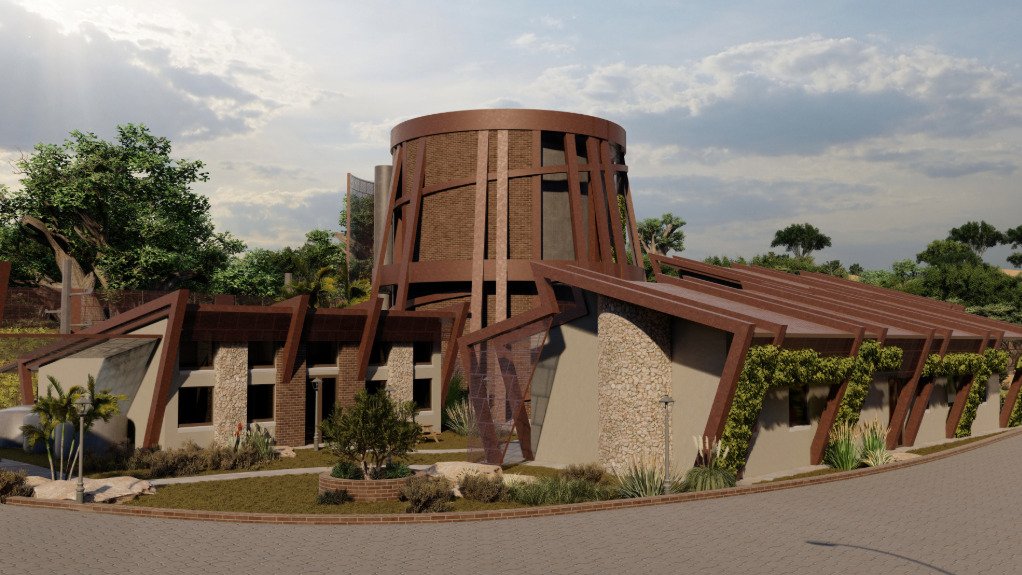
HITTING THE HIGHS The Kudu high temperature modular reactor or HTMR-100 designed by Stratek Global in the Limpopo Province


The de-mothballing of South Africa’s second nuclear energy solution, the Pebble Bed Modular Reactor (PBMR) at the Pelindaba site, in the North West province, was formally announced by Energy and Electricity Minister Kgosientsho Ramokgopa in November last year. This represents a renewed commitment to energy security and diversification, positioning South Africa as a leader in small modular reactor (SMR) technology.
“Although the project will still be referred to as the PBMR, the actual original PBMR design will not be reactivated,” says nuclear physicist and Stratek Global chairperson Dr Kelvin Kemm.
The project will now comprise a general SMR development linked to the original PBMR concept and approach.
During the fifteen years that the original PBMR had been dormant, another more streamlined reactor – the high temperature modular reactor (HTMR)-100 – was developed privately by teams led by Stratek Global.
Kemm says the HTMR-100 project is at an advanced stage, as it has been under continuous development for more than a decade.
He regards the HTMR-100 as the frontrunner for not only South African nuclear deployment but also for Africa, adding that “ . . . what is now essential is a private–public partnership approach, as indicated by Ramokgopa”.
Adding to the Mix
Kemm says the new PBMR project “will make a massive contribution” to not only the energy sector but also the manufacturing sector.
He notes that, from an energy perspective, the integration of helium-cooled SMRs introduces a “transformative paradigm” in energy supply infrastructure. This is because Stratek’s design intentionally eliminates the need for water-based cooling systems, allowing for installation flexibility across diverse geographic locations.
Consequently, nuclear power generation facilities can be situated in more arid locations and closer to end-users, eliminating geographic constraints and bypassing the need for extensive, high-voltage transmission networks.
“This allows for strategic deployment of SMRs within remote inland regions, such as mining complexes, for example, within the proposed Limpopo Special Economic Zone, or in small municipalities seeking to expand their industrial capabilities.”
In 2022, the EU designated nuclear energy as a ‘green’ technological option, affirming its classification as a sustainable and environmentally-forward energy source.
This designation supports the long operational life span of nuclear plants – anywhere up to 99 years – while affirming their environmental neutrality and facilitating green financing opportunities.
A strategic objective for South Africa, Kemm notes, is the development of domestically manufactured reactors for domestic energy needs and export markets, with such initiatives being projected to stimulate substantial local industrial activity, thereby contributing to the national economy.
“The main challenge facing the PBMR project is to get adequate private funding. For that, we need a clear indication of government and private collaboration.”
He adds that the Stratek Global team has organised face-to-face meetings with eight African countries: “There’s huge interest in many African countries in pursuing nuclear into the future, particularly SMRs, because it is so clearly the obvious answer”.
Right Side of History
Kemm points out that South Africa saw the potential value of SMR technology more than 30 years ago: “In 1995, I was invited to present the South African case to the World Nuclear Association in London”.
He adds that while a large number of people attended the presentation, global consensus at the time was that larger reactors were better.
Although the need for large reactors is evident, Kemm stresses there is “definitely a market for both”.
“The initial foresight has, however, been shown to be correct, and many groups globally are now hurrying to follow the South African lead in developing a workable SMR programme,” he concludes.
Article Enquiry
Email Article
Save Article
Feedback
To advertise email advertising@creamermedia.co.za or click here

Projects
Latest Multimedia
Latest News
Showroom

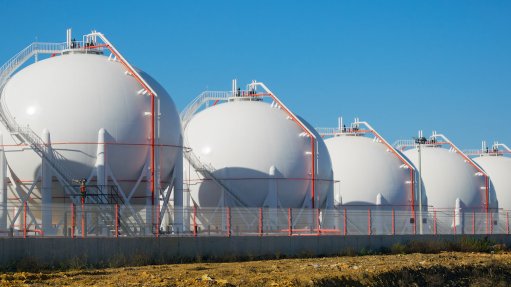
Virtual Gas Network supplies compressed natural gas via a virtual gas distribution network.
VISIT SHOWROOM
Press Office
Announcements
What's On
Subscribe to improve your user experience...
Option 1 (equivalent of R125 a month):
Receive a weekly copy of Creamer Media's Engineering News & Mining Weekly magazine
(print copy for those in South Africa and e-magazine for those outside of South Africa)
Receive daily email newsletters
Access to full search results
Access archive of magazine back copies
Access to Projects in Progress
Access to ONE Research Report of your choice in PDF format
Option 2 (equivalent of R375 a month):
All benefits from Option 1
PLUS
Access to Creamer Media's Research Channel Africa for ALL Research Reports, in PDF format, on various industrial and mining sectors
including Electricity; Water; Energy Transition; Hydrogen; Roads, Rail and Ports; Coal; Gold; Platinum; Battery Metals; etc.
Already a subscriber?
Forgotten your password?
Receive weekly copy of Creamer Media's Engineering News & Mining Weekly magazine (print copy for those in South Africa and e-magazine for those outside of South Africa)
➕
Recieve daily email newsletters
➕
Access to full search results
➕
Access archive of magazine back copies
➕
Access to Projects in Progress
➕
Access to ONE Research Report of your choice in PDF format
RESEARCH CHANNEL AFRICA
R4500 (equivalent of R375 a month)
SUBSCRIBEAll benefits from Option 1
➕
Access to Creamer Media's Research Channel Africa for ALL Research Reports on various industrial and mining sectors, in PDF format, including on:
Electricity
➕
Water
➕
Energy Transition
➕
Hydrogen
➕
Roads, Rail and Ports
➕
Coal
➕
Gold
➕
Platinum
➕
Battery Metals
➕
etc.
Receive all benefits from Option 1 or Option 2 delivered to numerous people at your company
➕
Multiple User names and Passwords for simultaneous log-ins
➕
Intranet integration access to all in your organisation