Property players plug into renewables as risks fall and tariffs rise


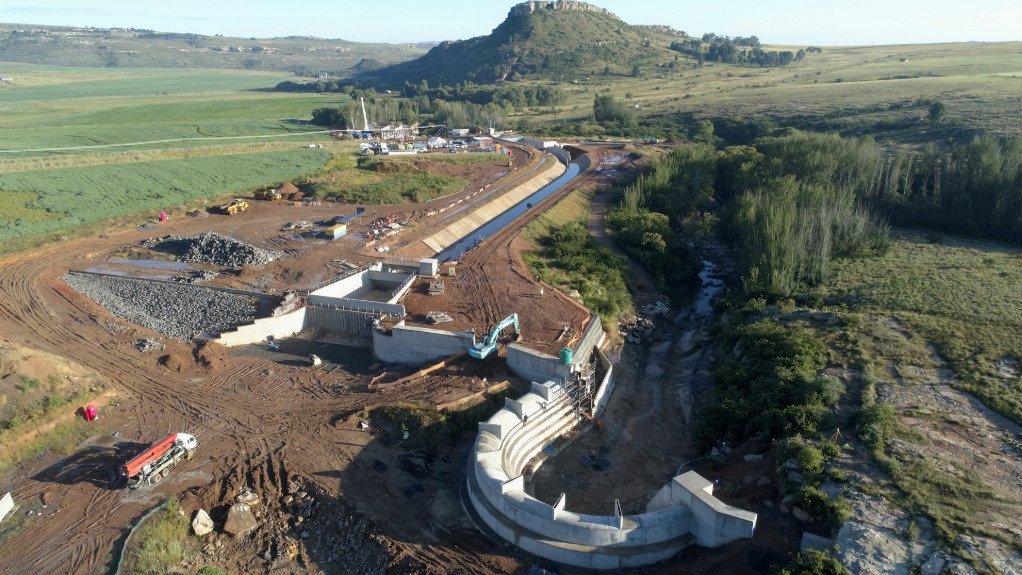

BOSTON HYDROELECTRIC PLANT Amid a global energy transition, local property players are increasingly integrating renewable energy sources into their portfolios
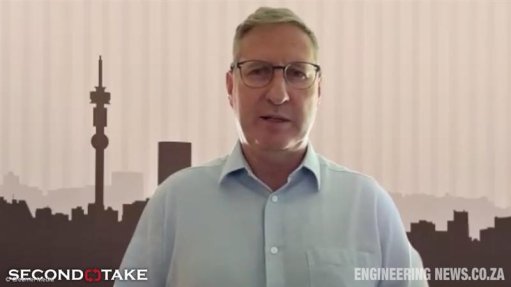
Growthpoint Properties COO Engelbert Binedell





Amid decarbonisation pressures and looming electricity tariff increases, South African property players are increasingly incorporating renewable-energy sources – such as on-site solar PV or offsite generation through hydro or wind power – into their portfolios.
This shift has been driven by the need to achieve sustainable development goals, improve environmental, social and governance (ESG) performance, and mitigate ongoing energy security issues, explains Green Building Council of South Africa (GBCSA) CEO Lisa Reynolds.
She notes, for example, that at the height of loadshedding – from March 2022 to June 2023 – solar PV adoption in the South African built environment increased by more than 300%. Diesel generators proved to be too expensive, too noisy and too polluting to use as backup power, prompting exponential growth in renewables adoption in the property sector.
Reynolds says this increase, driven by rising sustainability goals and operational necessity, reflects the old adage that one should never waste a good crisis.
“The time of rampant loadshedding seems to have passed for now, but the energy savings are continuing and are being experienced by those who invested in renewables. As State-owned Eskom increases the cost of energy by double-digit percentages, the return on investment continues to improve,” she adds.
While the fundamentals driving solar PV adoption are the same, the landscape looks very different now, says environmental consulting firm Imbue Sustainability founder Simon Penso.
“As the market has matured, we have seen the uncertainties fall away – technology is more predictable, pricing is clearer and the rules are easier to navigate. All of that has really derisked solar PV and helped us advise clients to make confident decisions. Loadshedding and energy security have always been strong drivers, but often misunderstood.”
Many property owners were under the mistaken impression that on-site solar PV systems would continue operating during loadshedding. However, Penso notes that when the grid shuts down, so must the PV systems, unless there is an alternative power source providing an active reference grid, such as a battery energy storage system (BESS) or a diesel generator.
He reiterates that the business case for solar PV has strengthened over the years – owing to lower costs of major equipment, increased competition in the market and steep rises in national grid energy costs – describing solar PV as yield-enhancing and leading to increased asset valuation.
Other factors driving renewable-energy adoption by local property players include carbon mitigation, net-zero carbon goals and future-proofing for carbon tax.
“To be net-zero carbon compliant, the asset should ideally first maximise on-site renewable generation,” says Penso.
However, while the cost of solar PV panels and batteries has decreased over the past decade, Reynolds says the systems are still costly and the payback period is too long for some companies.
Most buildings also do not have sufficient roof space to accommodate enough solar PV panels to generate the required power and energy, prompting her to suggest that buildings with external parking areas can mitigate this challenge by using carport roof space.
Penso adds that slow approval of small-scale embedded generation (SSEG) by municipalities and the National Energy Regulator of South Africa could also hinder the adoption of renewable energy in the property sector, noting that approval processes currently far exceed project implementation programmes.
“We also face challenges with outdated regulations that contain many duplications. These are being addressed, but at a slow pace. This creates additional installation costs that could potentially be omitted,” he says.
As solar PV continues to be a major source of renewable energy for local property companies, Penso expects an increase in carbon mitigation strategies, with the mix of on- and off-site renewables to mature in terms of net-zero certifications, ESG reporting and carbon tax considerations.
“On-site generation maximisation will become critical.”
Therefore, he argues that the future energy market is likely to become an extremely dynamic, live pricing marketplace, as “you may purchase energy from multiple sources and switch sources, depending on the hour-by-hour pricing and source. This needs to tie into an overall energy and net-zero carbon roadmap.
“This, and the increased market realisation of the importance of solar asset management, is a major focus area of ours and is steadily growing. An independent approach to this is key so that clients know they are receiving data-driven, impartial advice.”
Strategic Integration
Illustrating the transition to renewable energy in the property sector, real estate investment trust Growthpoint Properties operates and procures one of South Africa’s most diversified private renewable-energy portfolios, combining solar and hydro generation, with wind set to join its renewable-energy mix soon as part of the company’s power purchase agreement (PPA) with energy trader Etana Energy.
Growthpoint Properties COO Engelbert Binedell says the company is integrating its overall renewable-energy strategy into its business model through the adoption of an updated, climate-centric environmental strategy that focuses on renewables, efficiency, utilities management and certifications.
The company’s targets are increasingly embedded into business planning and linked to executive key performance indicators and remuneration.
“Growthpoint is driven by a deep commitment to sustainability, including decarbonisation – with the aim to be carbon neutral by 2050; resilience in the face of strained municipal infrastructure and climate risk; and securing a more stable cost base for itself and its tenants amid escalating/volatile electricity tariffs,” he adds.
The company’s renewables strategy combines scaling on-site rooftop solar and scaling wheeled renewable electricity through its PPA with Etana.
Binedell explains that different property types, regions and cities allow for and necessitate a blend of solutions, noting, for example, that offices are often better suited to wheeling, owing to limited roof space.
“Growthpoint has made measurable progress towards decarbonisation. For instance, Growthpoint exceeded its financial year 2025 solar target of 50 MWp, reaching 61.17 MWp of installed capacity across our portfolio, significantly advancing long-term sustainability and energy resilience goals.”
Growthpoint first introduced rooftop solar generation in 2011 and has since adopted various practical, scalable and carbon- reducing energy solutions for its business, tenants and South Africa.
Since its initial installation, the company has invested more than R1-billion in local solar energy projects and has grown into one of South Africa’s largest SSEG renewable- energy fleets, supported by transparent certification frameworks.
At the time of writing, Growthpoint’s growing Solar PV fleet consisted of 83 rooftop plants – with a combined capacity of 61.54 MWp – across its portfolio generating a significant amount of clean electricity yearly.
A pipeline of solar PV projects is currently in construction across Growthpoint’s portfolio, with good progress being made to ensure their cumulative target of 68 MWp of installed capacity is achieved by mid-2026.
The company recently acquired a 30% stake in the operational Boston hydroelectric plant – a new R390-million development with an operational lifetime of more than 40 years – from independent power producer Serengeti Energy.
Serengeti is the developer, constructor and operator of the Boston Hydro project – a 5 MW run-of-river hydropower plant on the Ash river, within the Lesotho Highlands Water Project, near Clarens, in the Free State. This project is the major water transfer scheme linking Lesotho and Gauteng.
As early as 2023, Growthpoint secured exclusive access to the 30 GWh/y of renewable electricity generated by the plant through its 195 GWh PPA with Etana.
Boston Hydro is the largest of six hydropower facilities along the Ash river and represents Serengeti Energy’s fourth operational hydro plant in South Africa.
As previously reported by Engineering News & Mining Weekly, the plant will generate about 30 GWh/y of renewable electricity, providing reliable baseload power 24/7 for Growthpoint’s e-co2, or electricity minus carbon dioxide, network through Etana Energy’s wheeling framework.
The e-co2 initiative is Growthpoint’s wheeled renewable-energy solution built around the company’s tenants that delivers wheeled renewable electricity directly to nine of the company’s flagship office buildings in Sandton, Gauteng.
Businesses can, therefore, reduce their Scope 2 emissions from purchased electricity in select Growthpoint buildings, enabling them to save money, advance their sustainability goals and report certified emissions reductions aligned with evolving International Financial Reporting Standards (IFRS) for sustainability.
Wheeled green electricity through Growthpoint’s e-co2 initiative has a zero-carbon footprint, is certified with tradable Renewable Energy Certificates and provides Growthpoint’s tenants with transparent renewable energy tariff escalations.
Binedell notes that, together with its rooftop solar, about 40% of Growthpoint’s total electricity demand will be supplied from renewable energy when the PPA with Etana is fully operational.
Further, Etana announced in a media release on December 15, 2025, that it would buy all the renewable electricity generated from two new wind farms being built by global renewables group ACCIONA Energía for the first 20 years of operation. Low-carbon energy will be supplied to customers, including Growthpoint.
The 100 MW Zen and 94 MW Bergrivier wind farms, which have a combined export capacity of 194 MW and located between Gouda and Saron, in the Western Cape, will produce about 580 GWh/y of renewable electricity. Etana notes that the electricity supplied through these projects will displace about 600 000 t/y of CO2 emissions.
Article Enquiry
Email Article
Save Article
Feedback
To advertise email advertising@creamermedia.co.za or click here
Research Reports


Projects
Latest Multimedia


Latest News


Showroom

Sulzer South Africa, established in 1922, partners with critical industries like power, oil & gas, water, mining, and chemicals to boost...
VISIT SHOWROOM
ISO-certified Condra manufactures overhead cranes, portal cranes, cantilever cranes and crane components: hoists, drives, end-carriages, brakes and...
VISIT SHOWROOM


Press Office
Announcements
What's On
Subscribe to improve your user experience...
Option 1 (equivalent of R125 a month):
Receive a weekly copy of Creamer Media's Engineering News & Mining Weekly magazine
(print copy for those in South Africa and e-magazine for those outside of South Africa)
Receive daily email newsletters
Access to full search results
Access archive of magazine back copies
Access to Projects in Progress
Access to ONE Research Report of your choice in PDF format
Option 2 (equivalent of R375 a month):
All benefits from Option 1
PLUS
Access to Creamer Media's Research Channel Africa for ALL Research Reports, in PDF format, on various industrial and mining sectors
including Electricity; Water; Energy Transition; Hydrogen; Roads, Rail and Ports; Coal; Gold; Platinum; Battery Metals; etc.
Already a subscriber?
Forgotten your password?
Receive weekly copy of Creamer Media's Engineering News & Mining Weekly magazine (print copy for those in South Africa and e-magazine for those outside of South Africa)
➕
Recieve daily email newsletters
➕
Access to full search results
➕
Access archive of magazine back copies
➕
Access to Projects in Progress
➕
Access to ONE Research Report of your choice in PDF format
RESEARCH CHANNEL AFRICA
R4500 (equivalent of R375 a month)
SUBSCRIBEAll benefits from Option 1
➕
Access to Creamer Media's Research Channel Africa for ALL Research Reports on various industrial and mining sectors, in PDF format, including on:
Electricity
➕
Water
➕
Energy Transition
➕
Hydrogen
➕
Roads, Rail and Ports
➕
Coal
➕
Gold
➕
Platinum
➕
Battery Metals
➕
etc.
Receive all benefits from Option 1 or Option 2 delivered to numerous people at your company
➕
Multiple User names and Passwords for simultaneous log-ins
➕
Intranet integration access to all in your organisation