PSG welcomes conservative Budget, says moving in right direction


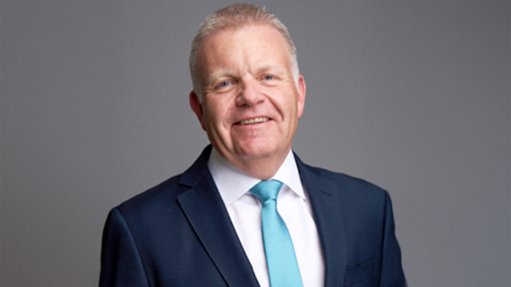
During a post-Budget briefing on February 27, financial services firm PSG group chief economist Johann Els and PSG policy and regulatory affairs head Ronald King said that, while South Africa faces many challenges, it is handling the broader economy effectively through macro-prudential guidelines and the National Treasury is doing well on providing fiscal policy.
The 2026 Budget sent a signal that the promises made by government on fiscal discipline and economic reforms would continue to be delivered, at least in terms of the National Budget. It also relied on conservative estimates and forecasts, said King.
A promising signal was that Finance Minister Enoch Godongwana specified that the debt-to-GDP ratio would peak this year at 78.9%, and then decline to below 75% within five years, he noted.
“The promising signals and the improving economic conditions will see trust start to build up. We expect ratings agencies will upgrade South Africa's sovereign rating this year,” King said.
However, while better confidence would boost GDP growth by between 0.5 of a percentage point and one percentage point, the budget alone would not solve the impediments to economic growth, he said.
Nonetheless, Treasury, through the Budget, showed strong commitment to structural economic reforms, said Els.
Allowing a large role for the private sector in the utility aspects of the economy has been increasing over the past few years, with electricity being the prime example. There has also been a focus on ensuring that policies are not only made but implemented.
Private sector involvement in the electricity grid, water supply and logistics systems would take time, but South Africa was moving in this direction, said Els.
“This will lead to better economic growth, although not great economic growth. Trust and greater confidence are key ingredients to growth.
“While we are unlikely to see GDP growth of more than 3% a year, we should be able to achieve 3% growth a year, which is better than the 1% a year we had over the past 16 years,” he said.
Further, while welcoming the increase of tax brackets by the margin of inflation for the first time in three years, and a range of other benefits for medical aid contributors, those with savings and retirement funds, and small business, King noted that the question of taxation on collective investment schemes had not been addressed.
Treasury is considering charging the buying and selling of collective investment schemes at the revenue tax of 45%, but the Budget seemed to indicate Treasury is considering taxing these transactions in terms of capital gains.
“A stable tax will provide certainty for the investment world to invest in South African collective investment schemes,” he said.
Further, the budget should improve the views held by ratings agencies, as the country has managed to keep the amount of interest paid on debt steady at about R16 in every R100 spent by government, said King.
This means ratings agencies should like the budget and an investment-grade rating for South Africa will result in more money flowing into South Africa, which will benefit the local stock exchanges. This should also benefit the rand.
“Ratings agencies expected a higher debt-to-GDP ratio than what the Budget presented and we expect a ratings upgrade this year and we hope we will get back to investment-grade ratings by at least one of the big three ratings agencies within about two years.
“The inflation differential between South Africa and the US was less than 1% and reducing our debt and interest payments will make South Africa more attractive to investments over time,” he said.
A conundrum, however, was that while the country demonstrated to foreign investors that it was working to fix issues, such as poorly performing State-owned enterprises and failures in municipalities, these were nonetheless precisely the issues that were preventing South Africa from achieving higher growth, Els noted.
Further, South Africa still spent too much on wages, interest payments and social grants, which, combined, accounted for about 60% of total spending, although capital spending was the fastest growing item in the current Budget, he said.
Additionally, while this R1-trillion to be spent on infrastructure over three years was welcome, it represented only a moderate year-on-year increase in spending on infrastructure.
“Fixed investment always lags behind the economic cycle and we are still coming off a weak growth base. However, we can look forward to a private sector fixed investments cycle kicking in once stronger growth is achieved.
“While our spending priorities are not wholly in line with what the country needs, we are moving in the right direction. However, financial wellbeing is created by controlling expenses. We need to manage expenses and cutting them will hurt, but is necessary,” said Els.
Article Enquiry
Email Article
Save Article
Feedback
To advertise email advertising@creamermedia.co.za or click here
Research Reports

Projects
Latest Multimedia

Latest News
Showroom

Sweet-Orr, established in 1871, is a global leader in superior protective workwear, known for quality, innovation, and performance.
VISIT SHOWROOM
The Steel Tube Export Association of South Africa was established to develop sustainable, internationally competitive carbon steel tube and pipe...
VISIT SHOWROOM


Press Office
Announcements
What's On
Subscribe to improve your user experience...
Option 1 (equivalent of R125 a month):
Receive a weekly copy of Creamer Media's Engineering News & Mining Weekly magazine
(print copy for those in South Africa and e-magazine for those outside of South Africa)
Receive daily email newsletters
Access to full search results
Access archive of magazine back copies
Access to Projects in Progress
Access to ONE Research Report of your choice in PDF format
Option 2 (equivalent of R375 a month):
All benefits from Option 1
PLUS
Access to Creamer Media's Research Channel Africa for ALL Research Reports, in PDF format, on various industrial and mining sectors
including Electricity; Water; Energy Transition; Hydrogen; Roads, Rail and Ports; Coal; Gold; Platinum; Battery Metals; etc.
Already a subscriber?
Forgotten your password?
Receive weekly copy of Creamer Media's Engineering News & Mining Weekly magazine (print copy for those in South Africa and e-magazine for those outside of South Africa)
➕
Recieve daily email newsletters
➕
Access to full search results
➕
Access archive of magazine back copies
➕
Access to Projects in Progress
➕
Access to ONE Research Report of your choice in PDF format
RESEARCH CHANNEL AFRICA
R4500 (equivalent of R375 a month)
SUBSCRIBEAll benefits from Option 1
➕
Access to Creamer Media's Research Channel Africa for ALL Research Reports on various industrial and mining sectors, in PDF format, including on:
Electricity
➕
Water
➕
Energy Transition
➕
Hydrogen
➕
Roads, Rail and Ports
➕
Coal
➕
Gold
➕
Platinum
➕
Battery Metals
➕
etc.
Receive all benefits from Option 1 or Option 2 delivered to numerous people at your company
➕
Multiple User names and Passwords for simultaneous log-ins
➕
Intranet integration access to all in your organisation