Ramaphosa touts his use of term ‘vaccine apartheid’ as a ‘crowning achievement’

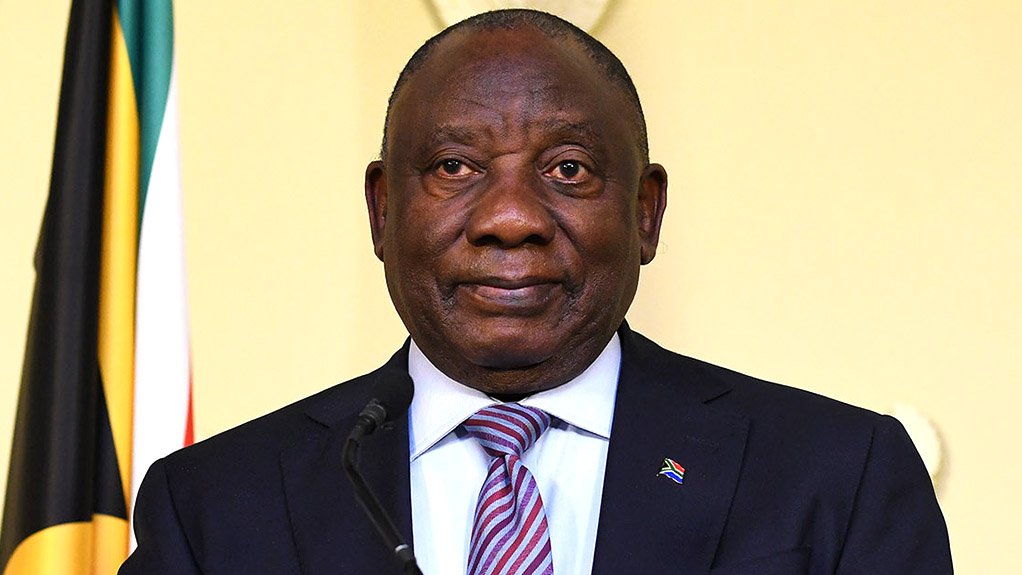


President Cyril Ramaphosa has defended and expressed pride in his use of the term “vaccine apartheid” to describe global Covid-19 vaccine distribution, while analysts, historians and public health experts have raised concerns about the accuracy and implications of the comparison.
Speaking at an event in Johannesburg on February 4, Ramaphosa said global vaccine access during the early stages of the Covid-19 pandemic represented a “most revolutionary moment”, arguing that wealthy countries in the northern hemisphere secured the vast majority of available doses and left Africa without access.
“Now, so you understand, this was a most revolutionary moment. If you recall, once Covid broke out, it was the countries in the northern hemisphere, because of access to pharmaceutical companies, that doled out money to those pharmaceutical companies to develop a vaccine.
“And once the vaccine had been developed, they acquired nearly all the vaccines in the world and we were left without any access to vaccines,” Ramaphosa recalled.
He said South Africa and other African States were forced into urgent diplomatic efforts to secure doses for the continent’s population of about 1.3-billion people.
“We had to work extremely hard at times, making phone calls at 03:00, 04:00, South African time, with the rest of the world, trying to get vaccines for the 1.3-billion people on our continent,” he said.
Ramaphosa alleged that several countries in the northern hemisphere had acquired vaccine stockpiles far exceeding their domestic needs and resisted sharing supplies.
“What they had done was simply to amass the vaccines. Many of them had acquired vaccines that were three to five times more than their own population, and they did not want to release some to our continent, and we had to put up a big fight,” he stated.
He said Africa experienced severe loss of life during this period, which led leaders to adopt stronger language to describe the situation.
“Our continent went through a rather challenging moment. You will recall that many of our people were dying . . . all over the continent,” Ramaphosa said.
He said this was what led to the calculated coining of the term “vaccine apartheid” to apply moral pressure on wealthier countries.
“We then had to craft the term that these other northern hemisphere countries were practising ‘vaccine apartheid’. When we mentioned the word ‘apartheid’, they became ashamed, they woke up, and they said, ‘Yes, we should make vaccines available to Africa’. For me, it is a personal crowning moment,” he said.
The term has since drawn criticism, with critics arguing that the term ‘apartheid’ refers to a specific system of racial rule enforced by law in South Africa and that applying it to vaccine procurement risks diluting its historical meaning.
Critics have also argued that early vaccine shortages during the pandemic were shaped by limited global manufacturing capacity, advance purchase agreements, regulatory approval processes and logistical challenges rather than by a coordinated effort to exclude Africa.
It has also been widely documented since the pandemic that vaccine rollout in several African countries was later hindered by domestic constraints, including weak healthcare systems, regulatory delays and distribution challenges, even after doses became available.
Some have argued that the use of morally charged language such as “vaccine apartheid” may strain international relations by framing global health cooperation as a matter of shame rather than shared capacity-building, while others have argued that the use of such terminology risks oversimplifying complex global supply dynamics.
Article Enquiry
Email Article
Save Article
Feedback
To advertise email advertising@creamermedia.co.za or click here


Latest Multimedia
Latest News


Showroom
Established in 1933, EKATO is the world leader in agitation technology, supplying agitators for processes and applications such as chemicals and...
VISIT SHOWROOM
We supply customers with practical affordable solutions for their testing needs. Our products include benchtop, portable, in-line process control...
VISIT SHOWROOM
Announcements
What's On
Subscribe to improve your user experience...
Option 1 (equivalent of R125 a month):
Receive a weekly copy of Creamer Media's Engineering News & Mining Weekly magazine
(print copy for those in South Africa and e-magazine for those outside of South Africa)
Receive daily email newsletters
Access to full search results
Access archive of magazine back copies
Access to Projects in Progress
Access to ONE Research Report of your choice in PDF format
Option 2 (equivalent of R375 a month):
All benefits from Option 1
PLUS
Access to Creamer Media's Research Channel Africa for ALL Research Reports, in PDF format, on various industrial and mining sectors
including Electricity; Water; Energy Transition; Hydrogen; Roads, Rail and Ports; Coal; Gold; Platinum; Battery Metals; etc.
Already a subscriber?
Forgotten your password?
Receive weekly copy of Creamer Media's Engineering News & Mining Weekly magazine (print copy for those in South Africa and e-magazine for those outside of South Africa)
➕
Recieve daily email newsletters
➕
Access to full search results
➕
Access archive of magazine back copies
➕
Access to Projects in Progress
➕
Access to ONE Research Report of your choice in PDF format
RESEARCH CHANNEL AFRICA
R4500 (equivalent of R375 a month)
SUBSCRIBEAll benefits from Option 1
➕
Access to Creamer Media's Research Channel Africa for ALL Research Reports on various industrial and mining sectors, in PDF format, including on:
Electricity
➕
Water
➕
Energy Transition
➕
Hydrogen
➕
Roads, Rail and Ports
➕
Coal
➕
Gold
➕
Platinum
➕
Battery Metals
➕
etc.
Receive all benefits from Option 1 or Option 2 delivered to numerous people at your company
➕
Multiple User names and Passwords for simultaneous log-ins
➕
Intranet integration access to all in your organisation