National Planning Commission report shows capital build-up without reinvestment in gross fixed capital formation




A new report by the National Planning Commission (NPC) shows that there is a significant build-up of capital in the economy that is not being reinvested in gross fixed capital formation (GFCF), but which needs to be circulated through transactions to drive growth and development.
'The Transformation of South Africa's Monetary Architecture 1983 - 2024' report assesses South Africa’s monetary architecture, which is the interconnected web of public, private and hybrid balance sheets that channel credit, allocate capital and govern investment.
South Africa's financial ecosystem is a web of interlocking balance sheets, in which the assets and liabilities of banks, development finance institutions (DFIs), pension funds, shadow banks, households and State-owned enterprises (SoEs) interact in ways that either support or constrain fixed investment and inclusive growth.
The current system produces patterns of financial exclusion, under-investment in fixed capital, as well as economic extractivism, and rewards short-term profit-taking over long-term productive investment in GFCF.
South Africa has not benefited from a system of macro-financial governance of the financial ecosystem, which is a complex, adaptive system.
The report provides recommendations for establishing such macro-financial governance required to address the key obstacles.
Rather than a division between public and private sector financing, a systemic approach that places macro-financial governance at the centre of structural transformation is needed, the report states.
Therefore, rather than limiting policy to fiscal ratios or inflation bands, the State should act as a strategic orchestrator of financial flows by identifying, negotiating and unlocking "elasticity spaces" where capital and credit can be redirected toward inclusive and sustainable investments in GFCF, and especially in the Just Energy Transition (JET).
The primary recommendation of the NPC’s report is the establishment of a system-wide macro-financial governance mechanism to track, model and coordinate interlocking public and private balance sheets.
This would facilitate mission-oriented blended finance that prioritises public value-creation, rather than filling in financing gaps with private sector investments, the report highlights.
The report details 14 recommendations and these coordinated balance sheet reconfigurations aim to unlock at least R5-trillion in new investment in GFCF and the JET, which could result in reduced inequality, an accelerated transition and foster inclusive economic growth without requiring fundamental changes to monetary or fiscal policy.
The strategic macro-financial governance of the web of interlocking balance sheets that is at the core of the wider financial ecosystem can enable this intervention to reach sufficient scale, it adds.
A key challenge is the constrained institutional capacity to absorb additional investments, including weak accountability and procurement mechanisms.
If not attended to, increased capital mobilisation will result in strong upward pressures on inflation, the report warns.
KEY RECOMMENDATIONS
The first recommendation is that the South African Reserve Bank’s (SARB's) Prudential Authority take over supervision of DFIs, such as the Land and Agricultural Development Bank of South Africa, the Industrial Development Corporation and the Development Bank of Southern Africa (DBSA).
The resulting collective balance sheet expansion could reach R1.4-trillion, thereby directly addressing under-investment in GFCF, the report says.
The second recommendation is for pension fund reallocation by considering reforming the Pension Funds Act Regulation 28 to reduce the 45% external investment limit in tandem with increased investment in GFCF within South Africa.
Additionally, as infrastructure constitute unlisted assets, the constraints on investments in unlisted assets imposed by Regulation 28 may need to be relaxed, the report emphasises.
A key reform might be to require pension funds to draft annual infrastructure investment plans, and to include reporting against these plans in their quarterly reports to the regulator.
Redirecting 20% of pension fund assets could unlock a R1-trillion project pipeline, especially if supported with sovereign guarantees and stock exchange-listed instruments, the report notes.
The third recommendation is to establish a rand-denominated guarantee company, co-funded by the National Treasury and DFIs. This could unlock R50-billion in infrastructure investment without increasing sovereign debt, as it would be a public-private capital mobilisation vehicle.
This initiative, namely the Credit Guarantee Vehicle, is already under way, the report adds.
The fourth recommendation is that the DBSA-led Infrastructure Fund be reinforced and expanded. It currently aims to leverage R100-billion in public finance to secure R900-billion in private investment.
As of this year, R340-billion worth of projects had been approved under the Infrastructure Fund, but this should be accelerated to meet the R1-trillion target.
The fifth recommendation notes the urgent need for clarity on SoE governance over the medium to long term.
The proposed holding company to hold the shares of the SoEs will not be well-regarded by investors. However, it might be appropriate to consider diversified shareholder models to leverage SoE balance sheets, which are worth R1.3-trillion, to attract R650-billion in capital without diluting overall public ownership beyond 60%.
Further, the sixth recommendation is for regulatory reforms to encourage bank lending to productive sectors and small and medium-sized enterprises (SMEs). A 1% reallocation of yearly bank lending, or about R55-billion, could significantly raise GFCF and support entrepreneurial activity.
However, banking systems are inappropriately configured to interface productively with SMEs, and the alternative is for banks to invest in intermediaries that have the relevant expertise.
The seventh recommendation states that corporate governance reforms are needed to mandate much higher levels of domestic reinvestment in fixed assets.
Environmental, social and governance-related reforms should be aligned with mandated reinvestment targets, including offering tax incentives for corporate companies that support domestic fixed-asset expansion, the report says.
Meanwhile, the tenth recommendation is for project-level blended finance. The various build-own-operate-transfer or build-operate-transfer models currently being used, such as for toll roads and which are being considered, could raise R80-billion, thereby ensuring fiscal neutrality while expanding infrastructure capacity.
An example under consideration is for energy projects in the National Transmission Company South Africa’s Independent Transmission Projects Programme to implement part of the R400-billion transmission investment plan, backed by guarantees.
The thirteenth recommendation supports the SARB’s ambitions to integrate climate risks into monetary policy and banking supervision.
Proposed balance sheet interventions to manage transition risks, such as for stranded assets, and which are estimated at R1.8-trillion between 2013 to 2035, should be considered.
Additionally, the SARB can reform the prudential controls of the banks in ways that allow banks to enter the riskier, credit-hungry SME space.
The fourteenth recommendation is that the Government Employees Pension Fund needs to realign its mandate with the National Development Plan’s (NDP's) target to increase investment to 30% of GFCF by funding SoEs, black economic empowerment contractors and domestic productive companies.
Similarly, rebalancing away from dual-listed, offshore-oriented firms should be encouraged.
“A reconfigured monetary architecture is necessary to break the cycles of low growth, unemployment, widening inequalities and financial exclusion.
“Unlocking financial flows for the public purpose defined by the Just Transition Framework requires a new institutional imagination that sees money as a tool for structural transformation,” the report says.
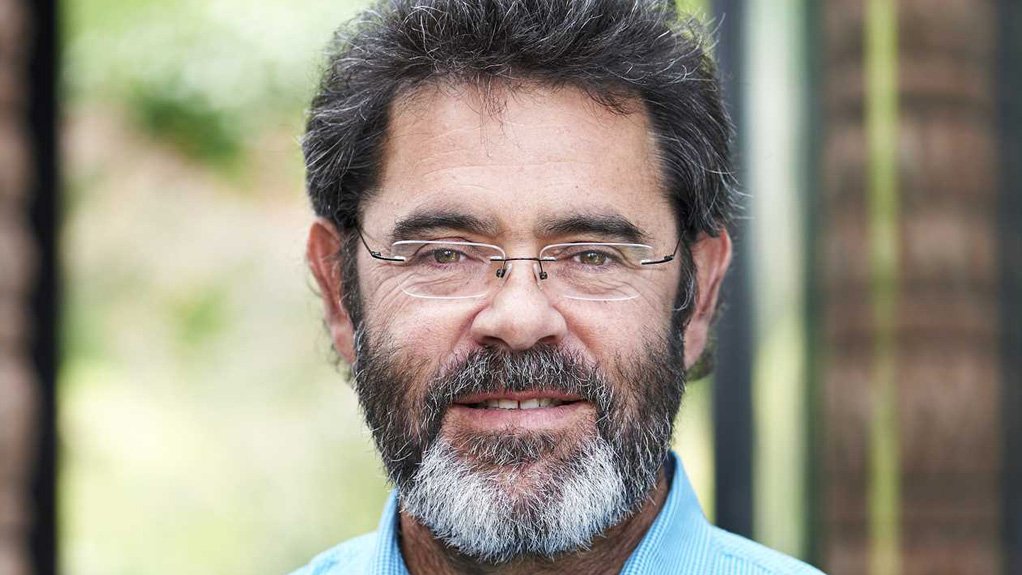
South Africa has a persistent, low level of GFCF as a percentage of GDP, currently about 15% against the NDP target of 30%, amid a widening infrastructure spending gap. Further, pension and insurance funds are growing rapidly, although only a small percentage of this is reinvested, NPC inclusive and fair economy work stream member, Stellenbosch University Centre for Sustainability Transitions co-director and report co-author Professor Mark Swilling said during a briefing on December 2.
“Our argument is that the rapid growth of the pension industry without significantly reinvesting in GFCF creates a build-up of cash that needs to be circulated.
“For example, the very limited capital available to SMEs is a block to the expansion of the SME sector, despite the sector having real potential to address South Africa's core challenges of unemployment, poverty and wealth inequality,” he added.
Article Enquiry
Email Article
Save Article
Feedback
To advertise email advertising@creamermedia.co.za or click here
Research Reports


Projects
Latest Multimedia

Latest News


Showroom

REELIN is Currently the largest supplier of Bearings to Transnet. We have contracts to supply bearings, draft gears slackadjusters and other...
VISIT SHOWROOM
Your global lifecycle technology & service partner for materials & minerals processing equipment for coal, iron ore, copper, manganese & other...
VISIT SHOWROOM

Announcements
What's On
Subscribe to improve your user experience...
Option 1 (equivalent of R125 a month):
Receive a weekly copy of Creamer Media's Engineering News & Mining Weekly magazine
(print copy for those in South Africa and e-magazine for those outside of South Africa)
Receive daily email newsletters
Access to full search results
Access archive of magazine back copies
Access to Projects in Progress
Access to ONE Research Report of your choice in PDF format
Option 2 (equivalent of R375 a month):
All benefits from Option 1
PLUS
Access to Creamer Media's Research Channel Africa for ALL Research Reports, in PDF format, on various industrial and mining sectors
including Electricity; Water; Energy Transition; Hydrogen; Roads, Rail and Ports; Coal; Gold; Platinum; Battery Metals; etc.
Already a subscriber?
Forgotten your password?
Receive weekly copy of Creamer Media's Engineering News & Mining Weekly magazine (print copy for those in South Africa and e-magazine for those outside of South Africa)
➕
Recieve daily email newsletters
➕
Access to full search results
➕
Access archive of magazine back copies
➕
Access to Projects in Progress
➕
Access to ONE Research Report of your choice in PDF format
RESEARCH CHANNEL AFRICA
R4500 (equivalent of R375 a month)
SUBSCRIBEAll benefits from Option 1
➕
Access to Creamer Media's Research Channel Africa for ALL Research Reports on various industrial and mining sectors, in PDF format, including on:
Electricity
➕
Water
➕
Energy Transition
➕
Hydrogen
➕
Roads, Rail and Ports
➕
Coal
➕
Gold
➕
Platinum
➕
Battery Metals
➕
etc.
Receive all benefits from Option 1 or Option 2 delivered to numerous people at your company
➕
Multiple User names and Passwords for simultaneous log-ins
➕
Intranet integration access to all in your organisation