Solar body concerned that revised Eskom unbundling plan could stymie crucial grid investment

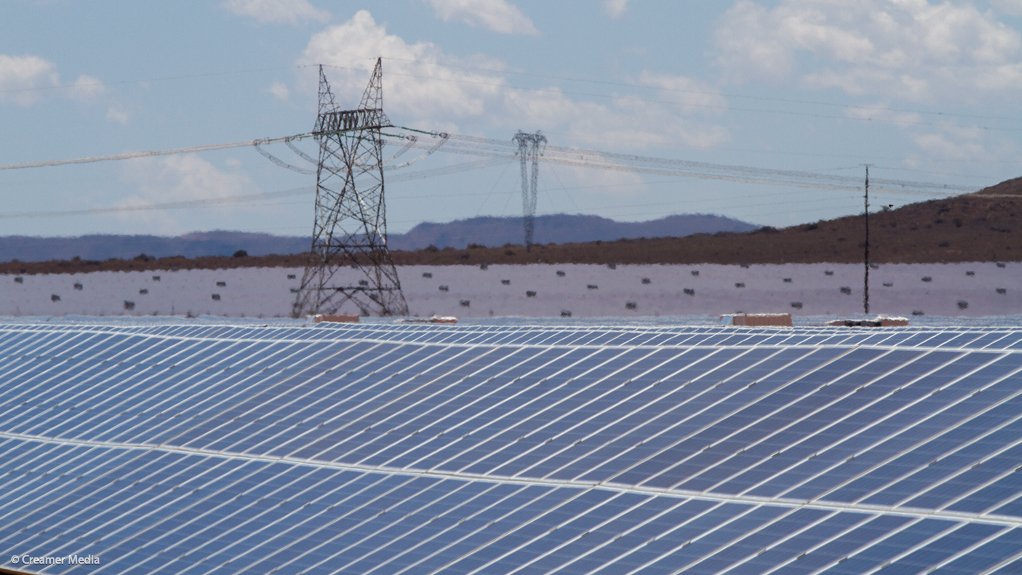


The South African Photovoltaic Industry Association (SAPVIA) has added its voice to those expressing concern about the potential negative consequences arising from the revised unbundling plan for Eskom, which was announced in December.
Under the revised structure the National Transmission Company South Africa (NTCSA) will remain a subsidiary of Eskom Holdings and will continue to own the transmission assets, while a separate Transmission System Operator (TSO) will be set up outside Eskom to handle system and market operation, but without owning the underlying infrastructure.
The Electricity Regulation Amendment Act, which came into force in 2025, set a five-year timeframe for the creation of an independent TSO, and SAPVIA was among those anticipating that the new fully independent transmission entity would own the grid assets, raise capital on its own balance sheet, and operate free from Eskom's institutional incentives.
CEO Dr Rethabile Melamu believes the revised structure creates practical problems, including the fact that a TSO without assets will be unable to raise capital at competitive rates to finance the 14 500 km of new transmission lines and other supporting infrastructure that South Africa requires.
In addition, the entity will remain dependent on an Eskom subsidiary for network access, perpetuating concerns about non-discriminatory treatment of Eskom Generation when compared with independent power producers.
She also highlights that the structure keeps critical grid infrastructure on Eskom's distressed balance sheet rather than creating a standalone, investment-grade transmission entity.
“The Department of Electricity and Energy and Eskom need to clarify how this structure will attract the private and development finance investment that transmission expansion requires,” Melamu tells Engineering News.
“Transparent governance, operational independence from Eskom Generation, and credible timelines for full separation will be essential to maintaining investor confidence. As currently articulated, the revised plan falls short of what the sector needs,” she argues.
Similar concerns have been raised by other commentators, including Professor Anton Eberhard, of the Power Futures Lab at the University of Cape Town’s Graduate School of Business, who warns that failing to ensure that the transmission grid is “fully liberated” from Eskom could compromise future investment and increase the risk of loadshedding from 2030.
For SAPVIA, resolution of the unbundling issue is particularly important given that it views access to grid infrastructure, both at a transmission and a distribution level, as the most pressing issue facing South Africa’s electricity supply sector in 2026.
While there are indications that PV installations could slow globally this year for the first time since its emergence as a significant technology about two decades ago, the association is optimistic of continued growth in South African installations.
Melamu highlights continued interest from renewables investors, noting that the 2025 South African Renewable Energy Grid Survey identified 117 GW of renewable-energy projects at advanced stages of development; capacity that already exceeds the 71.7 GW envisioned in the Integrated Resource Plan of 2025 over its entire 16-year horizon.
“The appetite for investment is clearly not the constraint; the grid is,” she avers.
On the transmission side, SAPVIA welcomes the progress being made on the Independent Transmission Programme, but it also notes that Phase 1 addresses only a fraction, or 1 164 km, of the new lines required this decade, and will also not be operational until 2028 at the earliest.
“In the interim, projects in high-resource areas (particularly the Cape regions) compete for limited connection capacity.”
At the distribution level, meanwhile, inconsistent municipal implementation of wheeling frameworks and small-scale embedded generation rules are frustrating private investment.
“The National Energy Regulator of South Africa’s Grid Capacity Allocation Rules, which came into effect in November 2025, provide a clearer regulatory framework, but their value depends entirely on consistent implementation by network service providers.
“SAPVIA will be watching closely to ensure the rules are applied fairly and transparently.”
Likewise, it will be monitoring developments relating to the South African Electricity Wholesale Market, the launch of which is still scheduled for April 2026, as well as developments in relation to the trading licences awarded to several market participants.
Melamu stressed, however, that a wholesale market cannot function effectively if generation cannot physically connect.
“Grid remains the decisive factor in translating investment appetite into installed capacity.”
Article Enquiry
Email Article
Save Article
Feedback
To advertise email advertising@creamermedia.co.za or click here
Research Reports

Projects
Latest Multimedia
Latest News
Showroom

ZF Aftermarket is the after-sales division of the world-renowned German ZF group, a global leader in mobility technology.
VISIT SHOWROOM
Supplier & Distributor of the Widest Range of Accurate & Easy-to-Use Alcohol Breathalysers
VISIT SHOWROOM


Announcements
What's On
Subscribe to improve your user experience...
Option 1 (equivalent of R125 a month):
Receive a weekly copy of Creamer Media's Engineering News & Mining Weekly magazine
(print copy for those in South Africa and e-magazine for those outside of South Africa)
Receive daily email newsletters
Access to full search results
Access archive of magazine back copies
Access to Projects in Progress
Access to ONE Research Report of your choice in PDF format
Option 2 (equivalent of R375 a month):
All benefits from Option 1
PLUS
Access to Creamer Media's Research Channel Africa for ALL Research Reports, in PDF format, on various industrial and mining sectors
including Electricity; Water; Energy Transition; Hydrogen; Roads, Rail and Ports; Coal; Gold; Platinum; Battery Metals; etc.
Already a subscriber?
Forgotten your password?
Receive weekly copy of Creamer Media's Engineering News & Mining Weekly magazine (print copy for those in South Africa and e-magazine for those outside of South Africa)
➕
Recieve daily email newsletters
➕
Access to full search results
➕
Access archive of magazine back copies
➕
Access to Projects in Progress
➕
Access to ONE Research Report of your choice in PDF format
RESEARCH CHANNEL AFRICA
R4500 (equivalent of R375 a month)
SUBSCRIBEAll benefits from Option 1
➕
Access to Creamer Media's Research Channel Africa for ALL Research Reports on various industrial and mining sectors, in PDF format, including on:
Electricity
➕
Water
➕
Energy Transition
➕
Hydrogen
➕
Roads, Rail and Ports
➕
Coal
➕
Gold
➕
Platinum
➕
Battery Metals
➕
etc.
Receive all benefits from Option 1 or Option 2 delivered to numerous people at your company
➕
Multiple User names and Passwords for simultaneous log-ins
➕
Intranet integration access to all in your organisation