Sustainable infrastructure strengthens S Africa’s future

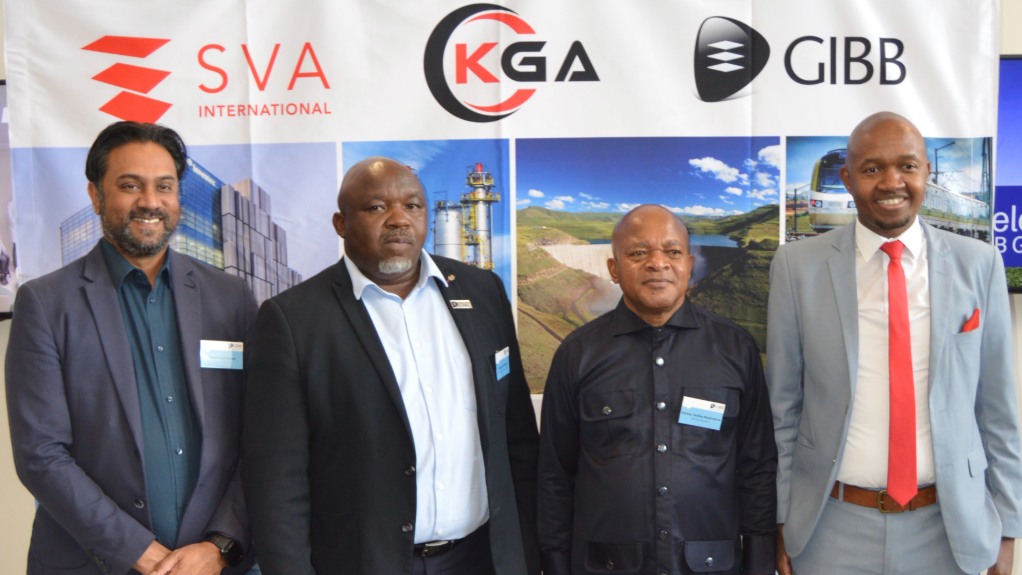
GEARED FOR GROWTH The Black Business Council in the Built Environment, GIBB and the South African Council for the Project and Construction Management Profession discussed sustainable infrastructure practices in Africa


South Africa stands at a pivotal moment to redefine infrastructure as a vehicle for climate-resilient development, economic inclusion and measurable environmental impact, as nations and industries shift from ambition to execution in sustainability strategies in 2026 and beyond, says engineering and architecture firm GIBB.
This means moving beyond traditional engineering outcomes toward holistic, people-centred systems.
The sustainability narrative is expected to shift globally, with businesses and investors prioritising execution over aspiration by deploying corporate strategies that focus on outcomes that deliver resilience, competitiveness, circularity and measurable environmental, social and governance performance.
This shift aligns with broader trends in sustainable finance, where Africa is increasing its sustainable debt and climate finance flows, yet continues to face gaps between investment needs and available capital for infrastructure and climate adaptation.
These themes were central to a recent industry roundtable hosted by GIBB, where leaders across the built environment reflected on the structural shifts needed to move South Africa from ambition to action.
At the time, GIBB Group CEO Vishaal Lutchman noted that sustainability can no longer be treated as a project-level consideration in 2026, adding that it is imperative that it becomes the organising principle of infrastructure systems, integrating economic growth, environmental responsibility, social upliftment and cultural relevance into a single delivery framework.
“Infrastructure must be people-centred and designed for long-term sustainability rather than short-term outputs,” said Lutchman.
However, fragmentation across policy, planning procurement and execution, remains a persistent challenge. Siloed approaches have weakened accountability and limited value creation. The roundtable emphasised the need for ecosystem-based thinking, where public and private stakeholders collaborate across value chains to deliver infrastructure that connects people to opportunity and supports economic participation.
Additionally, GIBB engineering, procurement and construction management GM Ntshavheni Phidza highlighted that inadequate maintenance, underinvestment and constrained transport and logistics networks continue to limit trade efficiency and market access. Reversing this trend will require smarter investment prioritisation, long-term planning certainty and credible public-private partnerships.
“Infrastructure’s declining contribution to GDP further underscores the urgency of reform,” he said.
Professional body for the built environment industry Black Business Council in the Built Environment president Danny Masimene added that it is important to focus on the “equally critical considerations” of transformation and inclusion, as weak enforcement of procurement legislation and concentrated supply chains continue to inhibit meaningful participation by emerging players.
“Shifting procurement models away from lowest-cost outcomes toward quality, resilience and measurable social impact is essential to unlocking sustainable value,” he noted.
The key outcome the panelists committed to implementing within their organisations was a decisive shift toward inclusive, bottom-up planning models that reflect community needs and local realities.
To support this, professional body for the project and construction management sector South African Council for the Project and Construction Management Professions president Lufuno Ratsiku stated that stakeholders should improve delivery outcomes and public trust by enhancing professional standards and accountability.
“Performance-based contracts, skills transfer, and enforceable professional oversight are critical to improving quality and restoring confidence in the sector,” he concluded.
Article Enquiry
Email Article
Save Article
Feedback
To advertise email advertising@creamermedia.co.za or click here

Projects
Latest Multimedia

Latest News

Showroom

CMTS is a leading, well-established EC&I contractor with 37+ years of mining and industrial experience. We execute full-scope EC&I projects with...
VISIT SHOWROOM
Roytec Global is an international company specializing in liquid / solid and mineral separation technologies for the Mining and Industrial sectors.
VISIT SHOWROOM

Announcements
What's On
Subscribe to improve your user experience...
Option 1 (equivalent of R125 a month):
Receive a weekly copy of Creamer Media's Engineering News & Mining Weekly magazine
(print copy for those in South Africa and e-magazine for those outside of South Africa)
Receive daily email newsletters
Access to full search results
Access archive of magazine back copies
Access to Projects in Progress
Access to ONE Research Report of your choice in PDF format
Option 2 (equivalent of R375 a month):
All benefits from Option 1
PLUS
Access to Creamer Media's Research Channel Africa for ALL Research Reports, in PDF format, on various industrial and mining sectors
including Electricity; Water; Energy Transition; Hydrogen; Roads, Rail and Ports; Coal; Gold; Platinum; Battery Metals; etc.
Already a subscriber?
Forgotten your password?
Receive weekly copy of Creamer Media's Engineering News & Mining Weekly magazine (print copy for those in South Africa and e-magazine for those outside of South Africa)
➕
Recieve daily email newsletters
➕
Access to full search results
➕
Access archive of magazine back copies
➕
Access to Projects in Progress
➕
Access to ONE Research Report of your choice in PDF format
RESEARCH CHANNEL AFRICA
R4500 (equivalent of R375 a month)
SUBSCRIBEAll benefits from Option 1
➕
Access to Creamer Media's Research Channel Africa for ALL Research Reports on various industrial and mining sectors, in PDF format, including on:
Electricity
➕
Water
➕
Energy Transition
➕
Hydrogen
➕
Roads, Rail and Ports
➕
Coal
➕
Gold
➕
Platinum
➕
Battery Metals
➕
etc.
Receive all benefits from Option 1 or Option 2 delivered to numerous people at your company
➕
Multiple User names and Passwords for simultaneous log-ins
➕
Intranet integration access to all in your organisation