Trade, Carbon, and Power: Why SA’s Energy Transition Requires Credible Market Participants


This article has been supplied and will be available for a limited time only on this website.
By: Liesel Kassier - Senior Business Developer – Lyra Energy
South Africa’s energy transition has entered a decisive phase. The question is no longer whether new capacity will be built, but how effectively it is integrated into the economy - and who is trusted to do so. For energy-intensive sectors such as mining, electricity has become a strategic variable, shaping costs, emissions profiles, and long-term competitiveness.
The latest CBAM implementation measures issued by the European Commission at the end of 2025 move the mechanism from “transition administration” into a tighter compliance-and-cost regime. For South Africa, the practical effect is straightforward: exporters cannot treat embedded emissions as a reporting exercise on the margins of the business. It is becoming a priced variable in trade.
The policy direction is deliberately incentive-driven. Where firms rely on default emissions values, the EU is signalling that this route will become progressively more expensive through scheduled mark-ups, pushing exporters toward verified, product-specific emissions data. In parallel, the monitoring, reporting, and verification rules have been tightened into a clearer rulebook, but clarity now comes with enforceable requirements, including verification expectations that will add cost, operational burden, and potential border friction if audit readiness is weak.
For South Africa, the strategic point is clear: electricity choices are now trade relevant. Power is both a core cost input and a material source of emissions embedded in exported goods. In a carbon-constrained global economy, reducing price volatility while lowering carbon intensity is becoming a condition of market access, not a sustainability “nice to have”.
That is why electricity market reform matters commercially, not only politically. As reforms advance toward a more open and tradable market, including the development of the South African Wholesale Electricity Market, large customers gain more scope to contract intelligently, manage volatility, and lower carbon intensity in ways that stand up to external scrutiny.
But more choice also raises the bar. Industrial firms need partners who can execute reliably, carry risk appropriately, and navigate grid and regulatory complexity without creating new exposure.
Lyra Energy was established in response to this need. As a licensed electricity trader backed by Scatec and STANLIB, Lyra brings together complementary strengths that are rarely aligned in the South African context.
Scatec contributes global experience in developing, owning, and operating renewable energy assets across multiple markets, alongside a proven track record of delivering projects at scale. STANLIB adds deep local market insight, institutional governance, and a long-term investment perspective rooted in South Africa’s economy.
Together, this enables Lyra to participate in the market not as an intermediary, but as a credible counterparty.
Access to readily available renewable capacity, combined with trading capability and a strong understanding of grid and regulatory dynamics, allows Lyra to support industrial consumers in making the transition from passive electricity buyers to active market participants.
For energy-intensive sectors such as mining and export-exposed manufacturing, this combination matters: it enables firms to move beyond procurement of megawatts toward bankable decarbonisation, audit-ready emissions claims, and resilient energy strategies that protect competitiveness under regimes like CBAM.
In a carbon-constrained trade environment, the competitive edge will belong to firms that treat energy procurement as a strategic function and to market participants capable of converting reform into a measurable, auditable advantage.
Energy is no longer just power. It is positioning.
- Kassier is senior business developer for Lyra Energy.
Article Enquiry
Email Article
Save Article
Feedback
To advertise email advertising@creamermedia.co.za or click here
Comments
Research Reports

Projects
Latest Multimedia

Latest News

Showroom
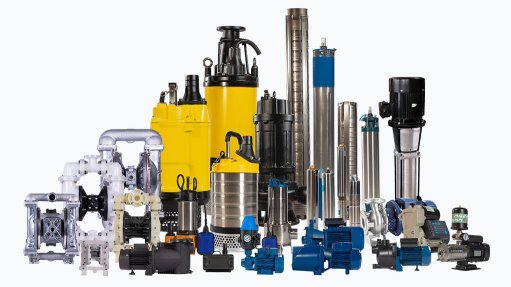
AxFlow AQS Liquid Transfer (Pty) Ltd is an Importer and Distributor of Pumps in Southern Africa
VISIT SHOWROOM
EIMS is an independent specialised environmental consulting firm offering the full spectrum of environmental management services across all sectors...
VISIT SHOWROOM
Press Office
Announcements
What's On
Subscribe to improve your user experience...
Option 1 (equivalent of R125 a month):
Receive a weekly copy of Creamer Media's Engineering News & Mining Weekly magazine
(print copy for those in South Africa and e-magazine for those outside of South Africa)
Receive daily email newsletters
Access to full search results
Access archive of magazine back copies
Access to Projects in Progress
Access to ONE Research Report of your choice in PDF format
Option 2 (equivalent of R375 a month):
All benefits from Option 1
PLUS
Access to Creamer Media's Research Channel Africa for ALL Research Reports, in PDF format, on various industrial and mining sectors
including Electricity; Water; Energy Transition; Hydrogen; Roads, Rail and Ports; Coal; Gold; Platinum; Battery Metals; etc.
Already a subscriber?
Forgotten your password?
Receive weekly copy of Creamer Media's Engineering News & Mining Weekly magazine (print copy for those in South Africa and e-magazine for those outside of South Africa)
➕
Recieve daily email newsletters
➕
Access to full search results
➕
Access archive of magazine back copies
➕
Access to Projects in Progress
➕
Access to ONE Research Report of your choice in PDF format
RESEARCH CHANNEL AFRICA
R4500 (equivalent of R375 a month)
SUBSCRIBEAll benefits from Option 1
➕
Access to Creamer Media's Research Channel Africa for ALL Research Reports on various industrial and mining sectors, in PDF format, including on:
Electricity
➕
Water
➕
Energy Transition
➕
Hydrogen
➕
Roads, Rail and Ports
➕
Coal
➕
Gold
➕
Platinum
➕
Battery Metals
➕
etc.
Receive all benefits from Option 1 or Option 2 delivered to numerous people at your company
➕
Multiple User names and Passwords for simultaneous log-ins
➕
Intranet integration access to all in your organisation