Urgent action needed on vehicle industry, broader economic reform showing mixed progress – Mavuso





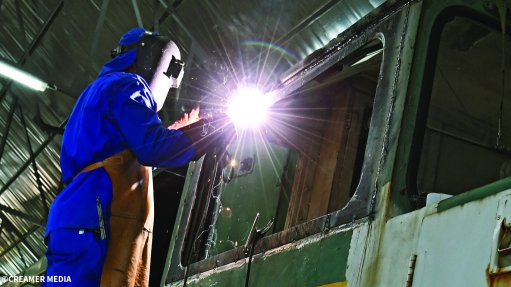
As cheap imports flood the local car market, the government is urged to make “life and death decisions” for the sector – one of the most important parts of the South African industrial base.
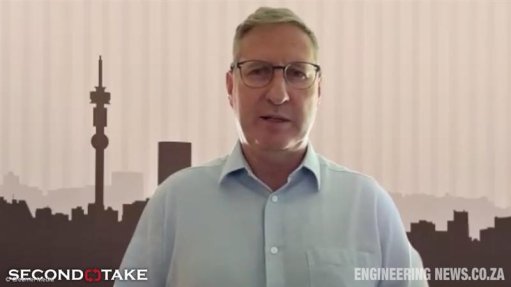
In her latest weekly newsletter, Business Leadership South Africa (BLSA) CEO Busi Mavuso, points out that BMW South Africa CEO Peter van Binsbergen said last week that, today, one in three vehicles sold in the country is produced locally.
Mavuso notes that, 25 years ago, over 80% of vehicles were locally produced, noting that local production has stagnated below pre-Covid levels of 640 000 units a year in recent years.
Even those still produced locally are seeing declining proportions of local content, she says, with the National Association of Automotive Component and Allied Manufacturers (NAACAM) reporting that local content has fallen by about 1.1 percentage points every year for the last 25 years.
The component sector is particularly hard hit.
NAACAM reports that 13 component manufacturers have closed in the last three years, with more closures expected this year, says Mavuso.
“This destruction of manufacturing capacity represents not just direct job losses, but the erosion of skills and supply chain capabilities that took decades to build,” she expresses, adding that South Africa’s main export market, Europe, is rapidly evolving to embrace new-energy vehicles (NEVs).
Mavuso argues that South Africa is still poorly positioned to serve that demand, with policy uncertainty and slow implementation of the NEV roadmap delaying investment in local NEV production.
Meanwhile, Mavuso notes that the industry faces a flood of cheap Chinese imports, with Chinese models now accounting for 22% of all vehicle imports, sold at prices that undercut local manufacturers, enabled by substantial subsidies for manufacturing in China.
Mavuso acknowledges that government has started considering tariff tools to address this problem, but that no decisions have been made yet.
She argues that current tariffs of 25% on imported fully manufactured vehicles could be doubled and still comply with World Trade Organisation (WTO) rules.
However, local manufacturers have pointed out that blunt tariff increases could damage them, as they support local manufacturing of some models while importing others to complete their product ranges.
“The challenge requires more sophisticated policy responses than simple across-the-board tariff increases,” says Mavuso, adding that the geopolitical context complicates matters.
With the US turning against the global trading system, building relationships with alternative markets has never been more important, she argues, noting that China is a critical trading partner and a potential source of investment.
“But we must be laser-focused on what matters: our own economy and its ability to employ people.
“That is the single test for policy decisions. Chinese market access must serve those core objectives, not undermine them.”
Mavuso argues that support should be shown to Chinese manufacturers to develop production in South Africa, such as Chery's proposed acquisition of Nissan's Rosslyn manufacturing facilities, which preserves manufacturing capacity and jobs while potentially expanding export production.
In Parliament last week, she points out, Trade, Industry and Competition Deputy Minister Zuko Godlimpi, showed welcome focus on the issues, noting that it is critical to "tactically defend" the employment capability of the industry while it gears up to produce NEVs competitively.
Mavuso says business and labour are aligned on this objective, with union leaders also noting last week the importance of protecting jobs from unfair competition.
“Now we need urgent action. Government must finalise NEV policy to enable local manufacturers to transition production capabilities.”
Mavuso also argues that tariff policy must be refined to protect local manufacturing while avoiding damage to local assemblers. Anti-dumping measures should be deployed where Chinese vehicles are being sold below cost, she says.
“Most importantly, these decisions cannot wait for factory closures to force action.
“The motor industry development strategy must position South Africa as an export-led, globally competitive manufacturing hub, and policy must support that outcome immediately.
“We cannot afford to lose more component manufacturers or see assembly plants shut down while government deliberates,” says Mavuso.
MERGERS
Meanwhile, Mavuso notes that the Department of Trade, Industry and Competition (dtic) has published a draft amendment to the thresholds at which a transaction must be notified to the Competition Commission.
Mavuso argues that competition processes are currently a source of significant red tape to the domestic economy and substantially increase the transaction costs of investment.
She says the thresholds at which a merger must require clearance from the authorities were last adjusted nine years ago, adding that the dtic now proposes to increase the threshold for combined turnover of the merging parties from R600-million to R1-billion.
For intermediate mergers, the target firm threshold increases from R100-million to R175-million.
For larger firms, the combined threshold rises from R6.6-billion to R9.5-billion, with the target threshold increasing from R190-million to R280-million.
Mavuso describes the change to the intermediate threshold as materially positive, making it easier for many smaller firms to do deals and attract investors.
She explains that the other adjustments roughly track inflation over the nine-year period, noting that this should reduce the regulatory burden on thousands of transactions that pose no meaningful competition concerns.
“Competition approvals have become a substantial cost for investors, who find it difficult to anticipate what additional requirements may be imposed through the process.
“International investors have told me repeatedly that this uncertainty is a major deterrent, making them prefer other markets where merger approval processes are more predictable.
“The threshold adjustment is a positive step forward, though much more can be done to streamline processes, reduce timelines and provide greater certainty about conditions that might be imposed,” says Mavuso.
Mavuso says BLSA will be submitting comments supporting these threshold increases and proposing additional reforms to improve the efficiency and predictability of the competition approval process.
BLSA COMMITMENT
In line with BLSA’s commitment to driving reforms that support the business environment, Mavuso notes that the organisation has developed the BLSA Reform Tracker, which monitors progress on over 200 reform deliverables and is available as a free resource to the public.
She notes that BLSA will be launching the second quarterly review of that progress this week.
She states that the review will show good progress in many areas, particularly logistics reforms, where port and rail concessioning is advancing.
Of concern, however, she points out, is that there have been backward steps on electricity reform.
“It appears that now the crisis of electricity availability has abated, the reform agenda is being challenged.
“Reforms to create genuine market competition, complete Eskom unbundling and establish the independent transmission company are facing delays and resistance.
“This is deeply troubling – the electricity crisis was resolved through sustained reform pressure, and backsliding now risks reversing those gains.”
After the launch, Mavuso says she will address these concerns in detail, including what appears to be happening and what must be done to get reforms back on track.
Mavuso points out that Operation Vulindlela last week published its own quarterly report on progress with its reform agenda.
She describes Operation Vulindlela as an “outstanding public institution” adding that its transparency is welcome.
“By its own scorecard, electricity reforms stand out as one area facing ‘significant challenges’,” she says.
On the positive side, it reports that almost half of the reforms are on track and another 40% progressing but with delays, with particularly strong progress on logistics and visa reforms.
These efforts to maintain focus on delivering the reform agenda are critical to achieving the job-creating economic growth we desperately need, says Mavuso.
“The Reform Tracker and Operation Vulindlela's reporting provide accountability mechanisms that help sustain momentum even when immediate crises abate.
“I'm pleased to see both government and business working to ensure transparency and continued progress, though the electricity reform concerns make clear that vigilance cannot be relaxed.”
Article Enquiry
Email Article
Save Article
Feedback
To advertise email advertising@creamermedia.co.za or click here


Projects
Latest Multimedia

Latest News

Showroom
Stewarts & Lloyds is a leading steel, tube, and engineering product supplier in South Africa.
VISIT SHOWROOM


Press Office
Announcements
What's On
Subscribe to improve your user experience...
Option 1 (equivalent of R125 a month):
Receive a weekly copy of Creamer Media's Engineering News & Mining Weekly magazine
(print copy for those in South Africa and e-magazine for those outside of South Africa)
Receive daily email newsletters
Access to full search results
Access archive of magazine back copies
Access to Projects in Progress
Access to ONE Research Report of your choice in PDF format
Option 2 (equivalent of R375 a month):
All benefits from Option 1
PLUS
Access to Creamer Media's Research Channel Africa for ALL Research Reports, in PDF format, on various industrial and mining sectors
including Electricity; Water; Energy Transition; Hydrogen; Roads, Rail and Ports; Coal; Gold; Platinum; Battery Metals; etc.
Already a subscriber?
Forgotten your password?
Receive weekly copy of Creamer Media's Engineering News & Mining Weekly magazine (print copy for those in South Africa and e-magazine for those outside of South Africa)
➕
Recieve daily email newsletters
➕
Access to full search results
➕
Access archive of magazine back copies
➕
Access to Projects in Progress
➕
Access to ONE Research Report of your choice in PDF format
RESEARCH CHANNEL AFRICA
R4500 (equivalent of R375 a month)
SUBSCRIBEAll benefits from Option 1
➕
Access to Creamer Media's Research Channel Africa for ALL Research Reports on various industrial and mining sectors, in PDF format, including on:
Electricity
➕
Water
➕
Energy Transition
➕
Hydrogen
➕
Roads, Rail and Ports
➕
Coal
➕
Gold
➕
Platinum
➕
Battery Metals
➕
etc.
Receive all benefits from Option 1 or Option 2 delivered to numerous people at your company
➕
Multiple User names and Passwords for simultaneous log-ins
➕
Intranet integration access to all in your organisation