Association warns consumer electrical product safety in South Africa not as good as it should be

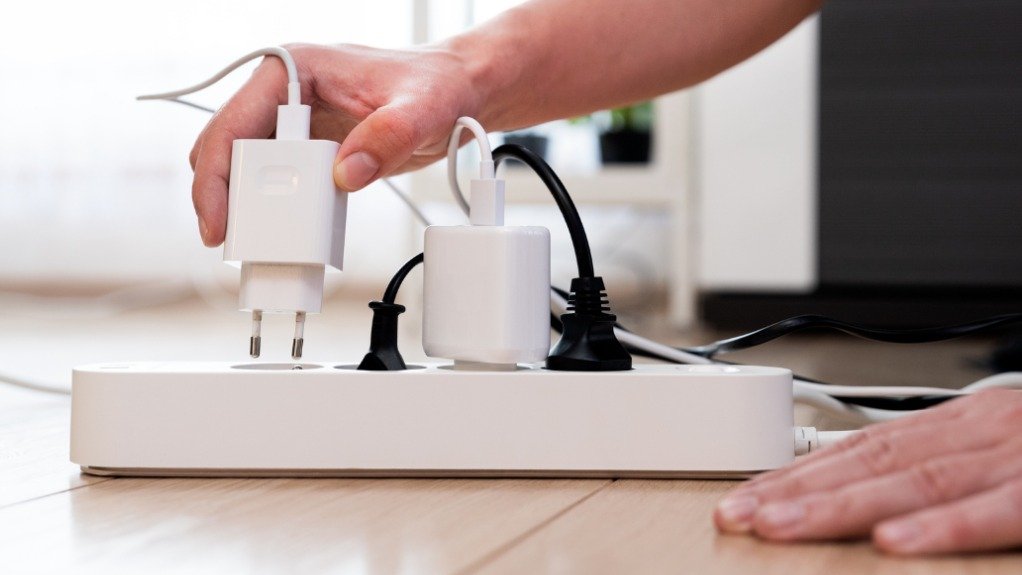


South African voluntary safety association Safehouse has highlighted that while many electrical products found on local store shelves were assumed, by consumers, to have been vetted by the retailer and were thus safe, this, alas, was not always the case. Independent industry testing had consistently shown high rates of failure to comply with electrical product standards.
“You can’t see electrical safety with the naked eye,” pointed out Safehouse chairperson and technical lead Connie Jonker. “Two products may look identical on a shelf, yet one can meet every requirement while the other fails critical safety tests. That’s why ongoing compliance testing matters, and why consumers and retailers need a way to know who is doing things properly.”
The country did not have reliable electrical product compliance statistics. A problem was the influx of non-compliant electrical products, either illicitly across the porous borders, or via online buying. The result was that there were many products for sale in South Africa that did not meet safety requirements.
“Different products carry different risks,” he explained. “If a circuit breaker doesn’t trip when needed, you could have a fire or an electrical shock. Other issues, such as incorrect marking, may not be immediately dangerous but can lead to products being used incorrectly. Buying very cheap products increases the risk of serious non-compliance.”
Too often, retailers relied blindly on documentation, instead of rigorously scrutinizing it, particularly when prices were low. They should verify test reports and Letters of Authority before stocking the products. They needed to understand what they were stocking and so serve as the first line of defence for consumers.
Safehouse was established in 2014, because of the ineffective regulation and failure to provide robust oversight of the market by the National Regulator for Compulsory Specifications (NRCS). The NRCS mainly relied on single type-test reports and administrative approvals and did not undertake ongoing quality control (an omission which significantly increased the risk of undetected noncompliance). On top of this, the NRCS refused to reveal which products were noncompliant, exposing consumers to risk. The agency was trying to act against illicit trade, but its impact was minimal – affecting just 0.5% of the country’s R100-billion total (across all sectors, not just electrical) illicit trade.
Safehouse operated on a peer review system and its members had funded a laboratory to test products, as visual inspection alone could not determine noncompliance. A strict code of conduct was applied. Tests cost several thousand rand each.
“We send test results to companies and urge them to fix issues, and if not, we report to the NRCS,” reported Jonker. “But not much happens after that. It is also virtually impossible to track what action, if any, the NRCS takes on any compliance issues raised.”
But products which passed the testing were awarded the Safehouse mark. Companies which achieved this were updating their product packaging to show it.
“Robust processes are being put in place thanks to our members’ continued commitment to product safety and regulatory compliance,” he highlighted. “Consumers can now make more informed and reliable choices by selecting products bearing the Safehouse mark and checking the Safehouse website to verify suppliers and businesses that are accredited members.”
Article Enquiry
Email Article
Save Article
Feedback
To advertise email advertising@creamermedia.co.za or click here
Research Reports

Projects
Latest Multimedia
Latest News


Showroom
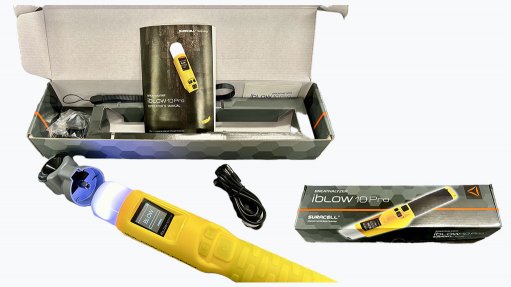
Supplier & Distributor of the Widest Range of Accurate & Easy-to-Use Alcohol Breathalysers
VISIT SHOWROOM
For over 60 years, VEGA has provided industry-leading products for the measurement of level, density, weight and pressure. As the inventor of the...
VISIT SHOWROOM
Press Office
Announcements
What's On
Subscribe to improve your user experience...
Option 1 (equivalent of R125 a month):
Receive a weekly copy of Creamer Media's Engineering News & Mining Weekly magazine
(print copy for those in South Africa and e-magazine for those outside of South Africa)
Receive daily email newsletters
Access to full search results
Access archive of magazine back copies
Access to Projects in Progress
Access to ONE Research Report of your choice in PDF format
Option 2 (equivalent of R375 a month):
All benefits from Option 1
PLUS
Access to Creamer Media's Research Channel Africa for ALL Research Reports, in PDF format, on various industrial and mining sectors
including Electricity; Water; Energy Transition; Hydrogen; Roads, Rail and Ports; Coal; Gold; Platinum; Battery Metals; etc.
Already a subscriber?
Forgotten your password?
Receive weekly copy of Creamer Media's Engineering News & Mining Weekly magazine (print copy for those in South Africa and e-magazine for those outside of South Africa)
➕
Recieve daily email newsletters
➕
Access to full search results
➕
Access archive of magazine back copies
➕
Access to Projects in Progress
➕
Access to ONE Research Report of your choice in PDF format
RESEARCH CHANNEL AFRICA
R4500 (equivalent of R375 a month)
SUBSCRIBEAll benefits from Option 1
➕
Access to Creamer Media's Research Channel Africa for ALL Research Reports on various industrial and mining sectors, in PDF format, including on:
Electricity
➕
Water
➕
Energy Transition
➕
Hydrogen
➕
Roads, Rail and Ports
➕
Coal
➕
Gold
➕
Platinum
➕
Battery Metals
➕
etc.
Receive all benefits from Option 1 or Option 2 delivered to numerous people at your company
➕
Multiple User names and Passwords for simultaneous log-ins
➕
Intranet integration access to all in your organisation