Call for Africa to turn fragmented mineral belts into coherent regional value chains


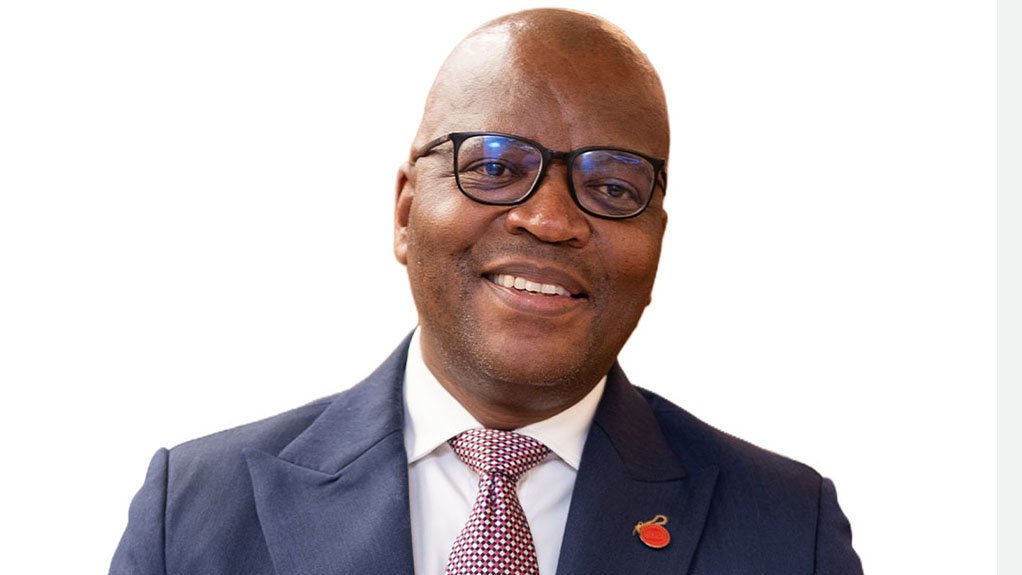
Absa CIB Coverage Head for Resources and Energy Shirley Webber.
Absa CIB Managing Executive for Public Sector Growth Capital Solutions Stephen Seaka.
Absa CIB Managing Executive for Public Sector Growth Capital Solutions Stephen Seaka.




Africa does not have the luxury of treating regional cooperation and regional beneficiation as afterthoughts. If the continent continues to negotiate in small, fragmented units, the result will be a patchwork of export restrictions and incentive schemes that strain investor confidence without building the connective tissue of shared infrastructure and industrial capacity.
If, instead, leaders use projects such as the Lobito Corridor as prototypes for how to align geology, logistics, and industrial policy at a regional scale, the continent can begin to shape global value chains rather than simply feeding into them.
This way forward for the continent is advocated for by Absa CIB coverage head for resources and energy Shirley Webber and Absa CIB managing executive for public sector and growth capital solutions Stephen Seaka, who highlight that regional corridors are needed to bridge Africa’s dispersed minerals endowment and report on a trial run on the Lobito Corridor reducing a usual six-week journey to eight days.
“It shows how a corridor can become the organising unit of industrial strategy, because the infrastructure that moves ore and the systems that govern its movement naturally operate beyond national borders. “It also forces a more fundamental question onto the table: If the next generation of global industry is going to draw on Africa’s critical minerals, what scale of planning can genuinely support that opportunity? In practice, the geology is regional, but industrial policy is still national. Lobito exposes that mismatch and demonstrates how coordinated corridors can begin to bridge it,” Webber and Seaka point out.
They outline regional cooperation as including tariff alignment, customs procedures, rail and port concessions, environmental and social standards, power-pool governance, dispute-resolution mechanisms and the regulatory treatment of long-term public- private partnerships.
They add that regional beneficiation, by contrast, is about where along the value chain different activities are positioned and how those activities are sequenced. Ore can be crushed, concentrated, smelted, refined, turned into precursors, assembled into components and eventually integrated into finished products.
Some of these steps require substantial power and water; some are knowledge-intensive; some are highly trade-exposed and shaped by logistics costs, with it seldom making sense to duplicate each step in every country that hosts a deposit.
“It’s more efficient to map which segments of a copper-cobalt- manganese-lithium chain should sit in which locations along a corridor, then design fiscal regimes, power investments, and skills programmes accordingly.
Interestingly, they observe that the continental policy landscape is beginning to move in this direction, which they see as being exemplified by the African Union’s Green Minerals Strategy, in that it positions critical minerals as a regional industrialisation opportunity and promotes integrated value chains and corridor-based infrastructure planning.
Regional economic communities, such as the Southern African Development Community, the Common Market for Eastern and Southern Africa and the Economic Community of Central African States, are held up as examples of sub-continental platforms that could support this kind of coordination.
“In practice, turning these frameworks into functioning corridors requires a different discipline from governments. It means treating a corridor as a single planning unit for power, water, data connectivity and skills, even while it traverses several jurisdictions.
“It means aligning fiscal terms enough to prevent destructive competition for smelters and refineries, while allowing differentiated incentives where countries have distinct industrial strengths.
“It also demands joint approaches to environmental and social governance, so that high standards become a feature of the corridor rather than a source of regulatory arbitrage.
“These elements form the operational foundation on which regional value-chain design can take shape. The private sector sits at the centre of whether this works. Mining companies and their supply chains will not commit to multi-decade smelting or refining investments unless they see predictable corridor-wide frameworks on transport, power pricing, fiscal regimes and environmental standards.
“Battery and EV manufacturers will only treat African corridors as strategic production nodes if they can access sufficient scale, consistent quality and credible delivery timelines. Regional banks and DFIs will structure project finance and corporate facilities more confidently when risk is shared across a corridor with pooled revenue streams rather than tied to the fiscal position of a single sovereign,” Webber and Seaka state in an article to Engineering News & Mining Weekly.
Africa Needs Action
“Africa needs action,” is a point that has been emphasised by Investing in African Mining Indaba executive advisory board chairperson Frans Baleni, ahead of the Indaba, which takes place in Cape Town from February 9 to 12. As Africa’s biggest mining platform, the Indaba is going all out to build momentum towards the realisation of a timely new Africa partnership era.
At the same Indaba media conference, UN Economic Commission for Africa economic affairs officer Dr Marit Kitaw drew attention to “putting our voices together” and “having an African agency”, at the upcoming Indaba, which is Africa’s biggest mining platform.
The journalists present also heard from Kitaw that “critical minerals have now become a currency. We talk about cobalt in the Democratic Republic of Congo, manganese in South Africa, graphite in Mozambique, platinum and gold in South Africa, and I can go on, so we have the endowments, but to have economies of scale and bargaining, you need to have regional integration”.
Article Enquiry
Email Article
Save Article
Feedback
To advertise email advertising@creamermedia.co.za or click here

Projects
Latest Multimedia
Latest News


Showroom
Roytec Global is an international company specializing in liquid / solid and mineral separation technologies for the Mining and Industrial sectors.
VISIT SHOWROOM
Axiom Hydraulics is a trusted leader in South Africa’s hydraulic industry, delivering world-class components, systems, and engineering expertise...
VISIT SHOWROOM



Press Office
Announcements
What's On
Subscribe to improve your user experience...
Option 1 (equivalent of R125 a month):
Receive a weekly copy of Creamer Media's Engineering News & Mining Weekly magazine
(print copy for those in South Africa and e-magazine for those outside of South Africa)
Receive daily email newsletters
Access to full search results
Access archive of magazine back copies
Access to Projects in Progress
Access to ONE Research Report of your choice in PDF format
Option 2 (equivalent of R375 a month):
All benefits from Option 1
PLUS
Access to Creamer Media's Research Channel Africa for ALL Research Reports, in PDF format, on various industrial and mining sectors
including Electricity; Water; Energy Transition; Hydrogen; Roads, Rail and Ports; Coal; Gold; Platinum; Battery Metals; etc.
Already a subscriber?
Forgotten your password?
Receive weekly copy of Creamer Media's Engineering News & Mining Weekly magazine (print copy for those in South Africa and e-magazine for those outside of South Africa)
➕
Recieve daily email newsletters
➕
Access to full search results
➕
Access archive of magazine back copies
➕
Access to Projects in Progress
➕
Access to ONE Research Report of your choice in PDF format
RESEARCH CHANNEL AFRICA
R4500 (equivalent of R375 a month)
SUBSCRIBEAll benefits from Option 1
➕
Access to Creamer Media's Research Channel Africa for ALL Research Reports on various industrial and mining sectors, in PDF format, including on:
Electricity
➕
Water
➕
Energy Transition
➕
Hydrogen
➕
Roads, Rail and Ports
➕
Coal
➕
Gold
➕
Platinum
➕
Battery Metals
➕
etc.
Receive all benefits from Option 1 or Option 2 delivered to numerous people at your company
➕
Multiple User names and Passwords for simultaneous log-ins
➕
Intranet integration access to all in your organisation