China unveils plan to decarbonise economy but stops short of quitting coal

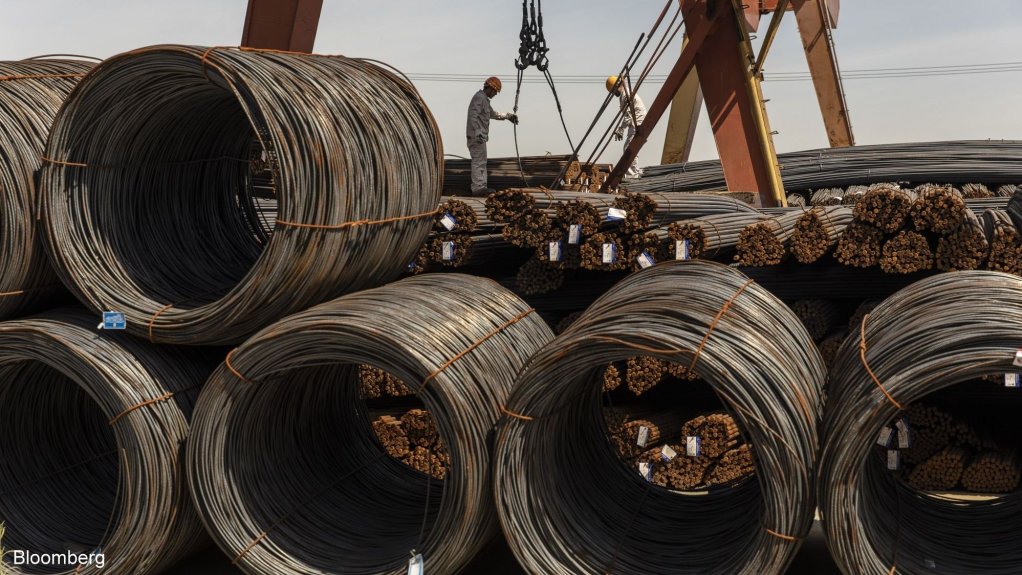


BEIJING - China on Thursday released a new economic decarbonisation plan that seeks to put its carbon intensity reduction programme back on track, mainly by relying on its booming renewable sector to limit coal consumption and rein in emissions.
China's new five-year plan, released on Thursday, called for it to reduce its carbon intensity, or carbon emissions per unit of gross domestic product, by 17% from 2026 to 2030. It also outlined targets to reach peak coal and replace 30-million metric tons per year of coal with renewables, but did not put further overall limits on coal consumption.
During the five-year plan that ended last year, China reduced its carbon intensity by 12%, missing its target of 18%.
In 2026, it plans to cut its carbon intensity by around 3.8%, according to a report from China's top state planner, the National Development and Reform Commission (NDRC). China has said it expects that its carbon emissions will peak before 2030.
The new carbon intensity goal is still "alarmingly lax," said Lauri Myllyvirta, co-founder of the Helsinki-based Centre for Research on Energy and Clean Air (CREA), who said it would allow emissions to increase by 3% to 6% over the next five years given China's economic growth target.
If China kept its emissions stable or declining as it has done for nearly the past two years, that would imply carbon intensity reductions of "well over 20%" by 2030, Myllyvirta said.
CREA research previously found that China would need to aim for a 23% cut over the next five years to meet a Paris Agreement commitment to reduce carbon intensity by more than 65% by 2030 as compared to 2005.
Still, the new carbon intensity target would not be easy to achieve, said Yao Zhe, a Beijing-based policy advisor for Greenpeace East Asia, pointing to continued energy demand growth needed to fuel Chinese manufacturing.
"The focus increasingly shifts to more challenging areas - decarbonising hard-to-abate sectors, integrating a much larger share of renewables into the power system and building a more flexible and resilient electricity system," said Muyi Yang, a senior energy analyst for Ember, an energy think tank.
In the next five years, China will also introduce a mandatory minimum quota system for renewable energy consumption, the NDRC report said.
"As China's economy continues to grow and energy efficiency stagnates, how quickly carbon intensity is reduced largely depends on how much renewable energy can be supplied," Yao said.
In a speech to the United Nations last year, President Xi Jinping said China would increase its wind and solar power capacity, already the world's largest, by six times from 2020 levels to 3 600 gigawatts by 2035. But China is expected to exceed that target based on current capacity building levels.
China has not yet released an outright emissions reduction target for 2030.
Last year, Xi said in a speech to the United Nations that China would peak its carbon emissions by 2030 and reduce emissions by 7% to 10% by 2035.
China's carbon emissions fell 0.3% last year thanks to reductions in the transport, power, cement and metals sectors, but it is not yet clear whether emissions will go up again before peaking.
This year marks the beginning of a planned shift from focusing on controlling the energy intensity of its economy to focusing on carbon intensity.
The so-called "dual control" system will bring the introduction of industry, company and project-level carbon emissions controls, according to the five-year plan.
The NDRC said that efforts would be made to phase out outdated coal-fired equipment and facilities. The five-year plan said China would promote carbon reductions in key industries through limiting their use of coal.
The plan also said China would push to peak its coal as well as its oil consumption over the period. But that implied a retreat from previous commitments to not only peak but also phase down coal consumption during the period.
Article Enquiry
Email Article
Save Article
Feedback
To advertise email advertising@creamermedia.co.za or click here
Research Reports


Projects
Latest Multimedia

Latest News


Showroom

Rentech provides renewable energy products and services to the local and selected African markets. Supplying inverters, lithium and lead-acid...
VISIT SHOWROOM
Leading condition monitoring specialists, WearCheck, help boost machinery lifespan and reduce catastrophic component failure through the scientific...
VISIT SHOWROOM

Press Office
Announcements
What's On
Subscribe to improve your user experience...
Option 1 (equivalent of R125 a month):
Receive a weekly copy of Creamer Media's Engineering News & Mining Weekly magazine
(print copy for those in South Africa and e-magazine for those outside of South Africa)
Receive daily email newsletters
Access to full search results
Access archive of magazine back copies
Access to Projects in Progress
Access to ONE Research Report of your choice in PDF format
Option 2 (equivalent of R375 a month):
All benefits from Option 1
PLUS
Access to Creamer Media's Research Channel Africa for ALL Research Reports, in PDF format, on various industrial and mining sectors
including Electricity; Water; Energy Transition; Hydrogen; Roads, Rail and Ports; Coal; Gold; Platinum; Battery Metals; etc.
Already a subscriber?
Forgotten your password?
Receive weekly copy of Creamer Media's Engineering News & Mining Weekly magazine (print copy for those in South Africa and e-magazine for those outside of South Africa)
➕
Recieve daily email newsletters
➕
Access to full search results
➕
Access archive of magazine back copies
➕
Access to Projects in Progress
➕
Access to ONE Research Report of your choice in PDF format
RESEARCH CHANNEL AFRICA
R4500 (equivalent of R375 a month)
SUBSCRIBEAll benefits from Option 1
➕
Access to Creamer Media's Research Channel Africa for ALL Research Reports on various industrial and mining sectors, in PDF format, including on:
Electricity
➕
Water
➕
Energy Transition
➕
Hydrogen
➕
Roads, Rail and Ports
➕
Coal
➕
Gold
➕
Platinum
➕
Battery Metals
➕
etc.
Receive all benefits from Option 1 or Option 2 delivered to numerous people at your company
➕
Multiple User names and Passwords for simultaneous log-ins
➕
Intranet integration access to all in your organisation