DRC growth demands custom-designed chute systems

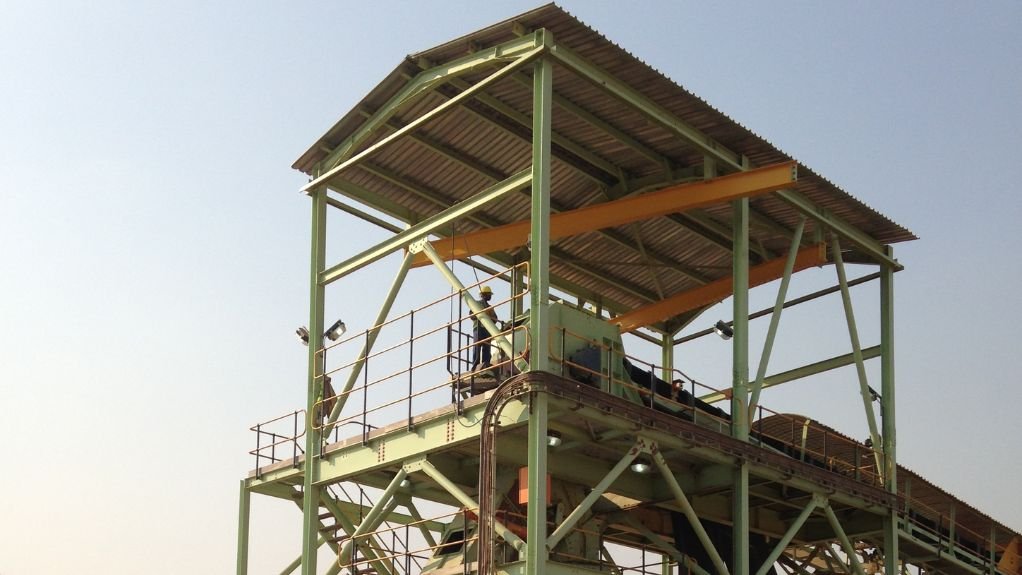
GETTING COPPER MOVING A bifurcated chute custom engineered by Weba Chute Systems to control copper flow, reduce turbulence and reduce wear in high throughput operations
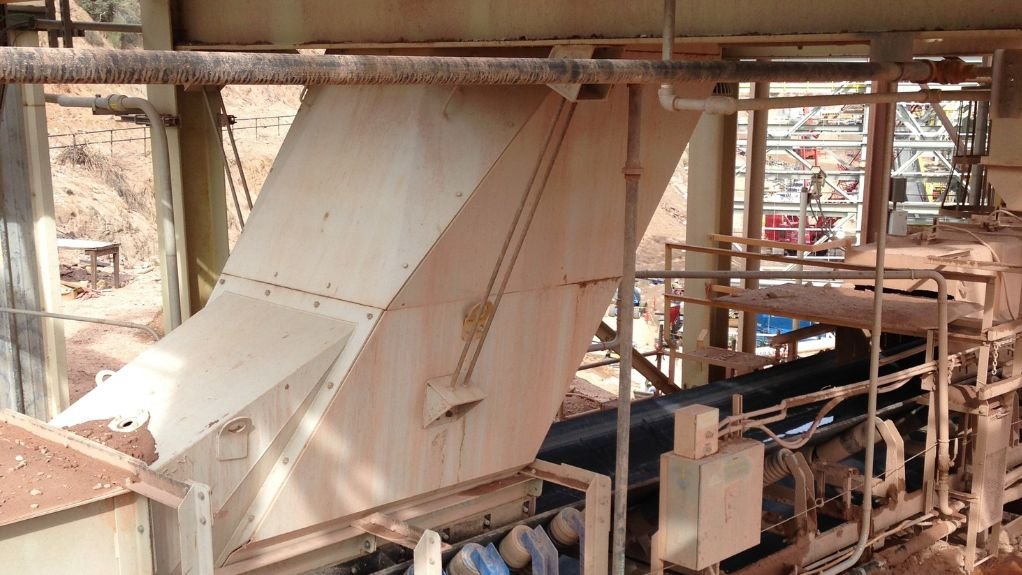
CONVEYOR-TO-CONVEYOR TRANSFER A high-capacity conveyor-to-conveyor transfer chute, engineered by Weba Chute Systems, reliably handling up to 4 500 t/h of copper under demanding operating conditions in the Democratic Republic of Congo
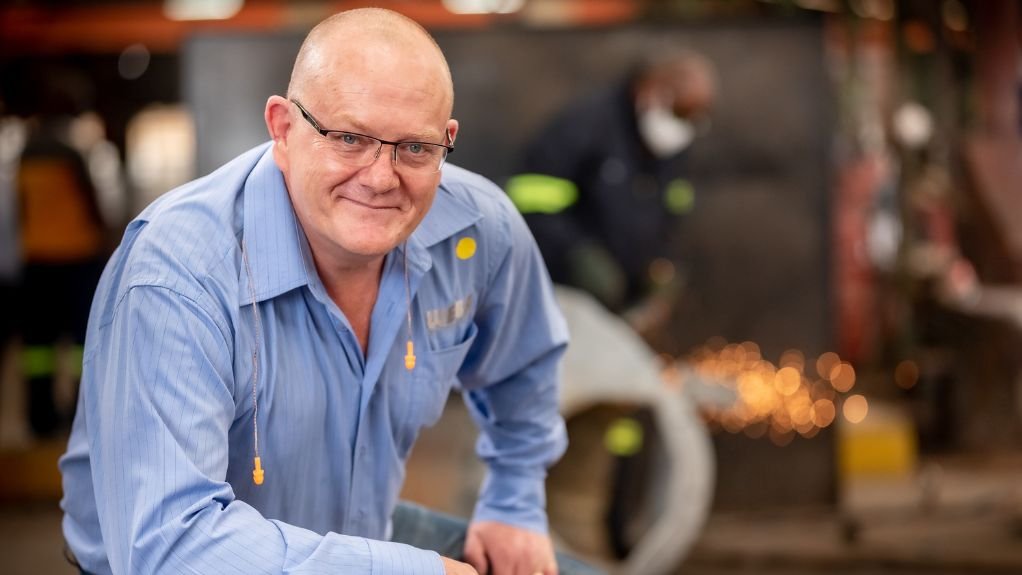
EDWARD CRUICKSHANK Weba Chute Systems Africa business development manager Edward Cruickshank
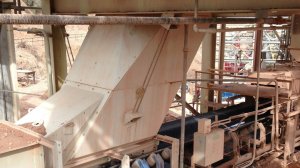



As mining operations in the Democratic Republic of Congo (DRC) scale up and push for higher throughputs, custom engineered chutes are starting to make a vital difference to transfer point efficiency.
The drive for production has meant that traditional chute designs are increasingly being found wanting, reports Weba Chute Systems Africa business development manager Edward Cruickshank.
Many mines in the region are handling material that is abrasive, fine and often sticky, he explains, adding that these properties can vary significantly, depending on moisture content and seasonal rainfall.
“This is a high rainfall region and that variability makes bulk materials handling particularly challenging.
“High tonnages, abrasive ore and fluctuating moisture content all accelerate wear and increase the risk of blockages. If a transfer point fails, the impact on downstream processes and production can be enormous,” notes Cruickshank.
It is precisely these conditions that are driving demand for engineered application-specific chute solutions. Mines are recognising that chutes cannot be treated as generic steel boxes, he says.
“Chutes are critical process flow components,” says Cruickshank, adding that if they are not designed properly to manage material flow, reduce impact velocities and control wear, they become a bottleneck and a maintenance headache.
Growing in the DRC
Weba Chute Systems has been steadily strengthening its presence in the DRC, designing and manufacturing chute solutions for some of the region’s most demanding copper and cobalt mining operations.
With multiple installations already operating successfully and new projects in the pipeline, the company sees the DRC as a strategic growth market.
Mines are focusing more sharply on uptime, safety and the long-term cost of ownership of their materials handling infrastructure, notes Cruickshank.
“Over the past few years, we have seen steady growth in our installed base, driven by both brownfield expansions and new copper and cobalt developments,” he says.
A current project at an openpit copper and cobalt mine in the DRC illustrates both the challenges and the value of Weba Chute Systems’ approach.
The company is designing and manufacturing a specialised ball mill feed chute – a seemingly modest component but one that plays a pivotal role in overall plant performance.
“Ball mill feed chutes are the interface between the conveying system and the grinding circuit, and their design has a direct influence on mill performance and liner life,” explains Cruickshank.
For this project, he says Weba Chute Systems is focusing on controlling the material trajectory, ensuring that the feed distribution into the mill is even and accommodates high throughput rates, while managing extreme wear conditions.
In highlighting the far-reaching consequences that he has witnessed from poorly designed feed chutes in mining operations, Cruickshank says that, for instance, if the feed is uneven or uncontrolled the result is increased liner wear, unstable mill operation and reduced milling efficiency.
“By engineering the chute specifically around the ore characteristics, operating parameters and spatial constraints of this plant, we help customers achieve more stable operation and better downstream efficiency,” says Cruickshank.
Each chute is engineered with the assistance of discrete element modelling to predict material flow and wear patterns before anything is built, he outlines, adding that this allows Weba Chute Systems to optimise the design and target wear areas properly.
Delivering its high level of performance in the DRC also requires Weba Chute Systems to pay close attention to reliability and maintainability, given the logistical and operational challenges of working in remote locations.
The company’s design philosophy is built around these realities, states Cruickshank.
“We combine advanced chute design methodologies with robust materials selection and a strong focus on maintenance accessibility,” he says, adding that this enables mines to reduce the frequency and complexity of interventions.
“Our approach is therefore about extending service life and making the inevitable maintenance work as straightforward and safe as possible.”
In parallel, Cruickshank says Weba Chute Systems works closely with partners in the region to ensure that mines are supported by a strong local presence – a collaborative approach that provides customers with on-the-ground technical backup, inspection support and maintenance capability, which is critical in remote and logistically complex operating environments like the DRC.
Article Enquiry
Email Article
Save Article
Feedback
To advertise email advertising@creamermedia.co.za or click here


Latest Multimedia

Latest News

Showroom

For over 15 years, Lilak Aluminium, a trusted leader in architectural extrusion supply, has delivered excellence to businesses like yours.
VISIT SHOWROOM
Virtual Gas Network supplies compressed natural gas via a virtual gas distribution network.
VISIT SHOWROOM


Press Office
Announcements
What's On
Subscribe to improve your user experience...
Option 1 (equivalent of R125 a month):
Receive a weekly copy of Creamer Media's Engineering News & Mining Weekly magazine
(print copy for those in South Africa and e-magazine for those outside of South Africa)
Receive daily email newsletters
Access to full search results
Access archive of magazine back copies
Access to Projects in Progress
Access to ONE Research Report of your choice in PDF format
Option 2 (equivalent of R375 a month):
All benefits from Option 1
PLUS
Access to Creamer Media's Research Channel Africa for ALL Research Reports, in PDF format, on various industrial and mining sectors
including Electricity; Water; Energy Transition; Hydrogen; Roads, Rail and Ports; Coal; Gold; Platinum; Battery Metals; etc.
Already a subscriber?
Forgotten your password?
Receive weekly copy of Creamer Media's Engineering News & Mining Weekly magazine (print copy for those in South Africa and e-magazine for those outside of South Africa)
➕
Recieve daily email newsletters
➕
Access to full search results
➕
Access archive of magazine back copies
➕
Access to Projects in Progress
➕
Access to ONE Research Report of your choice in PDF format
RESEARCH CHANNEL AFRICA
R4500 (equivalent of R375 a month)
SUBSCRIBEAll benefits from Option 1
➕
Access to Creamer Media's Research Channel Africa for ALL Research Reports on various industrial and mining sectors, in PDF format, including on:
Electricity
➕
Water
➕
Energy Transition
➕
Hydrogen
➕
Roads, Rail and Ports
➕
Coal
➕
Gold
➕
Platinum
➕
Battery Metals
➕
etc.
Receive all benefits from Option 1 or Option 2 delivered to numerous people at your company
➕
Multiple User names and Passwords for simultaneous log-ins
➕
Intranet integration access to all in your organisation