Early indications show promising, larger wine grape season

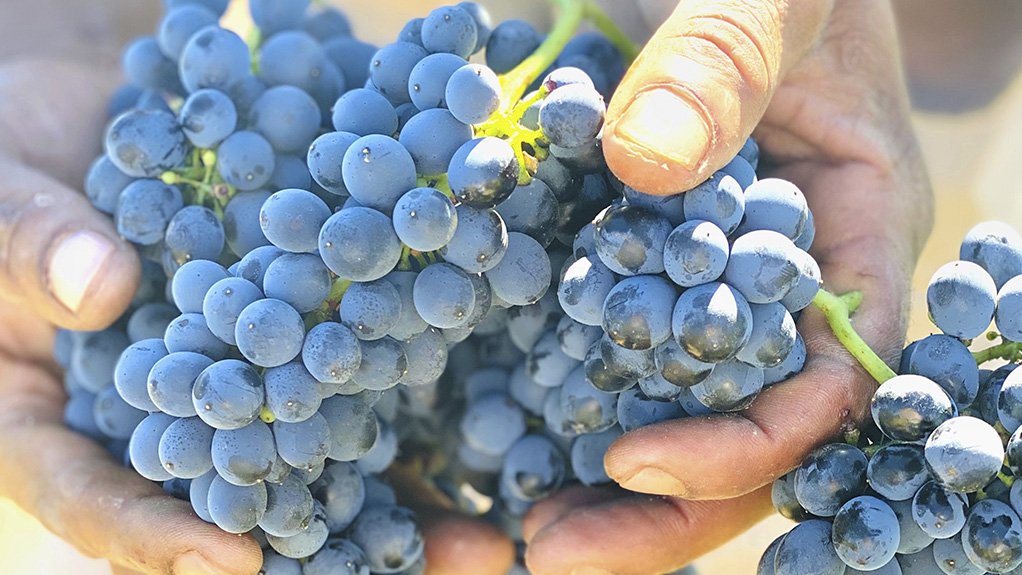


With the 2026 wine grape harvest approaching, all eyes remain on late-season conditions and fruit development, but industry body South Africa Wine says South Africa’s vineyards appear well-positioned to deliver another stable, quality-driven crop.
“South Africa’s wine industry enters the 2026 harvest season with renewed confidence, as the first official crop estimate from private and producer-cellar growers points to another stable and promising year,” the organisation says.
For the second consecutive season, producers have been spared major weather disruptions such as flooding and frost, allowing vineyards to maintain the positive trajectory established this year.
The initial forecast suggests a slightly bigger harvest for 2026, compared with this year.
Notably, this improvement comes despite the ongoing shrinkage and ageing of the national vineyard surface area, which is currently at 86 544 ha.
The trend reinforces a long-term structural shift: the removal of unproductive vineyards and their replacement with fit-for-purpose plantings designed for improved performance.
Industry body Vinpro consultation services manager Dr Etienne Terblanche says the favourable outlook is based on stable weather patterns that enable vines to maintain their phenological rhythm.
“The vineyards benefited from moderate temperatures during the crucial bunch initiation period in 2025, followed by minimal disease pressure and healthy and active canopy conditions after harvest.”
He adds that winter rainfall was close to long-term averages and chill accumulation improved significantly, especially in regions where cold units are often limiting. Together, these conditions created a solid foundation for the uniform budding and good fertility that Vinpro is seeing this season.
Warmer and drier conditions in spring advanced budding by about ten days compared to the previous year.
Terblanche says budding was reported as exceptionally uniform across most regions, aided by higher soil temperatures and sufficient chill during winter. While isolated late frost damage was recorded in some mountainous areas, the majority of South Africa’s vineyards remained unaffected.
Growth conditions throughout the season have indeed been largely favourable.
Warm, dry weather supported healthy vegetative growth and facilitated flowering, fertilisation and set across many cultivars.
Viticulturists expect improved bunch numbers in cultivars such as Chenin Blanc.
Simultaneously, some late-ripening red varieties, including Cabernet Sauvignon and Ruby Cabernet, may experience looser set owing to windy, warm conditions during their critical periods.
The primary constraint at this stage appears to be water availability, particularly in dryland regions such as the Swartland and Cape Town where summer rainfall has been minimal.
Terblanche says producers drawing solely from mountain catchment runoff have also reported lower irrigation stocks than last year. Still, many irrigation schemes and storage dams remain well-supplied and continue to operate according to plan.
He emphasises that the coming months will be decisive for the season.
“The fertility is clearly visible in the vineyards, but the extent of the final crop size will depend heavily on water resource availability. Conditions vary significantly between regions, so producers will need to use all available tools to monitor water status and manage ripening closely. If the current trend holds, we can expect a harvest similar to or slightly larger than the previous season,” he explains.
South Africa Wine CEO Rico Basson emphasises the importance of a good, quality crop across all ten wine regions, noting that such consistency is vital for strengthening the industry’s long-term competitiveness.
“With the national wine stock-to-sales ratio in equilibrium, the sector is better positioned to respond to market opportunities. Continued focused reinvestment in both vineyards and wineries is crucial for securing future supply and sustaining the positive momentum gained through consecutive stable seasons.”
Basson adds that the industry remains firmly committed to driving value growth rather than relying solely on volume.
South Africa Wine is of the view that strengthening price points, improving market positioning and expanding revenue streams, including the growing wine tourism sector, are all key to building financial resilience across the wine value chain.
Together, these efforts support a more sustainable and competitive future for South Africa’s wine industry.
Article Enquiry
Email Article
Save Article
Feedback
To advertise email advertising@creamermedia.co.za or click here
Research Reports


Projects
Latest Multimedia

Latest News


Showroom
Supplier & Distributor of the Widest Range of Accurate & Easy-to-Use Alcohol Breathalysers
VISIT SHOWROOM
For over 60 years, VEGA has provided industry-leading products for the measurement of level, density, weight and pressure. As the inventor of the...
VISIT SHOWROOM



Press Office
Announcements
What's On
Subscribe to improve your user experience...
Option 1 (equivalent of R125 a month):
Receive a weekly copy of Creamer Media's Engineering News & Mining Weekly magazine
(print copy for those in South Africa and e-magazine for those outside of South Africa)
Receive daily email newsletters
Access to full search results
Access archive of magazine back copies
Access to Projects in Progress
Access to ONE Research Report of your choice in PDF format
Option 2 (equivalent of R375 a month):
All benefits from Option 1
PLUS
Access to Creamer Media's Research Channel Africa for ALL Research Reports, in PDF format, on various industrial and mining sectors
including Electricity; Water; Energy Transition; Hydrogen; Roads, Rail and Ports; Coal; Gold; Platinum; Battery Metals; etc.
Already a subscriber?
Forgotten your password?
Receive weekly copy of Creamer Media's Engineering News & Mining Weekly magazine (print copy for those in South Africa and e-magazine for those outside of South Africa)
➕
Recieve daily email newsletters
➕
Access to full search results
➕
Access archive of magazine back copies
➕
Access to Projects in Progress
➕
Access to ONE Research Report of your choice in PDF format
RESEARCH CHANNEL AFRICA
R4500 (equivalent of R375 a month)
SUBSCRIBEAll benefits from Option 1
➕
Access to Creamer Media's Research Channel Africa for ALL Research Reports on various industrial and mining sectors, in PDF format, including on:
Electricity
➕
Water
➕
Energy Transition
➕
Hydrogen
➕
Roads, Rail and Ports
➕
Coal
➕
Gold
➕
Platinum
➕
Battery Metals
➕
etc.
Receive all benefits from Option 1 or Option 2 delivered to numerous people at your company
➕
Multiple User names and Passwords for simultaneous log-ins
➕
Intranet integration access to all in your organisation