Governance failures turning waste tyre depots into public health, environmental hazards – Redisa

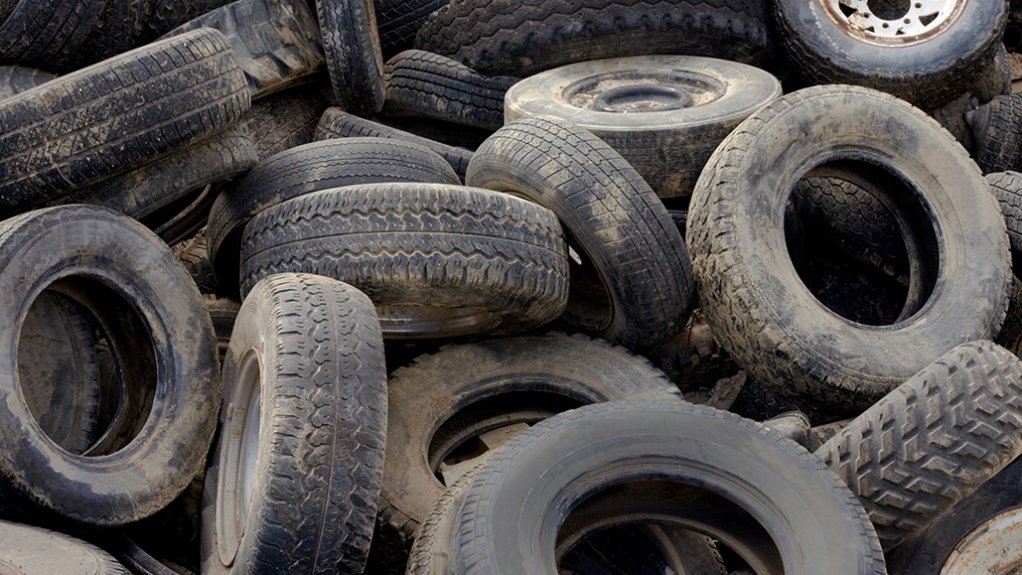


The Rustenburg Waste Tyre Depot, visited by Forestry, Fisheries and the Environment Deputy Minister Bernice Swarts, is not representative of the dire state of depots across the country, says tyre recycling initiative Recycling and Economic Development Initiative of South Africa (Redisa).
It suggests that the Deputy Minister should rather have visited the site of the Biesiesvlei depot in Lichtenburg, which is also in the North West. In 2023, the depot went up in flames and caused significant environmental damage.
Despite the dire warning of Lichtenburg, the North West and all other provinces remain threatened by dangerously overburdened depots. Burning tyres causes severe air pollution, says Redisa director Stacey Jansen.
Further, the depots are so full that, recently, the Department of Forestry, Fisheries and the Environment (DFFE) put out tenders for another 32 waste tyre depots, totalling one-million square metres.
The latest DFFE Annual Report also shows it underspent on the transport budget because it does not have storage space for the tyres, Redisa executive committee member Dr Chris Corzier.
The DFFE has also recently gone to tender to auction off some R100-million worth of equipment that was intended to be used for pre-processing tyres and intended to generate revenue for the Waste Bureau, but which is not being used.
This is a blunt admission of failure, as the DFFE cannot deal with the tyres, and has spent tens of million on equipment that they cannot put to use.
“Government is busy with waste tyre storage, not tyre recycling,” he says.
South Africa produces 70 000 waste tyres a day, and reports received by Redisa indicate that depots are not following all needed safety protocols and that trucks are being turned away from overfull depots, which is leading to illegal dumping next to roads and in riverbeds.
While the government continues to collect a producer-paid levy intended exclusively for waste tyres, more than half of these funds are diverted to purposes other than waste tyres, indicating governance failure, he adds. The lack of a responsible waste tyre collection and recycling programme has led to toxic pollution, as illegal burning releases carcinogens linked to cancer and birth defects, while toxins leach into essential groundwater.
Further, the most affected neighbourhoods are informal settlements and urban fringes, where desperate residents also burn tyres for warmth that produce toxic fumes.
From 2013 to 2017, Redisa, which is a nonprofit company, managed waste tyres in South Africa and built 22 tyre collection centres, employed more than 3 000 people and created 226 small waste enterprises.
The government under former President Jacob Zuma moved waste tyre management to the Waste Management Bureau, from where the department could hand out contracts.
The reality on the ground is one of economic exclusion. The Waste Management Bureau fails to employ small business entrepreneurs and micro-collectors, who were once the backbone of a functional system.
The Deputy Minister should visit the streets and open fields around Soweto where the waste tyres are dumped and burned. Then she could talk to former waste collectors who are waiting on jobs to collect the tyres and take them to the depots, which remains the broken link, says former waste tyre collector Agnes Mbokwana.
The situation is also a missed economic opportunity for the country. Research has shown that a functional waste plan for just 13 waste streams could raise GDP growth by 1.5 percentage points, Redisa notes.
Article Enquiry
Email Article
Save Article
Feedback
To advertise email advertising@creamermedia.co.za or click here

Latest Multimedia
Showroom

Sulzer South Africa, established in 1922, partners with critical industries like power, oil & gas, water, mining, and chemicals to boost...
VISIT SHOWROOM
EIMS is an independent specialised environmental consulting firm offering the full spectrum of environmental management services across all sectors...
VISIT SHOWROOM
Press Office
Announcements
What's On
Subscribe to improve your user experience...
Option 1 (equivalent of R125 a month):
Receive a weekly copy of Creamer Media's Engineering News & Mining Weekly magazine
(print copy for those in South Africa and e-magazine for those outside of South Africa)
Receive daily email newsletters
Access to full search results
Access archive of magazine back copies
Access to Projects in Progress
Access to ONE Research Report of your choice in PDF format
Option 2 (equivalent of R375 a month):
All benefits from Option 1
PLUS
Access to Creamer Media's Research Channel Africa for ALL Research Reports, in PDF format, on various industrial and mining sectors
including Electricity; Water; Energy Transition; Hydrogen; Roads, Rail and Ports; Coal; Gold; Platinum; Battery Metals; etc.
Already a subscriber?
Forgotten your password?
Receive weekly copy of Creamer Media's Engineering News & Mining Weekly magazine (print copy for those in South Africa and e-magazine for those outside of South Africa)
➕
Recieve daily email newsletters
➕
Access to full search results
➕
Access archive of magazine back copies
➕
Access to Projects in Progress
➕
Access to ONE Research Report of your choice in PDF format
RESEARCH CHANNEL AFRICA
R4500 (equivalent of R375 a month)
SUBSCRIBEAll benefits from Option 1
➕
Access to Creamer Media's Research Channel Africa for ALL Research Reports on various industrial and mining sectors, in PDF format, including on:
Electricity
➕
Water
➕
Energy Transition
➕
Hydrogen
➕
Roads, Rail and Ports
➕
Coal
➕
Gold
➕
Platinum
➕
Battery Metals
➕
etc.
Receive all benefits from Option 1 or Option 2 delivered to numerous people at your company
➕
Multiple User names and Passwords for simultaneous log-ins
➕
Intranet integration access to all in your organisation