Indaba to focus on how Agentic AI could transform and disrupt mining

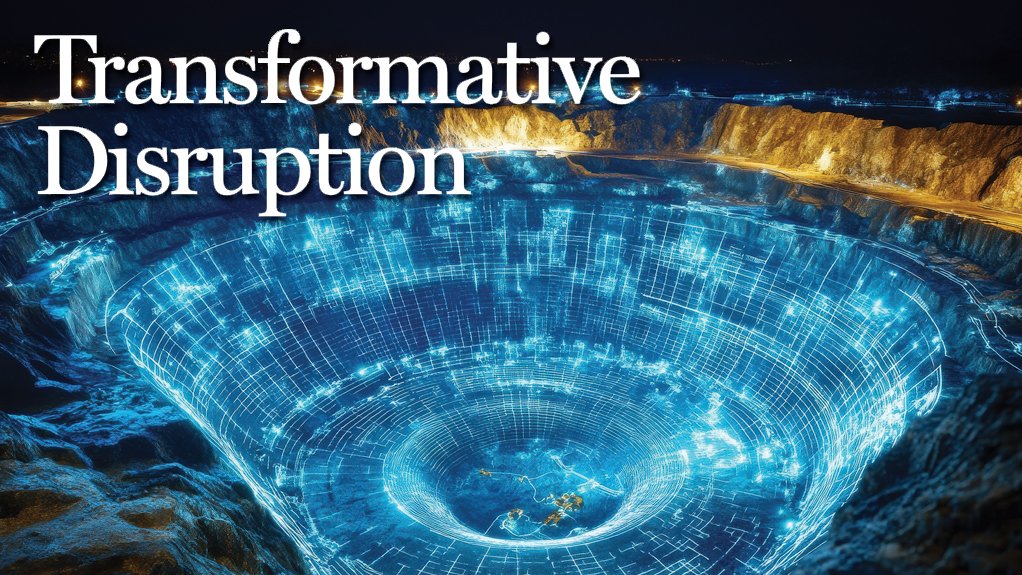


The focus of this year’s Investing in African Mining Indaba on disruptive technology reflects a growing acceptance that mining will not remain competitive using historic operating models alone, states Boston Consulting Group’s (BCG’s) Johannesburg branch MD Tycho Möncks.
Mining Indaba organiser Hyve Group has described AI as the mining industry’s “next strategic battleground”, and a key focus of the 2026 Indaba is to foster a conversation that “moves beyond hype [and speculation] to hard realities as leaders dissect the rise ofAgentic AI”.
Agentic AI, according to BCG, refers to autonomous systems that can “plan, act and learn on their own”, mimicking human decision-making to complete tasks, and requiring limited human intervention once operational.
For decades, mining has been shaped by incremental gains and a cautious approach to digital adoption; however, Agentic AI represents “something different” – true, transformative disruption that will “define the next era of mining”, Hyve Group points out.
“Costs are rising, orebodies are getting more complex and the expectations on safety, emissions and water use are increasing. The industry now needs technologies that help mines become more adaptive, more integrated and more predictive. Agentic AI can play a key role in that shift,” says Möncks.
The Indaba – to be held at the Cape Town International Convention Centre from February 9 to 12 – will help to shape Africa’s mining environment in the near term. It now also offers a means of “debating and evaluating how the industry realises AI’s pragmatic value and reimagines the baseline for mining”, adds Möncks.
He says this realisation has already started in other parts of the world, with BCG’s ‘Build for the Future 2025’ study finding that only 30% of organisations have managed to generate value from AI. However, those that have done so have outperformed their peers by 10% to 20%, and with that gap expected to widen year-on-year.
“The promise of Agentic AI is not flashy innovation; it is a more stable and resilient mine. The challenge now is how leaders design the data, processes and governance required to deploy them responsibly,” Möncks elaborates.
The Environment & AI
The question of responsible deployment encompasses environmental-impact and socioeconomic concerns. A key consideration of the former is that, despite the often incorporeal nature of AI outputs, the physical infrastructure requires significant land, water, energy, human and material resources to operate.
The July 2024 report of the UN Environment Programme, titled ‘Navigating New Horizons – A Global Foresight Report on Planetary Health and Human Wellbeing’ notes that most large-scale AI deployments are housed in data centres, which require vast amounts of raw materials and, consequently, produce electronic waste that often contains hazardous substances.
“Data centres use water during construction and, once operational, to cool electrical components. Globally, AI-related infrastructure may soon consume six times more water than Denmark, a country of six-million, according to one estimate. That is a problem when a quarter of humanity already lacks access to clean water and sanitation,” the report states.
It further notes that data centres that host AI need a lot of energy, citing the International Energy Agency’s estimate that, in Ireland, the rise of AI could see these centres accounting for up to 35% of the country’s energy in 2026.
This poses the question of whether mining – an industry that already has a considerable environmental impact – can justify increasing its environmental footprint.
“The question isn’t about whether it’s justified, because it’s inevitable. It is impossible to expect the mining sector to swear off AI when all other sectors globally are jumping onto the bandwagon. That being said, a few things should be considered by the mining sector when managing its environmental footprint,” states University of York sustainability lecturer Dr Felicia Liu.
“On the infrastructural side, data centres can differ a lot. Some are more resource intensive, depending on where they’re located. For instance, if [it is] . . . built within an urban hub with limited land, water and energy resources, then, inevitably, it’s going to strain the grid . . . [and] the water supply. It’s going to compete for land with other economic and social activities.”
Other considerations regarding the energy aspect include whether data centres use renewable-energy sources or hybrid systems; whether the location has sufficient energy security to support not only the 24-hour operation of a centre but also residents and/or organisations in the surrounding area; and whether they are energy efficient.
“The frustrating thing is that, as end-users of AI, we actually have limited visibility or transparency, let alone control in terms of the digital infrastructure that supports AI use. But perhaps industry as a whole, through a bit of coordination, can ensure that it achieves greater insight and understanding into the total environmental impact of the AI systems being used,” notes Liu.
Further, the types of activities and outcomes for which AI is deployed need to be considered.
“Is it to improve environmental oversight? Is it to reduce inefficiencies? Is it to avoid environmental harm? When we’re trying to think about this . . . we need to think about the infrastructure underpinning AI and what it is being used for.”
Möncks adds that AI can be justified environmentally because the compute load required at a mine site is “small, while the efficiency gains are significant”.
“When used well, AI reduces energy waste, water use and rehandling losses across circuits such as grinding, flotation, pumping and ventilation, leading to a smaller footprint per tonne. We have already seen 5% to 15% improvements in electricity use and overall process efficiency gains in the real world,” he elaborates.
Nevertheless, Liu notes that increased collaboration is needed if the world is to successfully navigate the dual demands of increased digitalisation and the decarbonisation of the economy.
“I think tech companies perhaps have a key role to play in terms of coordinating with their suppliers, which are, ultimately, mining companies, to hold them accountable in terms of the environmental and social impact.”
Further, much of the focus on sustainability is on various types of climate-neutral or net-zero standards for data centres, “but we rarely ever look at the entire supply chain”.
She adds that the tech sector has started conversations with renewable-energy companies to source clean energy, but for other parts of the supply chain – whether land acquisition, mining or e-waste management – “the supply chain is not necessarily talking to each other to ensure that environmental synergies are being maximised”.
Responding to the suggestion that data centres could be constructed at existing or decommissioned mine sites, Liu notes that the viability of such an endeavour has yet to be adequately explored but using “what is essentially a brownfield site” is not novel.
She cites Singapore as an example, where a lot of the old manufacturing sites have been repurposed for data centre use – they are not hyperscale data centres because they are constrained by the infrastructure of the old manufacturing sites and, consequently, tend to be co-location sites.
“Old mining sites may well be large enough to fit hybrid data centres, but brownfield sites are constrained by existing infrastructure availability, with the most important part being connectivity.”
Liu elaborates that many of the data centres in Singapore are built very close to Internet cable landing stations, which raises the question of connectivity availability when considering potential existing mining sites, as “that is essential for building uptime”.
Möncks comments that mining companies already act as anchor customers for power and water infrastructure, with their long-term offtake often underwriting renewable projects and transmission lines that would otherwise be unfinanceable.
This is evidenced by renewable-energy company G7 Renewables which, in December, told Engineering News & Mining Weekly that private- and mining-led transactions account for 56% of all utility-scale solar PV and 67% of all wind energy developments that have entered into construction in South Africa over the past five years.
“As AI use grows, miners should lean into their role as anchor customers, partnering with governments, utilities and tech companies so that data centre and AI demand help underwrite energy and water infrastructure that also serve households and other industries. In such a model, employing AI is not about diverting scarce resources, but about using digital demand to unlock cleaner, more reliable infrastructure for the broader economy,” he explains.
Agentic AI in Mining
AI has progressed from narrow, rules-based systems to predictive models, generative models and, now, Agentic AI.
“What distinguishes AI agents is their ability to observe what is happening across a mine, plan a sequence of actions and intelligently execute parts of a workflow with minimal intervention. This reframes AI from being just a tool to becoming more of a ‘colleague’,” says Möncks.
A mine could deploy an “operations co-pilot” that integrates fleet data, plant conditions, maintenance priorities and external factors, such as the weather, to propose and increasingly even directly carry out adjustments to drill, haul and processing routines to maximise throughput while keeping energy, water and emissions within predetermined limits.
However, clear risks remain and must be managed. Möncks adds, for example, that equipment wears unevenly, grades deviate from models and environmental conditions shift continuously.
“In that context, even a highly capable agent could inadvertently push haul roads beyond safe conditions or accelerate component failure. Therefore, deploying AI responsibly with credible guardrails, behaviours and assurance standards becomes critical for mines.”
When setting guardrails, BCG’s work shows that algorithm quality accounts only for about 10% of their success; roughly 20% is technology or architecture, and about 70% is people, governance and “ways of working”.
“One effective framing is to treat an AI system like a digital employee: it has a defined role, a supervisor, boundaries, escalation rules and performance expectations. Just as a mine would never place a new hire into a critical workflow without structured onboarding, checks and continuous oversight, an AI agent should be governed with the same discipline. As AI agents advance over time, they can gradually earn the trust to be given higher degrees of autonomy – but appropriate governance by humans will remain pivotal.”
He adds that the convergence of operational technology, IT, people and now AI means the cybersecurity risk surface is larger and, while the specific percentage of budget allocated to cybersecurity will vary by company, investment must grow in line with digital adoption.
“Leading operators now treat cybersecurity on par with physical security, with dedicated controls to protect AI models, restrict access and detect manipulation or jailbreak attempts.”
Although Agentic AI offers a genuine step-change opportunity for mining, “the true value does not come from algorithms . . . but from mining professionals equipped to work confidently with AI as a partner,” Möncks concludes.
Article Enquiry
Email Article
Save Article
Feedback
To advertise email advertising@creamermedia.co.za or click here
Research Reports

Projects
Latest Multimedia

Latest News

Showroom

ALBIS FLANGES — founded in 1965 — is a petro-chemical approved manufacturer of flanges and fittings in most grades of steel, listed with Sasol,...
VISIT SHOWROOM
M and J Mining are leading suppliers of physical support systems as used by the underground mining industry. Our selection of products are not...
VISIT SHOWROOM

Press Office
Announcements
What's On
Subscribe to improve your user experience...
Option 1 (equivalent of R125 a month):
Receive a weekly copy of Creamer Media's Engineering News & Mining Weekly magazine
(print copy for those in South Africa and e-magazine for those outside of South Africa)
Receive daily email newsletters
Access to full search results
Access archive of magazine back copies
Access to Projects in Progress
Access to ONE Research Report of your choice in PDF format
Option 2 (equivalent of R375 a month):
All benefits from Option 1
PLUS
Access to Creamer Media's Research Channel Africa for ALL Research Reports, in PDF format, on various industrial and mining sectors
including Electricity; Water; Energy Transition; Hydrogen; Roads, Rail and Ports; Coal; Gold; Platinum; Battery Metals; etc.
Already a subscriber?
Forgotten your password?
Receive weekly copy of Creamer Media's Engineering News & Mining Weekly magazine (print copy for those in South Africa and e-magazine for those outside of South Africa)
➕
Recieve daily email newsletters
➕
Access to full search results
➕
Access archive of magazine back copies
➕
Access to Projects in Progress
➕
Access to ONE Research Report of your choice in PDF format
RESEARCH CHANNEL AFRICA
R4500 (equivalent of R375 a month)
SUBSCRIBEAll benefits from Option 1
➕
Access to Creamer Media's Research Channel Africa for ALL Research Reports on various industrial and mining sectors, in PDF format, including on:
Electricity
➕
Water
➕
Energy Transition
➕
Hydrogen
➕
Roads, Rail and Ports
➕
Coal
➕
Gold
➕
Platinum
➕
Battery Metals
➕
etc.
Receive all benefits from Option 1 or Option 2 delivered to numerous people at your company
➕
Multiple User names and Passwords for simultaneous log-ins
➕
Intranet integration access to all in your organisation