Operation Vulindlela again lists Eskom’s restructuring as a reform area ‘facing significant challenges’

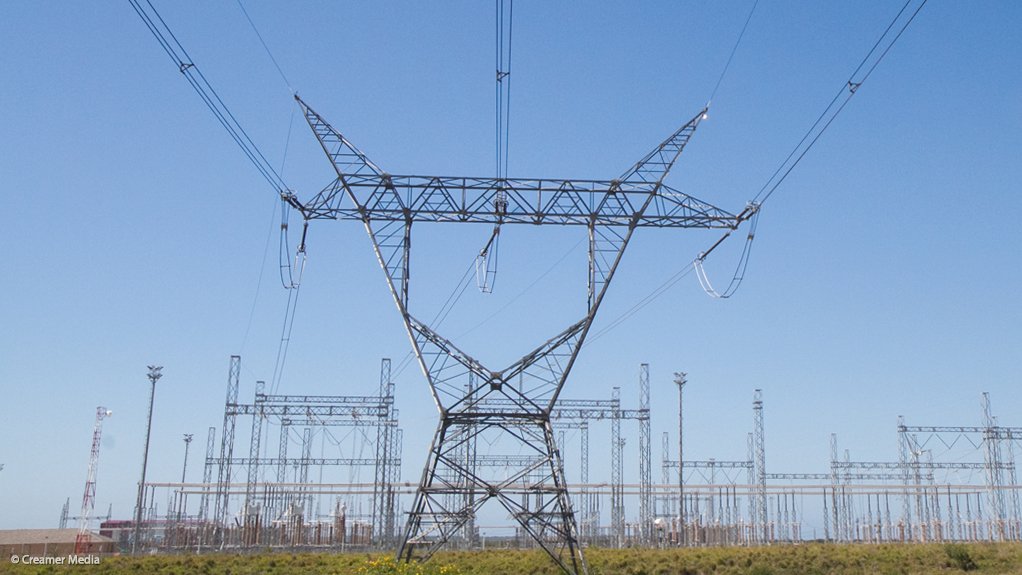


The latest update on progress being made in implementing the structural reforms that have been prioritised under Operation Vulindlela has again identified Eskom’s restructuring as a reform area “facing significant challenges” and where intervention is required.
Lagging restructuring progress at Eskom is one of only three reforms highlighted as facing difficulties, even though several others are listed as experiencing delays.
The other two reforms said to be facing significant challenges relate to the lack of progress in creating a sustainable electricity distribution industry, and a reform set up to clear the country's title-deeds backlog and to make the system more accessible and affordable.
Overall, however, the latest dashboard points to progress being made on 90% of the 30 reforms being overseen by Operation Vulindlela. These cover both the initial reform areas of electricity, logistics, water, and work and tourism visas, as well as the new areas of local government, spatial inequality, and digital transformation.
Speaking at the launch of the third quarter progress report in Sandton, the Presidency’s Rudi Dicks attributed the lack of progress being made in relation to Eskom’s restructuring to it being a complex intervention that required various interrelated reform components being implemented in sequence.
“So, the reforms in the electricity sector are likely to be pushed out slightly, because we have got to follow particular processes … but the commitment remains that we continue with the restructuring of the electricity sector and Eskom,” Dicks said.
He also underlined the importance government was assigning to competition as a way of helping to tackle the steep rise in electricity costs, which was threatening various industries and placing serious strain on households.
The latest update also lists the steps that would be taken to support the ongoing reforms of Eskom and the sector in the coming six months, including developing a detailed implementation plan by March for the establishment of the Transmission System Operator (TSO) and implementing measures to ensure functional independence of the National Transmission Company South Africa (NTCSA) during the transition period.
This remedial step has been listed following the publication of a revised unbundling plan by Eskom Holdings and the Department of Electricity and Energy.
The plan states that the NTCSA would be retained as an Eskom Holdings subsidiary and continue to own the transmission assets, while an independent TSO would be created outside of Eskom to be the system and market operator.
This model has been criticised as being suboptimal in relation to levelling the playing field for all generators and ensuring non-discriminatory access to the grid.
There are also concerns that the failure to fully separate the transmission assets by positioning then in the TSO could slow the delivery of the new grid infrastructure needed to connect new generators at a pace needed to match the decommissioning of aged coal units.
In an opinion article published in the Business Day, Eskom Holding CEO Dan Marokane indicated that Eskom’s separation had been designed in stages to maintain stability and facilitate an orderly transition.
“Eskom’s capital structure is complex, in particular the significant levels of debt across syndicated facilities, bilateral facilities and bonds incurred from a broad array of creditors.
“Ensuring no breach is triggered on Eskom’s financings or at the Treasury through the government guarantees provided under the Guarantee Framework Agreement, has always been a core consideration in Eskom’s separation process,” Marokane wrote.
He added that a separation scenario involving the immediate and full legal separation of transmission assets would require major financial intervention from the ultimate shareholder, the South African government, “for a likely scenario of cross default to honour existing lender commitments based on an analysis by our transaction advisers”.
“This estimate is based on about R400-billion in debt settlement that would become due, and for the asset transfer outside of Eskom Holdings of about R100-billion being required to purchase the shares in the NTCSA,” Marokane outlined.
He argued further that the practice of separating “who owns the grid” from “who controls and operates the grid” was not novel, and in compliance with South Africa’s Electricity Regulation Amendment Act.
Besides the Eskom restructuring matter, the Operation Vulindela update indicated that the following actions would be taken over the coming six months to support ongoing electricity sector reforms, including:
- Publishing detailed guidance on the structure of the competitive wholesale electricity market, also by March 2026;
- Submitting, in February, the Market Code to the National Energy Regulator of South Africa (Nersa) for approval in order to establish the South African Wholesale Electricity Market;
- Finalising, by April, the Electricity Trading Rules following submission of public comments;
- Publish the Electricity Distribution Industry Reform Roadmap building on the Distribution Agency Agreement model by June 2026; and
- Operationalising by September the credit guarantee vehicle and issuing the final Request for Proposals for the first phase of independent transmission projects.
The report also stressed the reform progress made in the previous quarter, including the regulatory approvals and institutional developments that advance the transition to a competitive electricity market.
“Nersa approved the Market Operator licence for the NTCSA, published electricity trading rules for public comment, and approved grid capacity allocation rules to ensure fair and non-discriminatory access to constrained network infrastructure.
Additional renewable energy capacity reached commercial operation, further projects were secured under the renewable energy procurement programme, and steps were taken to enable private sector participation in transmission infrastructure.”
Article Enquiry
Email Article
Save Article
Feedback
To advertise email advertising@creamermedia.co.za or click here
Research Reports

Projects
Latest Multimedia
Latest News

Showroom
ALBIS FLANGES — founded in 1965 — is a petro-chemical approved manufacturer of flanges and fittings in most grades of steel, listed with Sasol,...
VISIT SHOWROOM
M and J Mining are leading suppliers of physical support systems as used by the underground mining industry. Our selection of products are not...
VISIT SHOWROOM
Press Office
Announcements
What's On
Subscribe to improve your user experience...
Option 1 (equivalent of R125 a month):
Receive a weekly copy of Creamer Media's Engineering News & Mining Weekly magazine
(print copy for those in South Africa and e-magazine for those outside of South Africa)
Receive daily email newsletters
Access to full search results
Access archive of magazine back copies
Access to Projects in Progress
Access to ONE Research Report of your choice in PDF format
Option 2 (equivalent of R375 a month):
All benefits from Option 1
PLUS
Access to Creamer Media's Research Channel Africa for ALL Research Reports, in PDF format, on various industrial and mining sectors
including Electricity; Water; Energy Transition; Hydrogen; Roads, Rail and Ports; Coal; Gold; Platinum; Battery Metals; etc.
Already a subscriber?
Forgotten your password?
Receive weekly copy of Creamer Media's Engineering News & Mining Weekly magazine (print copy for those in South Africa and e-magazine for those outside of South Africa)
➕
Recieve daily email newsletters
➕
Access to full search results
➕
Access archive of magazine back copies
➕
Access to Projects in Progress
➕
Access to ONE Research Report of your choice in PDF format
RESEARCH CHANNEL AFRICA
R4500 (equivalent of R375 a month)
SUBSCRIBEAll benefits from Option 1
➕
Access to Creamer Media's Research Channel Africa for ALL Research Reports on various industrial and mining sectors, in PDF format, including on:
Electricity
➕
Water
➕
Energy Transition
➕
Hydrogen
➕
Roads, Rail and Ports
➕
Coal
➕
Gold
➕
Platinum
➕
Battery Metals
➕
etc.
Receive all benefits from Option 1 or Option 2 delivered to numerous people at your company
➕
Multiple User names and Passwords for simultaneous log-ins
➕
Intranet integration access to all in your organisation