OPINION | Joburg’s walkability crisis: why it matters and how we can fix it

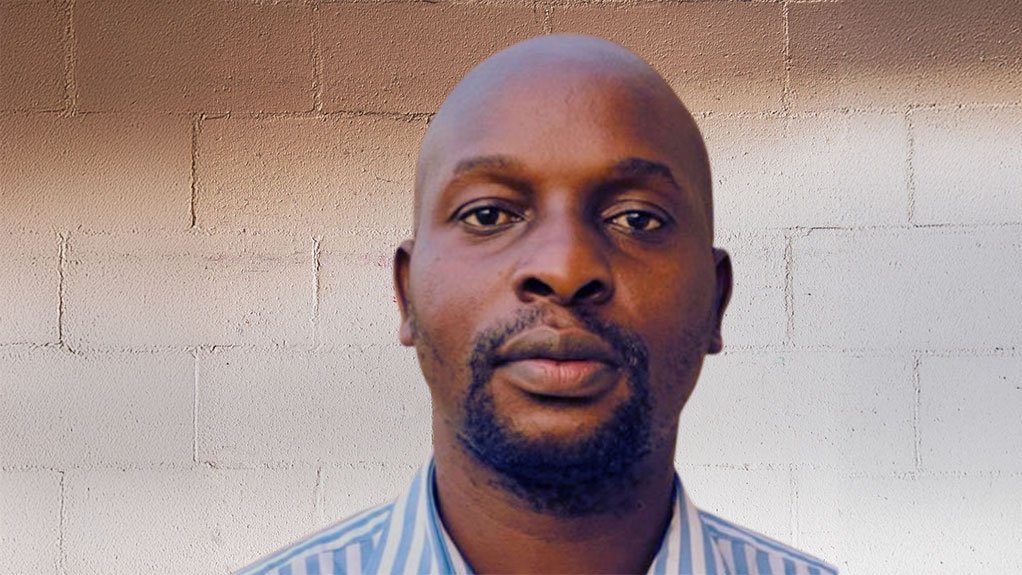



By Themba Mangane, Traffic and Transport Engineer at Atana
Johannesburg ranks last out of 90 global cities for walkability in 2025, according to a Compare the Market study, with an overall score of 18/100. Our safety score is the lowest in the dataset; only 8% of residents live within 1 kilometre of a car-free space, and just 13% live within walking distance of healthcare or education amenities. These scores aren’t just trivia, they describe a city where life without a car is hard and often unsafe.
Engineering our roads with people as a priority
Walkability isn’t a luxury reserved for postcard cities; it’s part of how a city shares opportunity. When walking is safe and convenient, congestion is reduced, air quality improves, household transport costs drop, small businesses prosper, and – most importantly – fewer people are injured or killed on our roads.
You can experience this in places that get it right: continuous pavements, safe crossings, good lighting, and essential services within reach. Johannesburg can feel like that too, if we can fix the basics with urgency.
For decades, Joburg’s street hierarchy has been upside-down: transport networks have been designed for cars and trucks first, squeeze in public transport next, and leave cyclists and pedestrians on the margins. The result is three or four-lane crossings that feel hostile on foot, kerbs that invite fast turns, and narrow, discontinuous walkways where two people can’t comfortably pass (never mind a parent with a pram or a wheelchair user).
Design culture isn’t the only barrier; funding and governance also entrench a car-first approach. Grants are typically allocated to increasing vehicle capacity rather than building non-motorised transport (NMT). Traffic signals and NMT are not prioritised for reliability and maintenance. And because responsibilities sit across separate departments, coordination is weak and even straightforward interventions progress slowly.
Maintenance alongside masterplans
Broken pavements, faded crossings, and poor lighting aren’t cosmetic issues; they’re safety hazards. Before policing can move the needle, engineering risks must be removed. In Joburg, signals go dark too often, sometimes after crashes, previously due to load-shedding, and currently due to maintenance neglect, which creates chaos for people on foot.
By prioritising a few key maintenance issues, it will make intersections safer and more pedestrian friendly. First, power high-risk signals through solar and mandate joint delivery between roads and electricity, so power outages no longer turn crossings into hazards.
Second, require every new development to build and connect non-motorised transport links - and enforce those commitments after approval so they don’t get value-engineered away. And, thirdly, publish pedestrian metrics that matter; injuries and fatalities, kilometres of compliant sidewalks, and signal uptime, so that residents can see progress and there is more accountability.
Start where routes already exist
Walkability is realistic, even in a city shaped by distance. If we start where short, daily trips are clustered, we can create safe routes around schools, clinics, universities and major transport nodes. Mapping 400 to 800 metre walking catchments and upgrading them with the basics (such as continuous pavements with Universal Access (UA), high-visibility crossings, and reliable lighting) will deliver quick and impactful safety improvements.
In Johannesburg, stitching together the Braamfontein-Parktown-Milpark-CBD spine, for example, with continuous, well-lit pavements and marked pedestrian crossings would make a major impact. Give each corridor a single accountable delivery team across roads, electricity and urban management, and report simple metrics, so progress is visible and can be scaled to the next precincts. That’s transit-oriented development in practice: mixed-use, high-density precincts that reduce car dependence now, not in a decade.
A different headline in 2026
Johannesburg’s last-place ranking should be a turning point rather than a label we learn to live with. The remedies are not complicated or prohibitively expensive, and there are practical steps we can take now to put people first.
This means ensuring traffic signals are dependable at the most dangerous junctions, redesigning intersections so turning speeds are lower and crossings are shorter, and repairing pavements so they are continuous, level and accessible. It also means lighting the most-used routes and linking key precincts so that everyday trips can be made safely on foot.
Just as important is transparency. The city should publish simple measures of progress so residents can see what is being delivered and hold leaders to account. Walkability isn’t a “nice-to-have” – it’s how we build a city where opportunity is within reach, even without a car.
Article Enquiry
Email Article
Save Article
Feedback
To advertise email advertising@creamermedia.co.za or click here

Projects
Latest Multimedia
Latest News
Showroom
Iritron delivers advanced automation, control, and optimisation solutions to the Mining, Minerals & Metals, Consumer Package Goods and...
VISIT SHOWROOM
ROSOND provides fast, efficient, safe, and cost-effective drilling and grouting services to mining and exploration industries throughout Africa.
VISIT SHOWROOM


Announcements
What's On
Subscribe to improve your user experience...
Option 1 (equivalent of R125 a month):
Receive a weekly copy of Creamer Media's Engineering News & Mining Weekly magazine
(print copy for those in South Africa and e-magazine for those outside of South Africa)
Receive daily email newsletters
Access to full search results
Access archive of magazine back copies
Access to Projects in Progress
Access to ONE Research Report of your choice in PDF format
Option 2 (equivalent of R375 a month):
All benefits from Option 1
PLUS
Access to Creamer Media's Research Channel Africa for ALL Research Reports, in PDF format, on various industrial and mining sectors
including Electricity; Water; Energy Transition; Hydrogen; Roads, Rail and Ports; Coal; Gold; Platinum; Battery Metals; etc.
Already a subscriber?
Forgotten your password?
Receive weekly copy of Creamer Media's Engineering News & Mining Weekly magazine (print copy for those in South Africa and e-magazine for those outside of South Africa)
➕
Recieve daily email newsletters
➕
Access to full search results
➕
Access archive of magazine back copies
➕
Access to Projects in Progress
➕
Access to ONE Research Report of your choice in PDF format
RESEARCH CHANNEL AFRICA
R4500 (equivalent of R375 a month)
SUBSCRIBEAll benefits from Option 1
➕
Access to Creamer Media's Research Channel Africa for ALL Research Reports on various industrial and mining sectors, in PDF format, including on:
Electricity
➕
Water
➕
Energy Transition
➕
Hydrogen
➕
Roads, Rail and Ports
➕
Coal
➕
Gold
➕
Platinum
➕
Battery Metals
➕
etc.
Receive all benefits from Option 1 or Option 2 delivered to numerous people at your company
➕
Multiple User names and Passwords for simultaneous log-ins
➕
Intranet integration access to all in your organisation