Opinion: Why so many public infrastructure projects go over time and budget

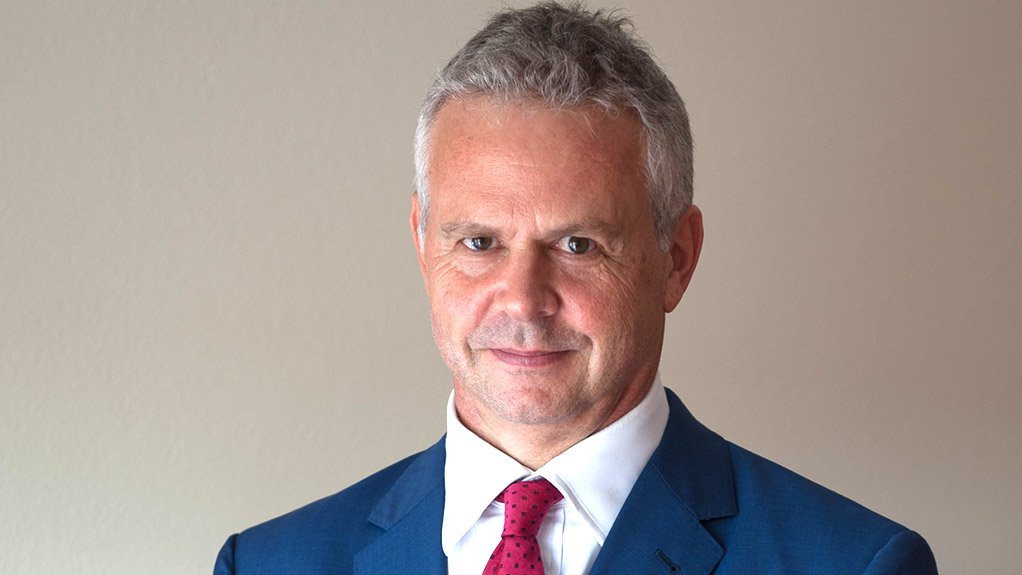


This opinion article, written by Department of Water and Sanitation director-general Dr Sean Phillips in his personal capacity, outlines the many causes for public projects being delayed or running over budget. Phillips argues that this is not only the result of poor planning and execution and suggests that there is a need for society to gain a better understanding of the nature of construction projects.
I typed the question “What percentage of large construction projects globally go over time and over budget?” into Google AI. It searched all the available relevant research papers and reports on the internet and gave me the following answer: “A vast majority of large construction projects globally go over time and budget, with studies showing 90% experiencing cost overruns or delays, often significantly, with average cost overruns of 28% to 79% and delays of 50% or more, highlighting that finishing on time and budget is extremely rare.”
Clearly, the problem of public infrastructure projects going over time and budget is not unique to South Africa. The causes all over the world lie in the nature of the construction process. A large construction project is a process involving many interrelated construction activities implemented by different specialist contractors, suppliers and service providers. Scheduling and co-ordination of these activities can be extraordinarily complex, and a delay in one activity can have a knock-on effect on others.
There are many unforeseeable and unpredictable risks in construction, including unusually heavy rain, labour strikes, community disruption, undetected underground rock and nonperformance by subcontractors or suppliers, to name a few. Some of these risks can be mitigated through risk management measures. For example, the risk of community disruption can be mitigated — but not ruled out altogether — by engagement and consultation with the community from the initial stages of the project. Other risks, such as the weather, are uncontrollable.
When project managers and engineers say how long a project is going to take and how much it will cost, they have to make assumptions about the risks, and their time and cost projections can only ever be estimates. Even with the best possible planning and project management, the risks can result in projects going over the estimated time and budget.
“Scope creep” — when decisions are made to change the scope of a project after the implementation contracts have been awarded — is also a frequent cause of time and cost overruns. Decision-makers often do not appreciate the impact of such changes in scope on the time frame and cost of the project.
Even with the best possible planning and project management, the risks can result in projects going over the estimated time and budget. In addition, sometimes projected costs are in constant prices, and do not include the effect of inflation, which can result in considerable increases in actual final project costs.
Project managers and planners are often put under intense pressure to set ambitious and optimistic, as opposed to realistic, timeframes and budgets. Projects often need to be implemented as quickly as possible to meet urgent social or economic needs.
In addition, decisions to proceed with projects are sometimes made late, and the project’s managers are then expected to make up for lost time through accelerated project implementation processes.
Overruns amid uncontrollable risks
However, pressure to accelerate implementation can have the unintended consequence of actually increasing the likelihood of projects going over time and over budget. For example, intense pressure to reduce timeframes can result in project managers cutting corners and not doing things properly, which in turn can result in things needing to be redone or in quality problems, adding to timeframes and costs.
Broader society can add to this pressure, including the media, civil society and political leaders. Community leaders sometimes make statements like: “They told us the project would be finished by now, but it’s not. Now they have a new completion date — they keep lying to us about when the project is going to be completed.” These sentiments are often amplified in the media.
The media and others can also sensationalise the fact that a project is over time or over budget, with dramatic headlines that a project is a year past its planned completion date, or 25% over budget, and calls for heads to roll. However, in the context of the answer provided by Google AI above, if a four-year project is completed a year late or is 25% over budget, the project has actually performed well by international standards.
Construction mafia
When projects go over time or budget, auditors often make findings of poor performance and “weaknesses in project management”, even if the delays are caused by uncontrollable risks.
Due to the prevalence of the “construction mafia” in South Africa, and its associated culture of violence and intimidation, project managers put their lives at risk when they conduct site visits or attend site meetings. In one instance, several project managers of the department of water & sanitation were forcefully detained by disgruntled subcontractors.
In another instance, a member of a delegation of a local “business forum” attended a site meeting armed with an automatic weapon. Some of our project managers have asked the department to provide them with guns so that they can defend themselves when they go to site.
All this pressure adds to the stress of overloaded project managers and can make them ill, demoralised or demotivated. It is difficult to attract and retain good project managers to work in this environment. Managing complex construction projects is an incredibly stressful job on its own, even without these kinds of social and political pressure.
None of the above provides any excuses for poor planning, poor infrastructure procurement, poor contract management or poor project management. Where projects have been poorly managed, there must be accountability. Rather, it indicates that there is a need for society in general to have a better understanding of the nature of construction projects, and to understand time and cost overruns in this context.
This article was originally appeared in Business Day.
Article Enquiry
Email Article
Save Article
Feedback
To advertise email advertising@creamermedia.co.za or click here


Projects
Latest News

Showroom
Axiom Hydraulics is a trusted leader in South Africa’s hydraulic industry, delivering world-class components, systems, and engineering expertise...
VISIT SHOWROOM
ATI systems comprises five divisions: electrical assemblies, drives and controls, feedback sensors, enclosures, and strip guiding.
VISIT SHOWROOM
Announcements
What's On
Subscribe to improve your user experience...
Option 1 (equivalent of R125 a month):
Receive a weekly copy of Creamer Media's Engineering News & Mining Weekly magazine
(print copy for those in South Africa and e-magazine for those outside of South Africa)
Receive daily email newsletters
Access to full search results
Access archive of magazine back copies
Access to Projects in Progress
Access to ONE Research Report of your choice in PDF format
Option 2 (equivalent of R375 a month):
All benefits from Option 1
PLUS
Access to Creamer Media's Research Channel Africa for ALL Research Reports, in PDF format, on various industrial and mining sectors
including Electricity; Water; Energy Transition; Hydrogen; Roads, Rail and Ports; Coal; Gold; Platinum; Battery Metals; etc.
Already a subscriber?
Forgotten your password?
Receive weekly copy of Creamer Media's Engineering News & Mining Weekly magazine (print copy for those in South Africa and e-magazine for those outside of South Africa)
➕
Recieve daily email newsletters
➕
Access to full search results
➕
Access archive of magazine back copies
➕
Access to Projects in Progress
➕
Access to ONE Research Report of your choice in PDF format
RESEARCH CHANNEL AFRICA
R4500 (equivalent of R375 a month)
SUBSCRIBEAll benefits from Option 1
➕
Access to Creamer Media's Research Channel Africa for ALL Research Reports on various industrial and mining sectors, in PDF format, including on:
Electricity
➕
Water
➕
Energy Transition
➕
Hydrogen
➕
Roads, Rail and Ports
➕
Coal
➕
Gold
➕
Platinum
➕
Battery Metals
➕
etc.
Receive all benefits from Option 1 or Option 2 delivered to numerous people at your company
➕
Multiple User names and Passwords for simultaneous log-ins
➕
Intranet integration access to all in your organisation