SAPVIA sees ongoing solar market recovery laying basis for industrialisation, but warns against narrow focus on modules

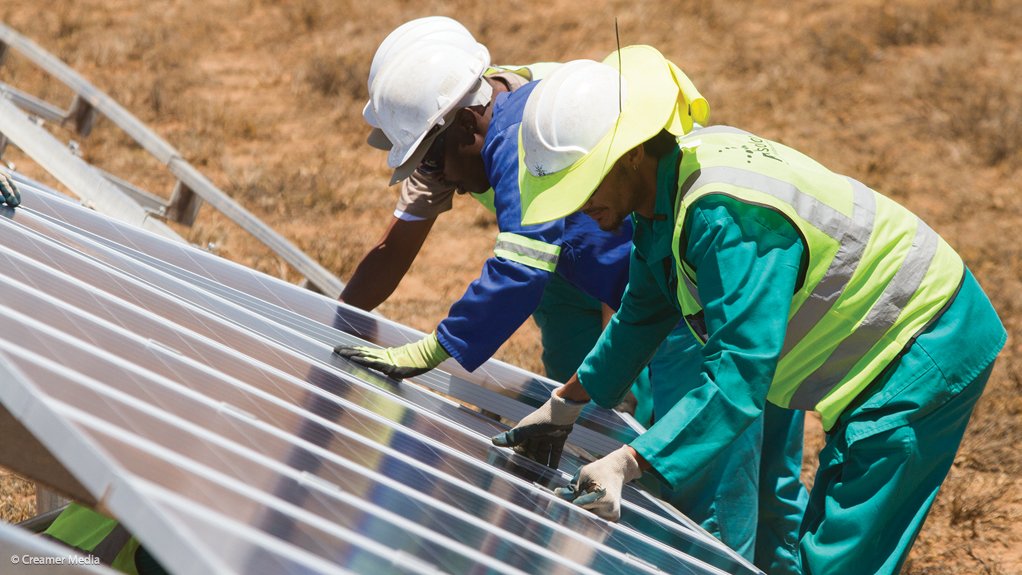


The South African Photovoltaic Industry Association (SAPVIA) says demand for solar PV in 2025 continued to recover from the 2024 slowdown, which followed on from the loadshedding-induced surge of 2023 when 2.4 GW of capacity was installed.
New installations contracted last year to about 1 GW, but have since recovered to above that level in 2025.
This, largely on the back of utility-scale private-offtake projects, the pipeline for which remains robust, with some 4 GW of new PV projects registered with the National Energy Regulator of South Africa (Nersa) in 2025, increasing overall renewables registrations to about 16 GW and with solar registrations standing at above 11 GW.
While not all registered projects will be converted into installations, SAPVIA CEO Dr Rethabile Melamu says the private-offtake pipeline, together with projects awarded under recent public procurement bidding rounds and a recovery in the embedded-generation market could result in yearly installations exceeding 3 GW in the coming few years.
Spokesperson Frank Spencer says the positive demand outlook is underpinned by the steep fall in PV costs, which is continuing to strengthen the competitiveness of solar installations in a context where tariffs for conventional electricity continue to rise.
Together with the fall in battery storage costs, Spencer believes there is also a growing incentive for microgrids, where solar is not only used during the day, but is stored in batteries for use during the evening peaks.
Deputy chairperson De Villiers Botha, who focuses primarily on the embedded generation market, argues that while PV installations reached grid parity in about 2015, there are signs that microgrid systems are also now at grid parity.
“There's a lot of interest in microgrid systems, where solar together with battery energy storage systems, together with the grid, and sometimes together with old diesel generators are supplying sustainable, cleaner and continuous power in commercial, industrial and agricultural settings,” Botha explains.
Given this positive market outlook, Melamu is also bullish about the potential for job creation and industrialisation spin-offs from the sector.
However, speaking against the backdrop of a court case brought by ARTSolar against various government Ministers, Eskom, Nersa and several independent power producers in a bid to have an exemption on local content stipulations in relation to locally assembled PV modules set aside, she argues in favour of a full value-chain approach.
While making no direct reference to the legal action, Melamu indicates that it will require a suite of fiscal incentives to position local industry to compete with China, which manufactures about 75% of the world’s PV modules.
By contrast, studies published by SAPVIA in 2023 and 2024 highlight the potential to industrialise various other parts of the supply chain, mostly in the absence of fiscal incentives.
The studies point in particular to cables and combiner boxes, mounting structures and trackers, inverters, electrical and civil balance of plant components, as well as recycling and reuse.
Solar modules make up about 20% of the value of a solar PV facility, she says, while arguing that most of the components that make up the other 80% can be manufactured locally.
“So it's really a decision of whether we are all willing to pay 40% to 50% more for electricity than we currently are to accommodate the incentives that would be required to really scale-up manufacturing, especially solar PV modules.”
SAPVIA also stresses that the bulk of the employment opportunities in the solar industry reside in the installation, operations and maintenance of such systems, with module manufacturing having become highly automated.
Article Enquiry
Email Article
Save Article
Feedback
To advertise email advertising@creamermedia.co.za or click here
Research Reports


Projects
Latest Multimedia

Latest News


Showroom
Supplier & Distributor of the Widest Range of Accurate & Easy-to-Use Alcohol Breathalysers
VISIT SHOWROOM
For over 60 years, VEGA has provided industry-leading products for the measurement of level, density, weight and pressure. As the inventor of the...
VISIT SHOWROOM

Press Office
Announcements
What's On
Subscribe to improve your user experience...
Option 1 (equivalent of R125 a month):
Receive a weekly copy of Creamer Media's Engineering News & Mining Weekly magazine
(print copy for those in South Africa and e-magazine for those outside of South Africa)
Receive daily email newsletters
Access to full search results
Access archive of magazine back copies
Access to Projects in Progress
Access to ONE Research Report of your choice in PDF format
Option 2 (equivalent of R375 a month):
All benefits from Option 1
PLUS
Access to Creamer Media's Research Channel Africa for ALL Research Reports, in PDF format, on various industrial and mining sectors
including Electricity; Water; Energy Transition; Hydrogen; Roads, Rail and Ports; Coal; Gold; Platinum; Battery Metals; etc.
Already a subscriber?
Forgotten your password?
Receive weekly copy of Creamer Media's Engineering News & Mining Weekly magazine (print copy for those in South Africa and e-magazine for those outside of South Africa)
➕
Recieve daily email newsletters
➕
Access to full search results
➕
Access archive of magazine back copies
➕
Access to Projects in Progress
➕
Access to ONE Research Report of your choice in PDF format
RESEARCH CHANNEL AFRICA
R4500 (equivalent of R375 a month)
SUBSCRIBEAll benefits from Option 1
➕
Access to Creamer Media's Research Channel Africa for ALL Research Reports on various industrial and mining sectors, in PDF format, including on:
Electricity
➕
Water
➕
Energy Transition
➕
Hydrogen
➕
Roads, Rail and Ports
➕
Coal
➕
Gold
➕
Platinum
➕
Battery Metals
➕
etc.
Receive all benefits from Option 1 or Option 2 delivered to numerous people at your company
➕
Multiple User names and Passwords for simultaneous log-ins
➕
Intranet integration access to all in your organisation