Township mechanics are strengthening their position - firm


RESHAPING AFTERMARKET Township-based workshops are rapidly emerging as credible, competitive repair hubs that are reshaping supply chains, component demand and the broader automotive aftersales landscape



South Africa’s automotive aftersales economy is being reshaped by the rapid rise of township mechanics, whose workshops are increasingly providing credible, competitive and affordable alternatives to traditional service centres.
With constrained household budgets, volatile vehicle ownership patterns and a growing need for accessible repair solutions, these microenterprises have become indispensable nodes in the mobility ecosystem, highlights economic advisory firm UBU Investment Holdings-affiliated cooperative The Motor Spares Collective (TMSC) director Shireen Crosson.
She notes that this expansion is also forcing component suppliers, insurers and original-equipment manufacturers to rethink long-standing assumptions about quality, compliance and market access.
Rather than viewing township mechanics purely as informal operators, major players are beginning to see them as gateways into high-volume consumer segments, but only if systemic constraints are addressed.
Crosson says the combination of technical support, certified components and targeted compliance interventions could unlock significant industrial and employment gains.
“This market is too big to ignore, but support must be practical, affordable and rooted in real operational challenges,” she notes.
Strengthening the Ecosystem
Crosson notes that the most persistent constraint facing township mechanics is not a lack of capability, but the absence of structured pathways to training, tools, and reliable supply chains for quality components.
Many operators are self-taught but technically skilled, especially on vehicles older than five years, which is a segment that now dominates South Africa’s car parc, she highlights, adding that as the aftermarket grows more complex, the ability to quickly access approved parts becomes central to both safety and competitiveness.
Crosson explains that this is where strategic partnerships with component manufacturers and logistics providers can rapidly shift performance outcomes. The TMSC programme has already begun piloting low-cost diagnostic toolkits, simplified compliance templates and curated parts catalogues designed for smaller workshops.
“We’ve found that once you eliminate the friction points such as sourcing, pricing and access to technical data, productivity improves almost immediately,” Crosson says.
Scalable Model for Sector Impact
Beyond supply chain integration, TMSC sees township mechanics as a major force for localised economic development and Crosson highlights that most independent workshops employ between three and ten staff, yet their contribution to employment and circulation of economic activity in township centres is disproportionately high.
With improved compliance and a clearer relationship with insurers, she argues, their growth could be exponential.
Crosson emphasises that the future of the automotive sector lies in structured collaboration rather than ad-hoc interventions. Insurers are increasingly open to working with accredited township workshops, especially where repair costs remain lower and turnaround times competitive.
She adds that component suppliers, too, are starting to recognise the strategic importance of these businesses in stabilising demand for locally manufactured parts.
“What we’re building is a model that respects the realities of the township economy while raising standards in a way that benefits everyone,” Crosson says.
As South Africa prepares for shifts in vehicle technologies, extended ownership cycles and a tightening economic climate, township mechanics are poised to play an even more central role.
Their positioning at the intersection of affordability, access and community-based mobility needs makes them one of the most dynamic forces in the automotive components sector today. With the right support mechanisms, they could anchor a more inclusive, resilient and competitive aftermarket industry.
Article Enquiry
Email Article
Save Article
Feedback
To advertise email advertising@creamermedia.co.za or click here



Latest Multimedia


Showroom

Rittal is a world leading provider of top-quality integrated systems for enclosures, power distribution, climate control, IT infrastructure and...
VISIT SHOWROOM
SmartMine IoT has been developed with the mining industry in mind, to provides our customers with powerful business intelligence and data modelling...
VISIT SHOWROOM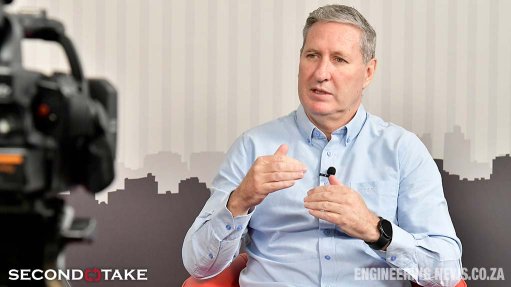


Press Office
Announcements
What's On
Subscribe to improve your user experience...
Option 1 (equivalent of R125 a month):
Receive a weekly copy of Creamer Media's Engineering News & Mining Weekly magazine
(print copy for those in South Africa and e-magazine for those outside of South Africa)
Receive daily email newsletters
Access to full search results
Access archive of magazine back copies
Access to Projects in Progress
Access to ONE Research Report of your choice in PDF format
Option 2 (equivalent of R375 a month):
All benefits from Option 1
PLUS
Access to Creamer Media's Research Channel Africa for ALL Research Reports, in PDF format, on various industrial and mining sectors
including Electricity; Water; Energy Transition; Hydrogen; Roads, Rail and Ports; Coal; Gold; Platinum; Battery Metals; etc.
Already a subscriber?
Forgotten your password?
Receive weekly copy of Creamer Media's Engineering News & Mining Weekly magazine (print copy for those in South Africa and e-magazine for those outside of South Africa)
➕
Recieve daily email newsletters
➕
Access to full search results
➕
Access archive of magazine back copies
➕
Access to Projects in Progress
➕
Access to ONE Research Report of your choice in PDF format
RESEARCH CHANNEL AFRICA
R4500 (equivalent of R375 a month)
SUBSCRIBEAll benefits from Option 1
➕
Access to Creamer Media's Research Channel Africa for ALL Research Reports on various industrial and mining sectors, in PDF format, including on:
Electricity
➕
Water
➕
Energy Transition
➕
Hydrogen
➕
Roads, Rail and Ports
➕
Coal
➕
Gold
➕
Platinum
➕
Battery Metals
➕
etc.
Receive all benefits from Option 1 or Option 2 delivered to numerous people at your company
➕
Multiple User names and Passwords for simultaneous log-ins
➕
Intranet integration access to all in your organisation