University highlights potential causes of transport project failure


GIEL BEKKER Rushing into execution without adequate upfront planning is a major cause of failure
Photo by UP



The common themes for project management failure in South African megaprojects are governance or procurement failures, corruption, equipment delivery delays, and legal and community issues. These “themes of failure” are not unique, but unfortunately, endemic to large capital projects, says tertiary education institution University of Pretoria associate professor Giel Bekker.
Citing ‘How Big Things Get Done: The Surprising Factors Behind Every Successful Project, from Home Renovations to Space Exploration’ by economic geographer Professor Bent Flyvbjerg and author Dan Gardner – which includes a study of 16 000 projects, most of which were publicly developed and a significant number being transport infrastructure projects – Bekker notes that only about 8.5% of megaprojects are completed on time and within budget.
Given that transport infrastructure is “core to any country’s economic activity”, as it provides the logistical backbone for the movement of goods, services and people, the provision of transport infrastructure is a government imperative and key performance indicator, Bekker states.
Flyvbjerg and Gardner identified six categories of failures that are prevalent in large capital projects, namely complexity, underestimated uncertainty; psychological and political biases; poor early planning and delayed execution; ignoring experience, modular design and repeatability; stakeholder misalignment and poor governance; and scope creep, overreach and unclear outcomes.
To illustrate these categories, Bekker cites large, high-profile transportation projects undertaken by the South African government over the last 15 years.
For example, State-owned enterprise Passenger Rail Agency of South Africa’s (PRASA’s) rolling-stock programme involved the renewal of the fleet of 268 Electric Multiple Unit (EMU) trains, alongside the refurbishment of the older fleet. “As of 2024/25, only 142 EMUs are operational, and after millions spent, the older fleet appears to be redundant. Irregular expenditure totalled R3.8-billion in 2022/23.”
This project suffered from complexity and underestimated uncertainty as well as stakeholder misalignment and poor governance.
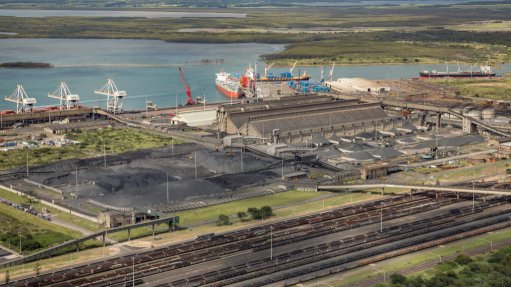
State-owned freight company Transnet’s Port Upgrade in Durban, meanwhile, suffered from poor early planning and delayed execution, with schedule delays in crane and straddle carrier procurement leading to a backlog of more than 60 vessels, and resulting in hundreds of millions in lost revenue.
Bekker points out that large capital projects are complex, with long timelines, many stakeholders and dynamic environments, and as such the risk of extreme cost or time overruns is much higher than most planners imagine.
“Many projects underestimate uncertainty or treat unknowns as if they were known, which leaves them exposed to surprising and cascading issues,” he states.
Moreover, planning fallacy, optimism, uniqueness bias, and strategic misrepresentation all contribute to failure, with planners and decision-makers often underestimating cost and timelines while overestimating benefits.
Bekker adds that project managers will often assume that a project is unique, which results in them dismissing past projects and prior experiences.
As a result of most transport infrastructure projects’ public nature, there are often political or organisational incentives to ensure that these projects are approved at a low cost, within a short timeframe and with large benefit figures – even if they are unrealistic.
Bekker, therefore, advocates for a philosophy of ‘think slow, act fast’, by investing time into a detailed plan, scenario-thinking and right-to-left mapping, and only progressing to full execution when the plan is robust.
In contrast, many projects are started prematurely under tight deadlines or political pressures and therefore incur costs, delays or require re-working later.
In their book, Flyvbjerg and Gardner highlight that projects that adopt a modular design, repetition and/or rely on prior experience tend to “perform better”.
Consequently, “bespoke one-off mega-projects with little precedent tend to carry higher risks”.
Bekker summarises that Flyvbjerg and Gardner argue that failure in large projects is not a mystery or a purely technical problem, but stems from predictable patterns.
As such, recognising these underlying causes is the first step toward improving the odds of success.
He states that South African transport infrastructure projects will be more likely to succeed if these patterns for failure and extreme levels of corruption are averted, calling for intervention and political will to improve the state of the sector.
He points to countries that experienced similar challenges, including Norway and the UK, concluding that, with strong leadership and private, public and academic interventions, project delivery models were developed that focused on proactive assurance practices rather than solely on retrospective auditing practices, in turn improving project delivery.
Article Enquiry
Email Article
Save Article
Feedback
To advertise email advertising@creamermedia.co.za or click here
Research Reports

Latest Multimedia

Latest News

Showroom

FLANDERS Southern Africa provides integrated solutions for mining and industrial operations, covering field services, automation, electrification,...
VISIT SHOWROOM
The SAIMM started as a learned society in 1894 after the invention of the cyanide process that saved the South African gold mining industry of the...
VISIT SHOWROOM


Announcements
What's On
Subscribe to improve your user experience...
Option 1 (equivalent of R125 a month):
Receive a weekly copy of Creamer Media's Engineering News & Mining Weekly magazine
(print copy for those in South Africa and e-magazine for those outside of South Africa)
Receive daily email newsletters
Access to full search results
Access archive of magazine back copies
Access to Projects in Progress
Access to ONE Research Report of your choice in PDF format
Option 2 (equivalent of R375 a month):
All benefits from Option 1
PLUS
Access to Creamer Media's Research Channel Africa for ALL Research Reports, in PDF format, on various industrial and mining sectors
including Electricity; Water; Energy Transition; Hydrogen; Roads, Rail and Ports; Coal; Gold; Platinum; Battery Metals; etc.
Already a subscriber?
Forgotten your password?
Receive weekly copy of Creamer Media's Engineering News & Mining Weekly magazine (print copy for those in South Africa and e-magazine for those outside of South Africa)
➕
Recieve daily email newsletters
➕
Access to full search results
➕
Access archive of magazine back copies
➕
Access to Projects in Progress
➕
Access to ONE Research Report of your choice in PDF format
RESEARCH CHANNEL AFRICA
R4500 (equivalent of R375 a month)
SUBSCRIBEAll benefits from Option 1
➕
Access to Creamer Media's Research Channel Africa for ALL Research Reports on various industrial and mining sectors, in PDF format, including on:
Electricity
➕
Water
➕
Energy Transition
➕
Hydrogen
➕
Roads, Rail and Ports
➕
Coal
➕
Gold
➕
Platinum
➕
Battery Metals
➕
etc.
Receive all benefits from Option 1 or Option 2 delivered to numerous people at your company
➕
Multiple User names and Passwords for simultaneous log-ins
➕
Intranet integration access to all in your organisation