Why optimisation is key to unlocking microgrid decarbonisation

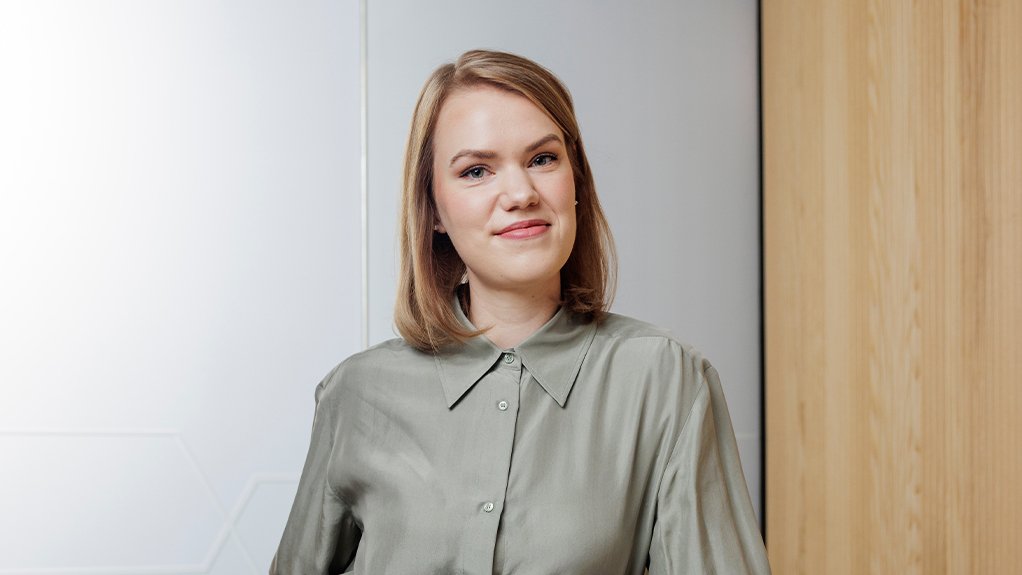
Ella Teperi GM for Market and Financial Analysis in the Wärtsilä Energy Decarbonisation Services team



This article has been supplied.
In the global discourse on climate change, the transition to sustainable power is often reduced to a simple formula: “replace fossil fuels with renewables.” However, for those responsible for the stability of industrial and utility microgrids, we know that decarbonisation is not a simple game of substitution. It is an intricate engineering challenge of integration and optimisation.
Adding solar and wind capacity provides the essential foundation for decarbonisation. However, to translate this capacity into reliable power, real cost savings and meaningful emission reductions, it must be paired with a holistic strategy that accounts for the inherent volatility of high renewable penetration.
For many power producers and industrial operators in Africa, the primary hurdle is not a lack of intent; it is the inability to secure a return on investment on renewable assets. This failure often stems from unoptimised dispatch, driven by the inherent complexity of hybrid microgrids. With load demand, renewable generation and reserve requirements all in constant flux, optimisation becomes a critical challenge.
In this volatile environment, operators must simultaneously optimise battery storage systems’ dispatch and state of charge, maximise renewable utilisation, and manage engine loading, all while balancing cost minimisation and grid reliability. Without sophisticated coordination, the system suffers from inefficiency, renewable curtailment, unreliability and even blackouts.
Intelligent Optimisation
Drawing on 79 GW of installed capacity, energy technology and lifecycle services supplier Wärtsilä offers a unique vantage point into the complexities of the global energy transition. We bridge the gap between volatility and reliability by serving as both an engine technology original equipment manufacturer and Battery Energy Storage System (BESS) integrator, providing the flexible, dispatchable assets that anchor the grid as renewable energy grows.
Our expertise extends beyond hardware; as a lifecycle services provider; we understand the long-term behaviour of these assets throughout their entire lifespan, and we are uniquely positioned to optimise their dispatch for maximum reliability, availability and efficiency. At the centre of this ecosystem is our Energy Management System, the digital intelligence that integrates and optimises every component to unlock the full performance of modern microgrids.
Intelligent optimisation brings three major advantages to hybrid microgrid systems. First, it significantly increases the use of renewable energy by using forecast-based dispatch, which minimises unnecessary curtailment and ensures available solar and wind power is prioritised, ultimately reducing both costs and emissions. Second, by prioritising renewables and leveraging battery storage, engine runtime and fuel consumption are reduced, leading to lower emissions and less maintenance. Third, advanced dispatch strategies allow for reliable reserve management, dynamically adjusting reserves to maintain grid stability and prevent outages even as renewable output and demand fluctuate.
Bridging the Gap
In systems where grid stability is a constant concern, we cannot afford to guess. This is why our engineering process relies heavily on techno-economic modelling and dynamic simulations. In addition to modelling the economically most optimal asset mix and dispatch philosophy, we stress-test systems against worst-case contingencies, such as a sudden cloud cover event or a trip in an overhead line.
By accurately modelling and preparing for these scenarios, we ensure that the system remains within frequency and voltage limits, providing the reliability that industrial users and utilities demand. This technical feasibility is what turns a “green ambition” into a bankable project.
Partnership
Decarbonisation is a journey that spans years, not a one-time equipment purchase. This is the philosophy behind Wärtsilä’s Decarbonisation Services Agreement. We stand behind our technology by aligning our performance fees with customer value drivers, typically cost, reliability and carbon reduction. This ensures that every dispatch decision made by our system is focused on achieving clients’ specific targets, creating a partnership where our success is linked to key operational results. We move from being a technology vendor to a long-term partner, ensuring that the Levelised Cost of Electricity remains as low as possible throughout the transition.
The transition to a low-carbon energy system is the defining engineering challenge of our generation. However, success will not be measured by the total megawatt-peak of solar panels installed, but by the resilience, emission reduction and economic viability of the grids they support.
The technology to achieve 100% renewable energy is already here. By combining flexible engine technology, advanced energy storage, and the intelligence of our energy management system we can navigate the complexities of today to secure the sustainable systems of tomorrow. In Africa, the roadmap is clear: we must stop just building assets and start engineering integrated energy systems.
Article Enquiry
Email Article
Save Article
Feedback
To advertise email advertising@creamermedia.co.za or click here
Research Reports
Projects
Latest Multimedia

Latest News
Showroom

Sulzer South Africa, established in 1922, partners with critical industries like power, oil & gas, water, mining, and chemicals to boost...
VISIT SHOWROOM


Press Office
Announcements
What's On
Subscribe to improve your user experience...
Option 1 (equivalent of R125 a month):
Receive a weekly copy of Creamer Media's Engineering News & Mining Weekly magazine
(print copy for those in South Africa and e-magazine for those outside of South Africa)
Receive daily email newsletters
Access to full search results
Access archive of magazine back copies
Access to Projects in Progress
Access to ONE Research Report of your choice in PDF format
Option 2 (equivalent of R375 a month):
All benefits from Option 1
PLUS
Access to Creamer Media's Research Channel Africa for ALL Research Reports, in PDF format, on various industrial and mining sectors
including Electricity; Water; Energy Transition; Hydrogen; Roads, Rail and Ports; Coal; Gold; Platinum; Battery Metals; etc.
Already a subscriber?
Forgotten your password?
Receive weekly copy of Creamer Media's Engineering News & Mining Weekly magazine (print copy for those in South Africa and e-magazine for those outside of South Africa)
➕
Recieve daily email newsletters
➕
Access to full search results
➕
Access archive of magazine back copies
➕
Access to Projects in Progress
➕
Access to ONE Research Report of your choice in PDF format
RESEARCH CHANNEL AFRICA
R4500 (equivalent of R375 a month)
SUBSCRIBEAll benefits from Option 1
➕
Access to Creamer Media's Research Channel Africa for ALL Research Reports on various industrial and mining sectors, in PDF format, including on:
Electricity
➕
Water
➕
Energy Transition
➕
Hydrogen
➕
Roads, Rail and Ports
➕
Coal
➕
Gold
➕
Platinum
➕
Battery Metals
➕
etc.
Receive all benefits from Option 1 or Option 2 delivered to numerous people at your company
➕
Multiple User names and Passwords for simultaneous log-ins
➕
Intranet integration access to all in your organisation