Cyber resilience moves from IT issue to board risk

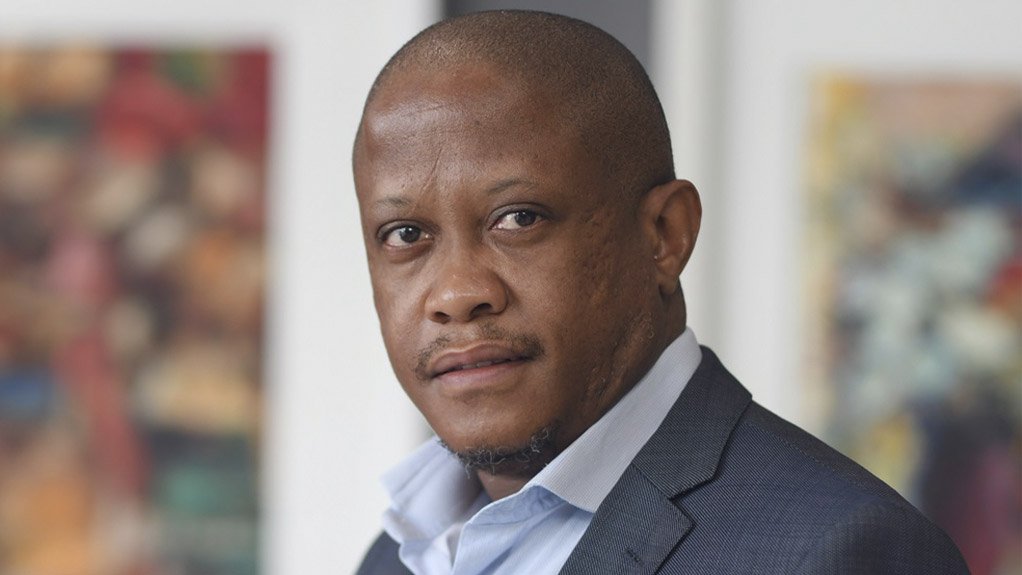



This article has been supplied.
By: Boland Lithebe - Security lead for Accenture, South Africa
Cybersecurity has shifted decisively from an IT concern to a core business risk, and South African organisations are feeling this change acutely. The World Economic Forum’s Global Cybersecurity Outlook 2026 in collaboration with Accenture, highlights a global environment where cyber risk is intensifying in scale, complexity and impact. Over the past year, these pressures have become more visible locally, as South African companies contend with rising digital adoption, growing reliance on cloud and AI-driven systems, and increasingly sophisticated cybercrime that directly targets economic value rather than just data.
South Africa’s economy is deeply connected to global digital systems, from financial services and telecommunications to logistics, mining and retail. This interconnectedness brings opportunity, but it also widens the attack surface. The past 12 months have seen a notable increase in ransomware, business email compromise and supply-chain-related cyber incidents affecting African organisations, including South African firms. These attacks are no longer opportunistic. They are often well-resourced, persistent and designed to exploit gaps between business operations, third-party relationships and cybersecurity governance.
One of the most relevant themes from the Outlook is the growing asymmetry between attackers and defenders. Cybercriminals are adopting artificial intelligence faster than many organisations are able to secure it. In South Africa, AI is being integrated into customer service, credit decisioning, fraud detection and operational analytics at pace. While this brings efficiency and scale, it also introduces new vulnerabilities, particularly where governance frameworks, skills and controls lag behind deployment. The result is a widening gap between innovation and protection that business leaders can no longer afford to ignore.
Skills shortages are a critical pressure point. The report underscores a global lack of experienced cybersecurity professionals, and this challenge is amplified in South Africa, where competition for digital talent is intense and budgets are constrained. Over the past year, many organisations have responded by consolidating security functions, relying more heavily on managed security services and automating routine tasks. While these steps help, they also place greater emphasis on leadership oversight, vendor management and clear accountability at executive level.
Regulation is another factor shaping the local cybersecurity landscape. South African organisations operate within established frameworks such as POPIA, alongside sector-specific requirements in banking, insurance and critical infrastructure. Over the last year, enforcement expectations have become clearer, and boards are increasingly aware that cyber incidents carry not only operational and reputational consequences, but also legal and financial exposure. This has driven a shift towards treating cyber resilience as part of overall enterprise risk management, rather than a technical compliance exercise.
The Outlook also highlights the growing importance of resilience over prevention alone. For South African businesses, this is a practical reality. Power instability, connectivity challenges and complex supply chains already test operational continuity. Cyber incidents now compound these risks. Organisations that have invested in incident response planning, crisis communication and recovery capabilities over the past year have been better positioned to limit damage when breaches occur. This pragmatic focus on resilience aligns well with local business conditions, where disruption is not hypothetical but expected.
Supply-chain risk is emerging as a particularly pressing concern. Many South African companies depend on global software providers, cloud platforms and logistics partners. The past year has shown how vulnerabilities in one part of the ecosystem can cascade rapidly across borders and industries. Smaller suppliers, often with limited security maturity, can become entry points into larger enterprises. As a result, due diligence, contractual security requirements and ongoing monitoring are moving higher up the procurement agenda.
There is also a growing recognition that cybersecurity culture matters as much as technology. Phishing and social engineering remain highly effective, exploiting human behaviour rather than system weaknesses. In South Africa’s diverse workforce environment, awareness programmes must be practical, inclusive and relevant to different roles and contexts. Over the past year, organisations that have invested in regular, scenario-based training have reported better detection and faster reporting of suspicious activity, reducing overall impact.
Perhaps the most significant shift highlighted by the Outlook is the move towards board-level ownership of cyber risk. Locally, this is beginning to translate into more frequent cyber briefings, clearer metrics linked to business outcomes, and closer collaboration between CIOs, CISOs, risk leaders and executives. Cybersecurity is increasingly discussed in the same breath as financial resilience, operational continuity and strategic growth, reflecting its role as a foundational enabler of trust in the digital economy.
For South African businesses navigating uncertain economic conditions and rapid technological change, cybersecurity is no longer about keeping systems running quietly in the background. It is about safeguarding revenue, protecting stakeholders and maintaining confidence in a highly connected environment. The past year has made it clear that cyber resilience is not a destination, but an ongoing capability that must evolve alongside the business itself.
Article Enquiry
Email Article
Save Article
Feedback
To advertise email advertising@creamermedia.co.za or click here


Projects
Latest Multimedia

Latest News


Showroom

Rooted in the hearts of South Africans, combining technology and a quest for perfection to bring you a battery of peerless standing. Willard...
VISIT SHOWROOM
EIMS is an independent specialised environmental consulting firm offering the full spectrum of environmental management services across all sectors...
VISIT SHOWROOM



Press Office
Announcements
What's On
Subscribe to improve your user experience...
Option 1 (equivalent of R125 a month):
Receive a weekly copy of Creamer Media's Engineering News & Mining Weekly magazine
(print copy for those in South Africa and e-magazine for those outside of South Africa)
Receive daily email newsletters
Access to full search results
Access archive of magazine back copies
Access to Projects in Progress
Access to ONE Research Report of your choice in PDF format
Option 2 (equivalent of R375 a month):
All benefits from Option 1
PLUS
Access to Creamer Media's Research Channel Africa for ALL Research Reports, in PDF format, on various industrial and mining sectors
including Electricity; Water; Energy Transition; Hydrogen; Roads, Rail and Ports; Coal; Gold; Platinum; Battery Metals; etc.
Already a subscriber?
Forgotten your password?
Receive weekly copy of Creamer Media's Engineering News & Mining Weekly magazine (print copy for those in South Africa and e-magazine for those outside of South Africa)
➕
Recieve daily email newsletters
➕
Access to full search results
➕
Access archive of magazine back copies
➕
Access to Projects in Progress
➕
Access to ONE Research Report of your choice in PDF format
RESEARCH CHANNEL AFRICA
R4500 (equivalent of R375 a month)
SUBSCRIBEAll benefits from Option 1
➕
Access to Creamer Media's Research Channel Africa for ALL Research Reports on various industrial and mining sectors, in PDF format, including on:
Electricity
➕
Water
➕
Energy Transition
➕
Hydrogen
➕
Roads, Rail and Ports
➕
Coal
➕
Gold
➕
Platinum
➕
Battery Metals
➕
etc.
Receive all benefits from Option 1 or Option 2 delivered to numerous people at your company
➕
Multiple User names and Passwords for simultaneous log-ins
➕
Intranet integration access to all in your organisation