Govt to require 2% of housing grants to go to innovative building technologies

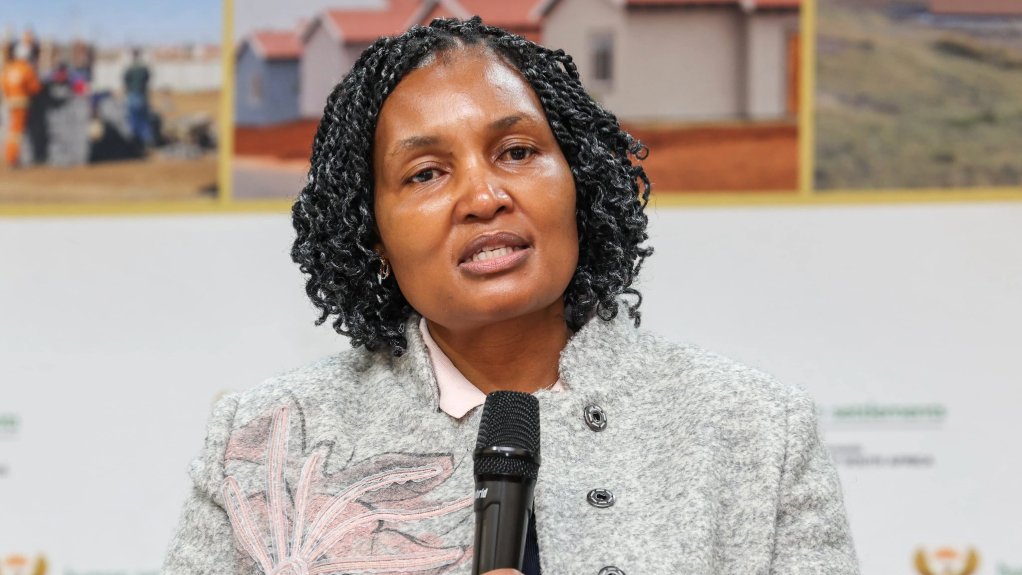



The Department of Human Settlements (DHS) will require provinces and metropolitan municipalities to allocate at least 2% of their 2026/27 housing grants to innovative building technologies (IBTs), signalling a push to accelerate housing delivery and improve resilience in disaster-prone areas.
Human Settlements Minister Thembi Simelane confirmed this during a briefing on January 21, which preceded the DHS’s hosting of the Innovative Building Technologies Summit from February 3 to 4, at Nasrec, in Gauteng.
The summit, under the theme ‘Mainstreaming Innovative Building Technologies for Sustainable Human Settlements’, will provide a national platform for government, industry and civil society to explore and assess scalable construction solutions that support the delivery of dignified housing and the eradication of the more than 4 700 informal settlements and mud house settlements across the country.
“The summit will be a national platform dedicated to advancing and showcasing innovative, sustainable and scalable construction solutions that support the delivery of dignified houses, the eradication of informal settlements and mud houses. It will also strengthen our capacity to respond to housing emergencies stemming from disasters,” Simelane said.
The summit forms part of broader strategic interventions aimed at addressing South Africa’s persistent housing challenges, including backlogs, the continued prevalence of informal settlements and the vulnerability of mud houses in rural and disaster-prone provinces.
Simelane stated that extreme weather events, including floods and droughts, regularly displaced communities and damaged housing infrastructure, as well as schools, hospitals, clinics and roads.
Rapid urbanisation and population growth would also require new approaches to housing delivery that were faster, safer and more cost-effective, environment-friendly and climate resilient, she explained.
The summit seeks to identify solutions to these problems that can be deployed at scale, bringing together government spheres, industry leaders, developers, investors, professionals in the built environment and research institutions.
A key focus of the summit would be the role of IBTs in accelerating housing delivery while maintaining quality, safety and regulatory compliance. Simelane emphasised that the department’s Eric Molobi Housing Innovation Hub had been testing technologies including modular and prefabricated construction systems, alternative and locally produced building materials, climate-resilient designs, green energy solutions and smart construction methods that reduced construction time and costs.
“The continued existence of mud houses, particularly in rural provinces, remains a critical concern. These structures are often highly vulnerable to extreme weather conditions, including heavy rains and flooding, posing serious risks to the safety and wellbeing of occupants.
Through the summit, the DHS aims to promote IBTs that offer durable, affordable alternatives that can be rolled out rapidly, while supporting local manufacturing, skills development and ultimately us participating in the second priority of the seventh administration, which is ensuring that we create jobs,” Simelane said.
The summit would also address the on-site upgrading of informal settlements, seeking alternatives for communities that had settled in areas unsuitable for formal housing or where relocation was difficult. Simelane explained that government aimed to reduce congestion, introduce permanent housing solutions and improve the quality of human settlements without displacing residents unnecessarily.
“Rapid construction . . . is of importance, and the development of permanent, dignified housing that improves quality and brings back the dignity of our people, and also prevents them from any of the disasters. The summit will examine how modular and prefabricated and repeat, deployable housing systems can be used to respond to emergencies,” she said.
She said the DHS would align innovative solutions with the country’s regulatory framework, including building standards, safety requirements and environmental regulations.
Discussions will explore how the certification and approval process can be strengthened to enable wider adoption of IBTs. The summit will feature an exhibition of technology solutions, allowing developers and implementing agents to assess suitability for large-scale housing projects.
Simelane stressed that IBTs also supported economic transformation and inclusive growth by creating opportunities for local production, enterprise development, skills transfer and job creation.
She said summit attendance had been confirmed by 505 delegates so far from 43 departments, with 30 exhibitors presenting IBT solutions. Simelane said the DHS expected the summit to transition from discussion to actionable projects, ensuring that allocations for IBT projects were budgeted at the start of the next financial year in April.
“The summit will bring together all three spheres of government, industry leaders, developers, investors, professionals in the built environment and research institutions to engage on practical solutions that can support the development of safe, resilient and integrated human settlements.
“A key focus of the summit will be the role of IBTs in accelerating housing delivery while maintaining quality, safety and compliance with regulatory standards,” Simelane said.
Article Enquiry
Email Article
Save Article
Feedback
To advertise email advertising@creamermedia.co.za or click here
Research Reports

Projects

Latest Multimedia
Latest News


Showroom
AxFlow AQS Liquid Transfer (Pty) Ltd is an Importer and Distributor of Pumps in Southern Africa
VISIT SHOWROOM
Your global lifecycle technology & service partner for materials & minerals processing equipment for coal, iron ore, copper, manganese & other...
VISIT SHOWROOM


Announcements
What's On
Subscribe to improve your user experience...
Option 1 (equivalent of R125 a month):
Receive a weekly copy of Creamer Media's Engineering News & Mining Weekly magazine
(print copy for those in South Africa and e-magazine for those outside of South Africa)
Receive daily email newsletters
Access to full search results
Access archive of magazine back copies
Access to Projects in Progress
Access to ONE Research Report of your choice in PDF format
Option 2 (equivalent of R375 a month):
All benefits from Option 1
PLUS
Access to Creamer Media's Research Channel Africa for ALL Research Reports, in PDF format, on various industrial and mining sectors
including Electricity; Water; Energy Transition; Hydrogen; Roads, Rail and Ports; Coal; Gold; Platinum; Battery Metals; etc.
Already a subscriber?
Forgotten your password?
Receive weekly copy of Creamer Media's Engineering News & Mining Weekly magazine (print copy for those in South Africa and e-magazine for those outside of South Africa)
➕
Recieve daily email newsletters
➕
Access to full search results
➕
Access archive of magazine back copies
➕
Access to Projects in Progress
➕
Access to ONE Research Report of your choice in PDF format
RESEARCH CHANNEL AFRICA
R4500 (equivalent of R375 a month)
SUBSCRIBEAll benefits from Option 1
➕
Access to Creamer Media's Research Channel Africa for ALL Research Reports on various industrial and mining sectors, in PDF format, including on:
Electricity
➕
Water
➕
Energy Transition
➕
Hydrogen
➕
Roads, Rail and Ports
➕
Coal
➕
Gold
➕
Platinum
➕
Battery Metals
➕
etc.
Receive all benefits from Option 1 or Option 2 delivered to numerous people at your company
➕
Multiple User names and Passwords for simultaneous log-ins
➕
Intranet integration access to all in your organisation