North America to diversify minerals supply

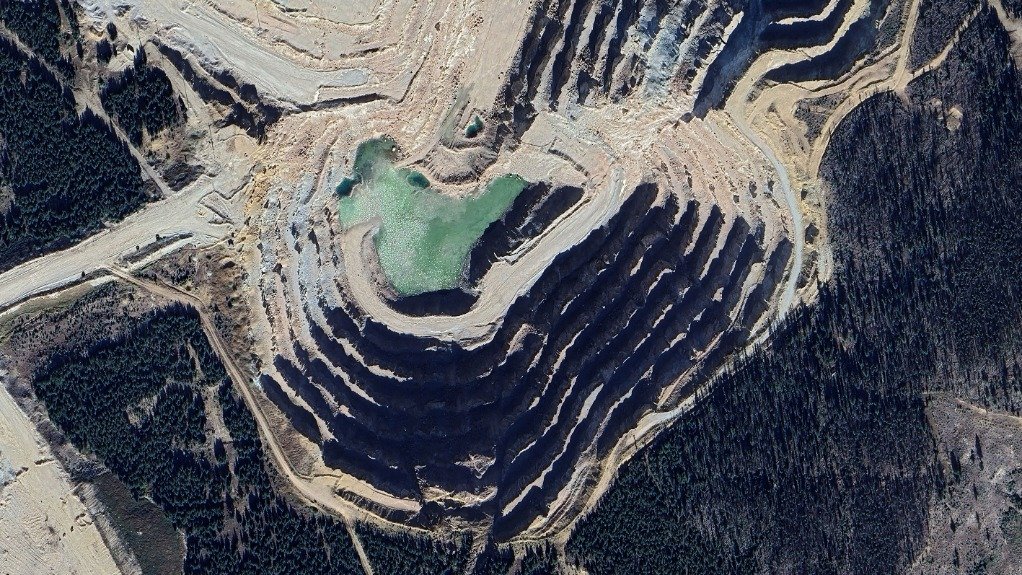
FOUNDATIONAL MOMENTUM North America's established copper sector is expected to record strong growth


To diversify mineral supply chains away from China, the governments of the US and Canada are taking a more direct role in their respective mining industries, with measures, including equity investments and debt financing for mining projects, says independent price reporting agency Benchmark Mineral Intelligence energy raw materials head Adam Webb.
Similar to developments in Europe, North America is developing its own resources and diversifying supply chains to reduce risks such as supply disruptions, he says.
In the US, two notable examples are lithium developer Lithium Americas’ Thacker Pass project, in Nevada, where the government has taken an equity stake and provided debt facilities; and rare earths producer MP Materials, which has received equity investment, debt support and a pricing floor through the US Department of War.
Similar support mechanisms are emerging in Canada, where there are also tax incentives aimed at downstream industries, beyond mining and refining, particularly electric vehicle battery cell manufacturing. These incentives indirectly support upstream mining by creating secure demand for domestically sourced raw materials, notes Webb.
Another important mechanism to expand in-continent minerals supply is localised offtake agreements that help developers secure financing by guaranteeing future demand. For example, the government of Canada has signed an offtake agreement with integrated graphite producer Nouveau Monde Graphite for minerals produced by its Phase-2 Matawinie mine, in Quebec.
However, despite these incentives and support mechanisms, Webb says permitting remains a significant challenge, particularly in the US, owing to the number of regulatory bodies involved.
Even in regions with established mining histories, where permitting processes tend to be more straightforward, the process can be slow and complex.
In the US, permitting often involves multiple federal, State, local and Indigenous stakeholders, resulting in significant permitting delays that can span decades.
While the current US administration has had discussions pertaining to streamlining permitting processes, Webb adds that it is too early to say whether these efforts will translate into tangible improvements.
Mineral Breakdown
Provided that government support mechanisms result in significant tangible improvements, North America’s lithium, graphite and rare earths industries are projected to experience significant growth over the next decade, says Webb.
Currently, North America’s lithium and graphite industries are small, accounting for about 2% of global lithium supply and about 1% of global natural graphite production.
However, with sufficient investment, these industries can offer substantial growth potential and the opportunity to generate significant domestic value, he adds.
Over the next decade, North America’s lithium output is forecast to increase about eightfold, raising the region’s share of global lithium supply to about 10%.
Webb explains that growth of lithium output will be driven by unconventional US resources, including clay and sedimentary deposits, as well as direct lithium extraction (DLE) projects, alongside conventional hard-rock spodumene projects, in Canada.
However, he notes that these developments carry technological risk, as clay-based lithium has not yet been commercially exploited anywhere globally and DLE has not been proven at scale on lower-grade North American brines.
Meanwhile, graphite production is forecast to increase about sixteen-fold over the next ten years in terms of natural graphite production.
However, Webb cautions that the significant increase is from a low base, as graphite producer Northern Graphite’s Lac des Iles operation, in Canada, is currently the only producing natural graphite mine in North America.
Graphite is a significant component of battery anodes, making it a strategic focus for the US as it aims to secure domestic supply.
“This is particularly important given that China currently dominates natural and synthetic graphite supply and is positioned as the lowest-cost producer of flake graphite,” he adds.
As a result, government investment, loans and offtake agreements are being used to support and allow for the development of domestic graphite projects in the US. The introduction of a 25% tariff on imports of Chinese material – the end-anode product and of flake graphite, will help North American developers in competing with Chinese material, highlights Webb.
North America is also targeting a fully domestic rare earths supply chain. It is the second-largest producing region globally, accounting for about 12% of mine supply of rare earths.
However, he notes that refining capacity has been heavily concentrated in China, with North America having limited downstream processing capability, until recently.
Aligned to its aim of a fully domestic rare earths supply chain, the US government is planning investment across mining, refining and downstream processing, including magnet manufacturing, with notable projects such as MP Materials’ Mountain Pass mine and a Texas-based magnet plant.
Meanwhile, the copper sector is more established in North America and is expected to record strong growth, with the region’s share of global supply projected to rise from about 10% to about 15%, adds Webb.
“North America is well positioned to continue to grow copper output. There are very good deposits [in the US], Mexico and Canada, as well as ongoing, active exploration across the region,” he says.
Nickel production is also expected to experience significant growth, says Webb, elaborating that largely as a result of sulphide deposits in Canada and some refining developments in the US, production is forecasted to rise by about 30% over the next decade.
In addition, because production from nickel sulphide deposits generally has lower carbon emissions compared to nickel coming from Indonesia – which is the largest nickel producer globally – a sustainability advantage is presented in North America, as the region could be viewed more favourably by manufacturing sectors that are seeking more sustainably produced minerals, such as EV manufacturers, concludes Webb.
Article Enquiry
Email Article
Save Article
Feedback
To advertise email advertising@creamermedia.co.za or click here

Projects
Latest Multimedia

Latest News

Showroom

SmartMine IoT has been developed with the mining industry in mind, to provides our customers with powerful business intelligence and data modelling...
VISIT SHOWROOM
Established on 1 March, 2000, by Barries Barnard, Advanced Fire Suppression Technologies (AFST) and the Advanced Group stands as Sub-Saharan...
VISIT SHOWROOM
Press Office
Announcements
What's On
Subscribe to improve your user experience...
Option 1 (equivalent of R125 a month):
Receive a weekly copy of Creamer Media's Engineering News & Mining Weekly magazine
(print copy for those in South Africa and e-magazine for those outside of South Africa)
Receive daily email newsletters
Access to full search results
Access archive of magazine back copies
Access to Projects in Progress
Access to ONE Research Report of your choice in PDF format
Option 2 (equivalent of R375 a month):
All benefits from Option 1
PLUS
Access to Creamer Media's Research Channel Africa for ALL Research Reports, in PDF format, on various industrial and mining sectors
including Electricity; Water; Energy Transition; Hydrogen; Roads, Rail and Ports; Coal; Gold; Platinum; Battery Metals; etc.
Already a subscriber?
Forgotten your password?
Receive weekly copy of Creamer Media's Engineering News & Mining Weekly magazine (print copy for those in South Africa and e-magazine for those outside of South Africa)
➕
Recieve daily email newsletters
➕
Access to full search results
➕
Access archive of magazine back copies
➕
Access to Projects in Progress
➕
Access to ONE Research Report of your choice in PDF format
RESEARCH CHANNEL AFRICA
R4500 (equivalent of R375 a month)
SUBSCRIBEAll benefits from Option 1
➕
Access to Creamer Media's Research Channel Africa for ALL Research Reports on various industrial and mining sectors, in PDF format, including on:
Electricity
➕
Water
➕
Energy Transition
➕
Hydrogen
➕
Roads, Rail and Ports
➕
Coal
➕
Gold
➕
Platinum
➕
Battery Metals
➕
etc.
Receive all benefits from Option 1 or Option 2 delivered to numerous people at your company
➕
Multiple User names and Passwords for simultaneous log-ins
➕
Intranet integration access to all in your organisation