Operation Vulindlela represents incomplete reforms until lived experiences improve – Bernstein





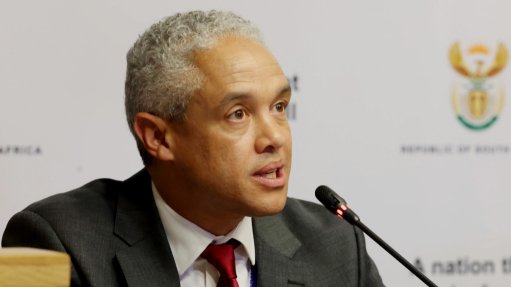
While South Africa has made progress since forming the Government of National Unity (GNU) in 2024, particularly in electricity and logistics reform, these incomplete achievements fall short of building the deep credibility needed to convince investors and businesses that the future will be meaningfully better, says public policy think tank Centre for Development and Enterprise executive director Ann Bernstein.
There are some areas of progress and the GNU deserves credit, but the question is not whether some things are better than they were, but whether the country genuinely believes it is on a trajectory that will lift investment, growth and employment; none of which has improved meaningfully.
“The economy is driven by what people expect to happen in the future. Confidence in the future derives from much deeper issues of policy and political credibility. Having been subjected to decades of misgovernance, deep suspicions about the quality of current and future governance are hard to turn around,” she says.
Operation Vulindlela is the most frequently cited evidence of the progress of reform, but listing achievements is not enough to persuade businesses and households that the future will be materially better than the present.
Much more potent is the lived experience of businesses and households. This has improved, as loadshedding has declined and as ports have become more efficient. However, people must believe that progress is being made on vital issues, like crime and corruption, school quality and local governments’ performance, Bernstein notes.
“Operation Vulindlela has made progress in some domains, although deep challenges in others will continue to hold back growth. Additionally, the roots of Operation Vulindlela‘s successes are not nearly as deep and healthy as they need to be,” she adds.
For example, in terms of the liberalisation of generation, the erosion of State-owned Eskom’s monopoly and the entry of private power producers marks a decisive break with the past. Loadshedding has receded and investment in renewable generation has surged.
“While these are real reforms, the electricity market is still incomplete and prices continue to rise rapidly. Grid capacity constraints remain binding, wheeling rules are unresolved and the wholesale market has not begun to operate.
“Electricity and Energy Minister Kgosientsho Ramokgopa is also reportedly walking back vital commitments to make the transmission company independent of Eskom,” she points out.
South Africa has moved from crisis management to reform, but does not yet have a fully functioning, competitive electricity system. Execution risk remains high amid pushback on some reforms by industry players, including Eskom, Bernstein says.
Another frequently cited example of Operation Vulindlela's success is the opening of rail access to private operators and improvements in port performance, which represent meaningful progress after years of decline. Reduced vessel waiting times and increased private-sector participation are important achievements.
However, State-owned Transnet remains financially fragile and operational monopolies in key sectors persist. Concessions and private participation are only beginning and the infrastructure backlog is enormous.
Exporters cannot yet rely on rail and ports with confidence, and investment decisions presumably reflect that reality, she points out.
Further, while the GNU is making some progress, the risk of destabilising policy changes in the medium and long term is real. It is also not really clear whether that risk is rising or falling.
Crime, corruption, government failure, infrastructure decay and weak execution capacity continue to exist and undermine confidence, she emphasises.
Many reforms are vulnerable to delay, dilution or reversal – whether now or if a new President is elected – while others depend on institutions that have yet to demonstrate consistent competence.
“Credibility is the central issue. Credibility is built when reforms are completed, not when they are announced. It is built when laws are enforced, not when law enforcement is promised. It is built when institutions perform efficiently and predictably, not episodically when we want to impress the G20.
“Credibility is undermined by a lack of urgency and, especially, when vested interests are allowed to block the implementation of promised changes.
“Operation Vulindlela is a set of incomplete reforms, achieved over a long period, and with many of the hardest steps still ahead.”
Credibility is also undermined when praise focuses on the areas where progress is tangible and deflects attention away from vital areas where progress is nonexistent or where there is actual regression, with law enforcement being the obvious example, Bernstein says.
Investment and growth will not rise because a set of reforms mainly targeting two key issues exists on paper, or because officials and business leaders praise them.
Investment will rise when firms, investors and households believe that the future is likely to be meaningfully better than the present, and that the risk of social, economic or political crisis over the next five years is negligible, Bernstein explains.
While Operation Vulindlela deserves credit for clearing paths that were blocked for years, South Africa’s growth prospects will be determined by the extent to which progress is made over a broad range of policy domains, and whether the State demonstrates, repeatedly and convincingly, that it can execute on its commitments, she adds.
“Our prospects will be determined by the speed of progress and the country’s return to competitiveness with peer countries. Operation Vulindlela also shows the limits of the country's ambitions as it indicates that freight tonnage carried by rail will [only] reach the same volume achieved in 2016 by 2030.
“Unless and until leadership is shown across a wide range of domains and visible progress becomes irreversible, business’ optimism will remain fragile and investment will remain cautious. Decisive and committed leadership is important now,” she says.
Article Enquiry
Email Article
Save Article
Feedback
To advertise email advertising@creamermedia.co.za or click here


Projects
Latest Multimedia
Latest News

Showroom
We are responsible manufacturers of essential components. Manufacturing 80 million parts a week, we have over 1 billion parts in stock.
VISIT SHOWROOM
Iritron delivers advanced automation, control, and optimisation solutions to the Mining, Minerals & Metals, Consumer Package Goods and...
VISIT SHOWROOM


Press Office
Announcements
What's On
Subscribe to improve your user experience...
Option 1 (equivalent of R125 a month):
Receive a weekly copy of Creamer Media's Engineering News & Mining Weekly magazine
(print copy for those in South Africa and e-magazine for those outside of South Africa)
Receive daily email newsletters
Access to full search results
Access archive of magazine back copies
Access to Projects in Progress
Access to ONE Research Report of your choice in PDF format
Option 2 (equivalent of R375 a month):
All benefits from Option 1
PLUS
Access to Creamer Media's Research Channel Africa for ALL Research Reports, in PDF format, on various industrial and mining sectors
including Electricity; Water; Energy Transition; Hydrogen; Roads, Rail and Ports; Coal; Gold; Platinum; Battery Metals; etc.
Already a subscriber?
Forgotten your password?
Receive weekly copy of Creamer Media's Engineering News & Mining Weekly magazine (print copy for those in South Africa and e-magazine for those outside of South Africa)
➕
Recieve daily email newsletters
➕
Access to full search results
➕
Access archive of magazine back copies
➕
Access to Projects in Progress
➕
Access to ONE Research Report of your choice in PDF format
RESEARCH CHANNEL AFRICA
R4500 (equivalent of R375 a month)
SUBSCRIBEAll benefits from Option 1
➕
Access to Creamer Media's Research Channel Africa for ALL Research Reports on various industrial and mining sectors, in PDF format, including on:
Electricity
➕
Water
➕
Energy Transition
➕
Hydrogen
➕
Roads, Rail and Ports
➕
Coal
➕
Gold
➕
Platinum
➕
Battery Metals
➕
etc.
Receive all benefits from Option 1 or Option 2 delivered to numerous people at your company
➕
Multiple User names and Passwords for simultaneous log-ins
➕
Intranet integration access to all in your organisation