South Africa at pivotal point in evolution of its mining industry, says Minerals Council

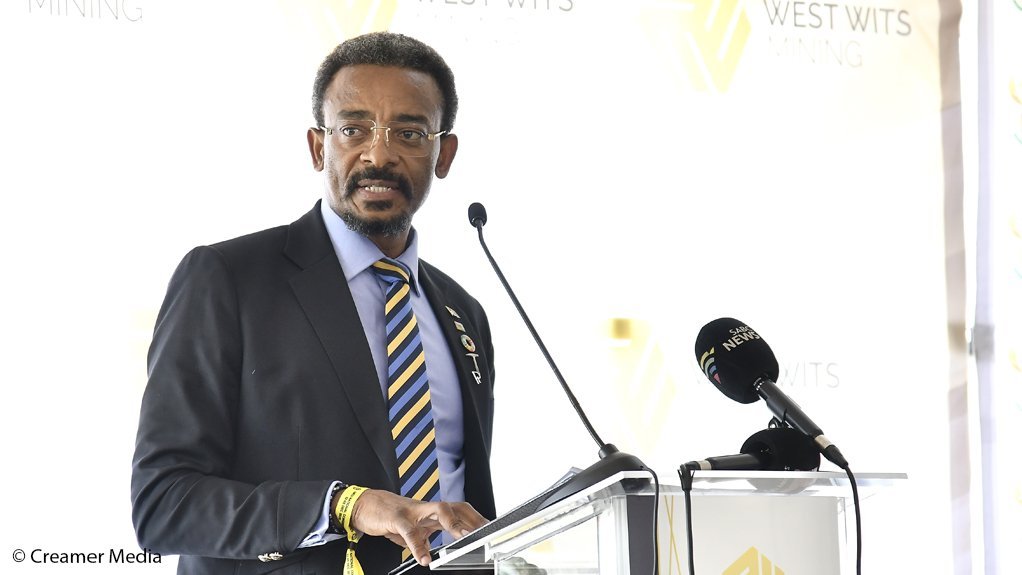
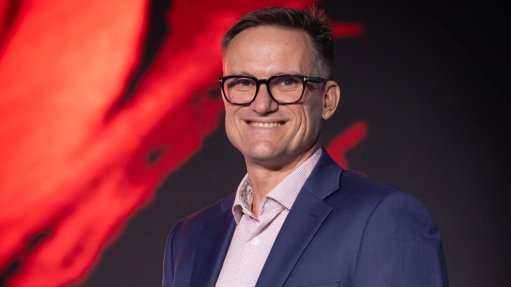
Minerals Council South Africa CEO Mzila Mthenjane.
Photo by Creamer Media Chief Photographer Donna Slater


JOHANNESBURG (miningweekly.com) – Mining built South Africa once. With clarity, confidence, and coherent policy, mining can help to build South Africa’s future again – and do so inclusively.
A successful and growing mining industry will expand the economy through the industrial benefits of upstream and downstream multiplier effects on jobs, corporate tax, PAYE, export earnings, VAT collections, as well as enabling the installation of much-required infrastructure.
South Africa must therefore favour market‑friendly policies and incentives that share risk and reward while reducing unnecessary restrictions that undermine sector competitiveness and investment confidence.
Encouraging signs are emerging such as the Financial Action Task Force removing South Africa from its grey list and S&P Global upgrading the country’s credit rating. Lower inflation expectations will temper interest rates, reducing debt costs. Combined, this is signalling progress coming from government and business partnerships to rebuild investor confidence and sentiment.
However, sentiment alone is not investment. Confidence in the South African economy must translate into concrete commitments to infrastructure, mineral development, exploration, research and development, and skills pipelines that future‑proof the industry, the economy and this country’s broader society. Essential to attracting this investment is the pace of critical structural reforms that will encourage and sustain private-sector investment and participation in key areas of the economy.
These are among the many vital points made by Minerals Council South Africa CEO Mzila Mthenjane in a thought-leadership article shortly ahead of next week’s crucial Investing in African Mining Indaba in Cape Town from February 9 to 12.
South Africa, Mthenjane emphasises in the article to Mining Weekly, is at a pivotal moment in the evolution of its mining industry – "a sector whose historic power and economic influence shaped not just the structure of cities like Johannesburg but the social and economic architecture of South Africa itself".
The legacy of more than a century of mining created cascading employment effects, built infrastructure, generated foreign exchange earnings, and underpinned entire communities.
Yet today, as South Africa approaches its fourth decade of democracy, this country’s mining industry faces the dual challenge and opportunity of redefining its place in a modern and technologically driven economy through skilled employees and shaping an inclusive society.
Mthenjane pinpoints the expansion of mining production as the real multiplier of broad‑based economic impact and social progress that mining brings and not high prices as the central truth that must guide this country’s mining strategy.
The mining sector accounted for 5.8% of GDP (nominal) in 2025, a significant source of economic activity but it is lower than 6.2% in 2004, indicating it is simply not realising its full potential, hampered by decades of logistics and energy constraints and inconsistent regulatory changes which have negatively affected investor confidence. Concerted interventions through a public-private partnership model, Operation Vulindlela 2.0, headed by the Presidency, are addressing fundamental bottlenecks, but more and focused efforts are needed to realise the aspired 3% growth rate in the short term.
While commodity price cycles may temporarily boost tax revenue and underpin the mining industry’s contribution to the economy, what really drives employment creation and sustainable development of the country is sustained production growth. It is output that stimulates manufacturing and requires an expansion of utilities and general infrastructure and strengthens upstream and downstream supply chains, thus stimulating investment in other industries
For mining to reclaim its catalytic role, all sectors of the value chain must perform effectively and efficiently to amplify these spillover benefits across the economy and kickstart the re-industrialisation of the economy to address unemployment in general and particularly youth unemployment.
This requires an enabling policy environment anchored in security of tenure, long-term stability and predictability to enable business planning and capital allocation. Investors cannot commit large amounts of long‑term capital if policy volatility threatens value erosion of invested capital and return on investment. Investment houses have a fiduciary duty to generate the expected returns from their investments to provide for all our pensions when we retire from employment.
With the right regulatory reforms, existing mining companies and emerging juniors can become engines of long‑term economic growth, job creation, and mineral development, particularly in the underexplored or undercapitalised segments of the sector.
Domestic and international economies are transitioning to a low-carbon future with the use of rapidly evolving technologies that rely on the minerals South Africa has in abundance. The definition of what strategically constitutes South Africa’s critical minerals underscores the socioeconomic importance of the current mining sector as well as the future supply of minerals that will enable energy and technology transitions. In both instances, exploration is critical to define more mineral deposits.
At the same time, regional cooperation offers untapped potential to use this country’s minerals to improve lives and livelihoods through sensible industrialisation policies and cross-border partnerships that mutually benefit all economies.
Expanding coherent regional cooperation can unlock market opportunities for both consumer and mineral products while stimulating large‑scale infrastructure investment and attracting long-term global capital that seeks integrated growth horizons. The Southern Africa Power Pool is an available leverage to expand the regional energy mix and enhance energy security and affordability that could expand mineral beneficiation for input into regional development, Mthenjane outlines.
The Southern African region has abundant minerals needed to make the materials to build extensive electricity infrastructure, as well as road, rail and water reticulation systems that will form the foundation of regional industrialisation and growing economies.
Looking ahead, the world has entered a renewed scramble for energy‑transition minerals, which are critical inputs for technologies ranging from renewable-energy systems to AI hardware.
With its substantial mineral endowments, South Africa has a narrow but once-in-a-lifetime window to position itself as a reliable supplier in this global shift.
Realising this potential requires urgent investment in energy stability, infrastructure rehabilitation, which can be enabled by mining, and serious inroads into reducing crime and corruption to drive social progress that supports a modern mining ecosystem that rests on a globally competitive regulatory environment and transparent mining cadastre.
Crucially, beneficiation should be reframed not as an end in itself, but as a strategic driver of industrial development. Instead of exporting value-added minerals alone, South Africa – as well as the African continent as a whole – can capture greater economic and social value by aligning mineral processing with the massive infrastructure buildouts needed for continental growth.
Finally, policymakers must resist the temptation of short‑term, restrictive measures – such as ill‑considered taxes or export bans – that may appear to strengthen the fiscal position but, like Samson pushing against the pillars, risk bringing the entire house down.
With a commodity boom emerging, this is an opportunity to build – not squander – momentum, writes Mthenjane, who concludes with a strong reiteration of mining’s inherent ability to serve, once again, as the crucial pillar in the rebuilding of the South African economy for the benefit of every single South African.
Article Enquiry
Email Article
Save Article
Feedback
To advertise email advertising@creamermedia.co.za or click here

Projects
Latest Multimedia


Latest News

Showroom

For over 60 years, VEGA has provided industry-leading products for the measurement of level, density, weight and pressure. As the inventor of the...
VISIT SHOWROOM
Rooted in the hearts of South Africans, combining technology and a quest for perfection to bring you a battery of peerless standing. Willard...
VISIT SHOWROOM
Press Office
Announcements
What's On
Subscribe to improve your user experience...
Option 1 (equivalent of R125 a month):
Receive a weekly copy of Creamer Media's Engineering News & Mining Weekly magazine
(print copy for those in South Africa and e-magazine for those outside of South Africa)
Receive daily email newsletters
Access to full search results
Access archive of magazine back copies
Access to Projects in Progress
Access to ONE Research Report of your choice in PDF format
Option 2 (equivalent of R375 a month):
All benefits from Option 1
PLUS
Access to Creamer Media's Research Channel Africa for ALL Research Reports, in PDF format, on various industrial and mining sectors
including Electricity; Water; Energy Transition; Hydrogen; Roads, Rail and Ports; Coal; Gold; Platinum; Battery Metals; etc.
Already a subscriber?
Forgotten your password?
Receive weekly copy of Creamer Media's Engineering News & Mining Weekly magazine (print copy for those in South Africa and e-magazine for those outside of South Africa)
➕
Recieve daily email newsletters
➕
Access to full search results
➕
Access archive of magazine back copies
➕
Access to Projects in Progress
➕
Access to ONE Research Report of your choice in PDF format
RESEARCH CHANNEL AFRICA
R4500 (equivalent of R375 a month)
SUBSCRIBEAll benefits from Option 1
➕
Access to Creamer Media's Research Channel Africa for ALL Research Reports on various industrial and mining sectors, in PDF format, including on:
Electricity
➕
Water
➕
Energy Transition
➕
Hydrogen
➕
Roads, Rail and Ports
➕
Coal
➕
Gold
➕
Platinum
➕
Battery Metals
➕
etc.
Receive all benefits from Option 1 or Option 2 delivered to numerous people at your company
➕
Multiple User names and Passwords for simultaneous log-ins
➕
Intranet integration access to all in your organisation