The Cost of Waiting: Why Late AI Adoption Will Hurt Business


This article has been supplied.
By: Cohen Appanah
Artificial intelligence has moved from “interesting” to “inevitable”. For South African industry, the question is no longer whether AI will matter, but how quickly it will reshape cost curves, throughput, and customer expectations. Globally, leading operators are already embedding AI into daily decisions. When that becomes normal, late adopters do not just lose time, they lose ground.
We have seen this pattern before. Kodak helped pioneer digital photography yet failed to invest decisively in the shift and filed for bankruptcy protection in 2012. Nokia dominated mobile phones but missed the smartphone platform transition and watched its lead evaporate. These are not technology stories. They are competitiveness stories.
Why waiting is expensive
AI creates a widening performance gap because it improves with use. Early movers build better data, sharper workflows, and people who know how to turn models into outcomes. Late movers pay a double price: the cost of catching up and the opportunity cost of years of weaker decisions. Gartner points to familiar blockers, legacy systems, cultural resistance, skills gaps, and insufficient leadership commitment. Those blockers do not shrink with time. They usually harden.
In heavy industry, the direction of travel is already clear. Rio Tinto reports that approximately 90% of its truck fleet across Pilbara sites is autonomous, improving safety and productivity at scale. BHP is combining digital twins with generative AI to support decision-making across complex mining value chains. Anglo American’s FutureSmart Mining programme similarly frames technology and digitisation as step-change levers across the mining value chain.
The late-adopter penalty
For South African businesses, adopting too late shows up in four places.
First, cost disadvantage. Competitors who optimise maintenance, energy, and production planning through AI can run the same assets at lower unit cost, with fewer surprises and less waste. The gap becomes structural.
Second, slower throughput. AI tightens the link between constraints and decisions. When teams see risk earlier and act faster, flow improves. Late adopters remain reactive, firefighting breakdowns and bottlenecks that leaders could have predicted.
Third, customer experience. In industrial markets, this means reliability, lead times, product consistency, and responsiveness. AI-enabled forecasting, quality monitoring, and decision support translate into fewer missed deliveries and fewer quality escapes. Customers remember who is dependable.
Fourth, loss of innovation capacity. AI changes how organisations learn. Teams that routinely test hypotheses, simulate scenarios, and iterate on process changes build a culture of experimentation. Those that delay often become buyers of other people’s solutions, with limited internal capability to adapt or differentiate.
AI as an amplifier
One underestimated benefit of AI is its ability to challenge “the way we have always done it”. Humans struggle to imagine a different process when a method has been embedded for years, supported by habits and unspoken assumptions. AI can prove, with evidence, that a process can be done differently and more efficiently, by revealing patterns in downtime, quality losses, changeovers, or energy use that are invisible to intuition.
AI also frees scarce experts for deeper thinking. When repetitive analysis and reporting are automated, engineers and leaders can spend more time on strategic questions: where value is really leaking, which constraints matter most, and which investments will shift performance sustainably.
It can be cost-effective if approached pragmatically. Many high-return use cases improve decisions on existing assets rather than requiring major capital spend. And once proven, AI scales. A solution that works on one site can be standardised and deployed across a group.
AI is also progressing daily, with practical applications multiplying across industries. The speed of improvement is itself a reason not to wait.
What this means for people
A credible AI strategy must face workforce impact honestly. The most realistic view is job shift, not job wipeout. Some tasks will disappear, many roles will change, and new roles will emerge around data, reliability, automation, and process excellence.
For South Africa, the opportunity is to treat AI adoption as a skills agenda: structured upskilling, redeploying people into higher-value work, and partnering with training institutions to modernise curricula. It also means engaging organised labour early and transparently, so AI is seen as a productivity and safety tool with clear pathways for workers.
A practical way forward
The balanced path is neither hype nor hesitation. Start with a clear value thesis tied to cost, throughput, reliability, and service. Build data foundations and governance early. Run focused pilots, then scale what works. Most importantly, build internal capability so AI becomes an operating muscle, not an outsourced experiment.
The cost of waiting is not that others will adopt AI. That is already happening. The cost is that they will learn faster, compound advantages, and redefine what “good” looks like, while late adopters are still debating whether the shift is real.
Article Enquiry
Email Article
Save Article
Feedback
To advertise email advertising@creamermedia.co.za or click here
Research Reports

Projects



Latest News

Showroom
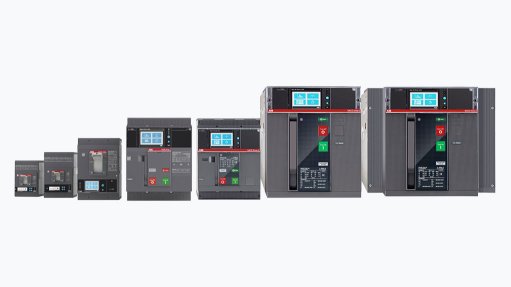
Electrifying the world in a safe, smart, and sustainable way, ABB Electrification is a global technology leader in electrical distribution and...
VISIT SHOWROOM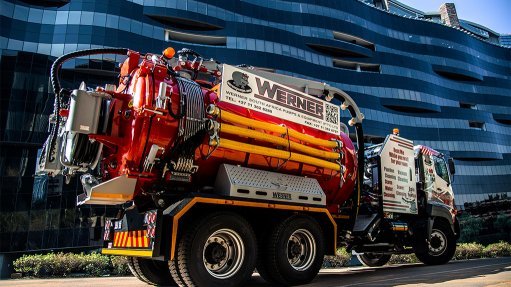
For over 30 years, Werner South Africa Pumps & Equipment (PTY) LTD has been designing, manufacturing, supplying and maintaining specialist...
VISIT SHOWROOM


Press Office
Announcements
What's On
Subscribe to improve your user experience...
Option 1 (equivalent of R125 a month):
Receive a weekly copy of Creamer Media's Engineering News & Mining Weekly magazine
(print copy for those in South Africa and e-magazine for those outside of South Africa)
Receive daily email newsletters
Access to full search results
Access archive of magazine back copies
Access to Projects in Progress
Access to ONE Research Report of your choice in PDF format
Option 2 (equivalent of R375 a month):
All benefits from Option 1
PLUS
Access to Creamer Media's Research Channel Africa for ALL Research Reports, in PDF format, on various industrial and mining sectors
including Electricity; Water; Energy Transition; Hydrogen; Roads, Rail and Ports; Coal; Gold; Platinum; Battery Metals; etc.
Already a subscriber?
Forgotten your password?
Receive weekly copy of Creamer Media's Engineering News & Mining Weekly magazine (print copy for those in South Africa and e-magazine for those outside of South Africa)
➕
Recieve daily email newsletters
➕
Access to full search results
➕
Access archive of magazine back copies
➕
Access to Projects in Progress
➕
Access to ONE Research Report of your choice in PDF format
RESEARCH CHANNEL AFRICA
R4500 (equivalent of R375 a month)
SUBSCRIBEAll benefits from Option 1
➕
Access to Creamer Media's Research Channel Africa for ALL Research Reports on various industrial and mining sectors, in PDF format, including on:
Electricity
➕
Water
➕
Energy Transition
➕
Hydrogen
➕
Roads, Rail and Ports
➕
Coal
➕
Gold
➕
Platinum
➕
Battery Metals
➕
etc.
Receive all benefits from Option 1 or Option 2 delivered to numerous people at your company
➕
Multiple User names and Passwords for simultaneous log-ins
➕
Intranet integration access to all in your organisation